People comparing protein for breakfast
You want to choose nuts or nut butter for porridge, yoghurt or a breakfast bowl, so you compare the protein per 100 g rather than just looking at the front of the pack.


When choosing organic nuts for a protein-rich breakfast, don’t rely on the organic label alone. Check the packaging, then compare protein per 100 g, ingredients and allergen information. The REWE products mentioned list 29.8 g of protein per 100 g for organic peanuts and 24 g for organic almonds. Almond butter can be used differently, and its nutritional values should be checked for the specific variety.
You want to choose nuts or nut butter for porridge, yoghurt or a breakfast bowl, so you compare the protein per 100 g rather than just looking at the front of the pack.
You prefer clear organic labelling and a short ingredients list. Check separately whether a product is unsalted, rather than assuming this from its organic label.
Check the ingredients and any ‘may contain’ information for every product. If you have a confirmed nut or peanut allergy, a general selection of nut products should not be taken as confirmation that they are safe for you.
If you’re looking for organic products, first check the labelling on the specific pack. Then compare the nutritional information and decide whether whole kernels or nut butter is better suited to how you plan to use it.
| Criteria | What to check | Who is it important to? |
|---|---|---|
| Protein content | Compare protein per 100 g and take into account how much you’ll actually use. | If I want nuts to contribute protein to my breakfast, I want to know how much my portion contains. This comparison is a priority for around 36% of consumers. |
| Organic labelling | For packaged organic products, look for the EU organic logo and the code of the organic control body; the consumer advice centre lists both as checks to make. | If you specifically want to buy organic nuts, look for a certification rather than a vague claim that they are ‘natural’. Around 29% of consumers say this is their top priority. |
| Ingredients and how you’ll use it | Check the ingredients, salt, sugar and nutritional values. Then decide whether whole kernels or nut butter is a better fit for your meal. | Nut butter may be more practical than whole kernels in my porridge, while I’d measure out a different portion for a snack. The right format and ingredients take priority for around 21% of consumers. |
| Allergens | Read the ingredients and ‘may contain’ information on the specific pack, even if the ingredients list is short. | If I need to watch out for certain allergens, the labelling on each product determines whether I choose it. Around 14% of consumers put this check first. |
Organic labelling doesn’t tell you the protein content. The REWE organic peanuts mentioned list 29.8 g of protein per 100 g, while EDEKA lists 19.6 g for its white organic almond butter.
Check the organic labelling, then compare the nutritional information for the products you’re actually considering buying.
A larger portion increases the amount of energy you consume as well as the amount of protein. The nutritional information per 100 g won’t necessarily match your breakfast portion.
Compare the per-100 g figures on a like-for-like basis, then take the portion you use into account.
‘May contain’ information varies between products. REWE says its organic peanuts may contain traces of tree nuts, sesame, soya and gluten.
Check the full allergen information on the specific pack every time you buy. A short ingredients list is no substitute for this check.
EDEKA notes that one of its organic almond products may not be available in every store and that the information online may differ from the packaging. ALDI SÜD says its range changes seasonally.
Before buying, check what’s available at your chosen store and read the information on the current pack.
If a particular product isn’t available there, finding it at another store may take extra time.
REWE lists organic peanuts and organic almonds, with nutritional information on the respective product pages.
The products mentioned include organic almonds, as well as brown and white organic almond butter.
ALDI SÜD has an organic range which, according to the retailer, may vary seasonally.
Lidl stocks organic products; the Alesto range includes both unseasoned nuts and flavoured snacks.
Seeberger offers products including roasted almonds and nut mixes.
This selection includes two almond butters described as organic for breakfast dishes, plus organic pine nuts as an ingredient. If you’re comparing protein content or have allergies, the information on the specific pack is what matters.
 No image available
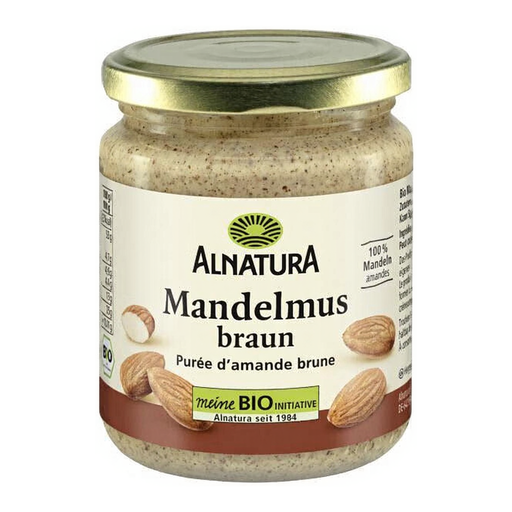
A nut butter option if you’d like to stir almonds into a breakfast dish.
The product name specifies roasted whole almonds. Check the organic labelling, nutritional information and allergen details on the pack.
 No image available
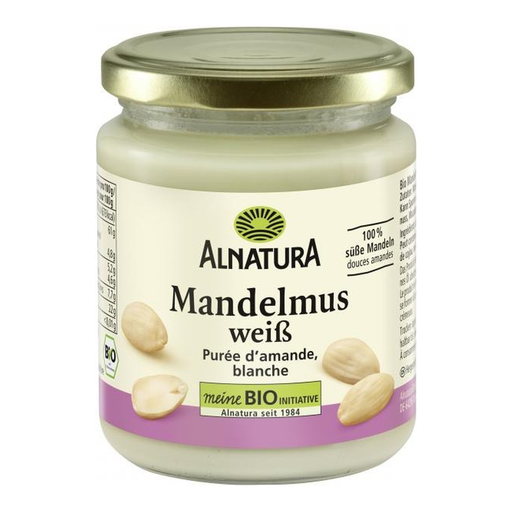
Another nut butter option for anyone who wants to use almonds as a breakfast ingredient.
Compare the nutritional information for this white almond butter with other varieties, and check the organic and allergen labelling on the pack before buying.
 No image available
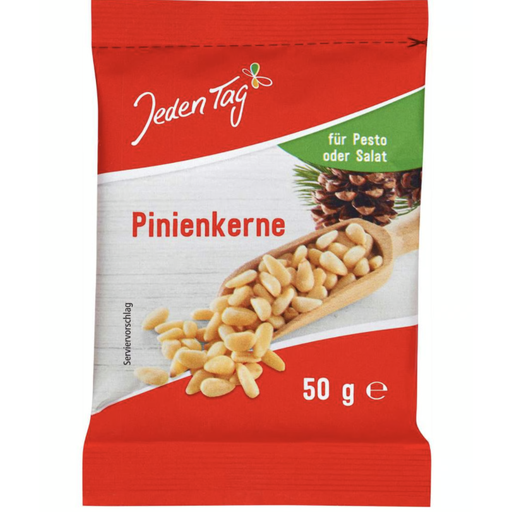
Pine nuts are an option if you’d prefer whole kernels rather than almond butter for your breakfast.
The product name gives the pack size as 50 g. For comparison, check the protein per 100 g, as well as the organic labelling, ingredients and allergen information on the pack.
Look for the EU organic logo and the code of the responsible organic control body. The consumer advice centre lists both as checks for packaged organic food; ‘natural’ or ‘pure’ is no substitute.
No. Organic labelling doesn’t guarantee a particular protein content. REWE lists 29.8 g of protein per 100 g for its organic peanuts, while EDEKA lists 19.6 g per 100 g for its white organic almond butter. Always compare the specific product.
Not necessarily. According to the German Nutrition Society, adults who do recreational sport for 30 minutes at moderate intensity four to five times a week don’t need to increase their protein intake. So a product name that mentions protein doesn’t, by itself, mean you need more.
Follow the instructions on the specific pack. REWE recommends storing its organic peanuts in a dry place and protecting them from heat and sunlight. EDEKA says oil may separate in the almond butter mentioned and should be stirred in after opening.
Availability may depend on the store and the time of year. EDEKA notes that one of the products mentioned may not be available in every store, while ALDI SÜD says its range changes seasonally. Check what’s available at your chosen store and read the information on the current pack.