Families with a toddler at the table
For them, the form matters more than the desire for crunchy nuts: the Federal Institute of Public Health recommends nut butter or finely ground nuts mixed into food as alternatives to whole nuts.


If toddlers are joining the meal, the Federal Institute of Public Health recommends using nut butter or finely ground nuts mixed into food rather than whole nuts. For older children and adults, plain organic nuts may be suitable, provided there is no relevant allergy. Check the organic label, ingredients and allergen information on every pack; some mixes may also be roasted and salted.
For them, the form matters more than the desire for crunchy nuts: the Federal Institute of Public Health recommends nut butter or finely ground nuts mixed into food as alternatives to whole nuts.
They want to find an organic option for a school-holiday lunch with clear labelling and an easy-to-read ingredients list. With mixes, it’s worth checking every individual ingredient.
They check the ingredients and allergen information on the specific pack. This is important even for products named after a single type of nut, as they may also carry precautionary allergen statements.
When choosing nuts or nut products for a school-holiday lunch, first consider the age of everyone eating. Organic labelling, ingredient information and pack size can then help you decide.
| What matters | What to check when buying | Who it matters most to |
|---|---|---|
| Age-appropriate form | For toddlers, choose nut butter or finely ground nuts to stir into food rather than whole nuts. | If a toddler is joining the meal, I want to avoid whole nuts because of the choking risk. For around 31% of consumers, an age-appropriate form is the top priority. |
| Organic certification and simple ingredients | Check the EU organic logo and inspection body details; compare the ingredients in a single-nut product with those in mixes. | For lunch, I want to identify organic products and see at a glance what they contain. Around 31% of consumers prioritise this. |
| Allergens and other ingredients | Read the ingredients list and precautionary allergen statements; with mixes, check for salt, sugar and seasonings too. | If I have a relevant allergy or am comparing mixes, what’s on the specific pack matters most. Around 23% of consumers prioritise allergens and other ingredients. |
| Pack size and shopping | Check the pack size and, if applicable, whether it can be resealed to make sure it suits your needs for several days of the school holidays. | For several lunches, I want to choose a pack that’s the right size and easy to use. Practical shopping plans are the main consideration for around 15% of consumers. |
An organic nut mix may be roasted and salted. For toddlers, the form is still key: whole nuts pose a choking risk, regardless of their organic certification.
As well as checking the organic logo, look at the ingredients and nutritional information. If toddlers are joining the meal, plan to serve nut butter or finely ground nuts mixed into food rather than whole nuts.
Even a product named after a single type of nut may carry a precautionary allergen statement. The ingredients and allergen information on the actual pack are therefore more important than the product name alone.
Read every new pack in full. If you have a known allergy, follow your individual medical advice.
The range and packaging may differ from a product image you saw previously. This is particularly important when ingredients or allergen information determine your choice.
In store, check the pack itself for organic certification, ingredients and allergen information, and choose a pack size that suits you for several days of the school holidays.
REWE lists organic almonds and organic nut mixes. You can compare single-nut products and mixes by looking at the information on each pack.
EDEKA describes its plain organic almonds as coming in a resealable 200-g bag.
ALDI SÜD presents its ALDI BIO own-brand range as meeting the requirements of the EU Organic Regulation.
Lidl offers an organic range that can be a useful starting point when looking for suitable nut products.
Seeberger sells different types of nuts and varieties, including plain products as well as roasted and seasoned options.
This selection includes ground organic hazelnuts to stir into food and organic pine nuts to use in savoury dishes. For toddlers and anyone with allergies, pay particular attention to the product form and the labelling on the pack.
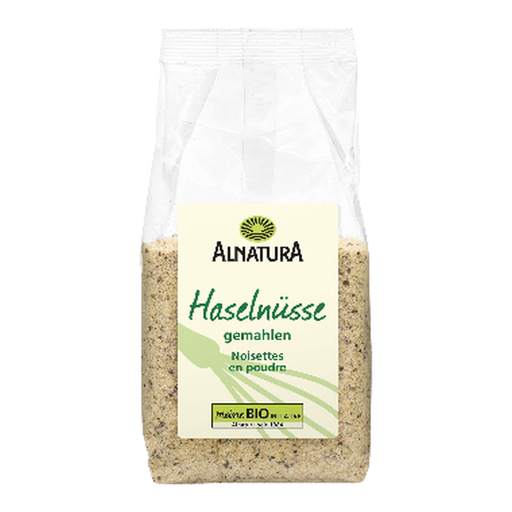 Image unavailable
The ground form is easy to stir into yoghurt or porridge. For toddlers, only serve mixed into food, not dry; check the allergen and organic labelling on the pack before buying.
 Image unavailable
Designed to be used as an ingredient in salads, rice dishes or pesto. If toddlers are joining the meal, don’t plan to serve them whole kernels; also check the ingredients, precautionary allergen statements and organic labelling on the pack before buying.
Look for the EU organic logo and the associated inspection body and origin details on the pack. The European Commission says the logo may only be used on organic products that have been inspected accordingly. To see whether a mix also meets your ingredient preferences, check the ingredients list.
No. Whole nuts pose a choking risk for toddlers. The Federal Institute of Public Health recommends alternatives such as nut butter or finely ground nuts stirred into food; dry nut flour should not be served without being mixed into food.
No. Read the ingredients list and any precautionary allergen statements on the specific pack. The Federal Office of Consumer Protection and Food Safety explains the labelling requirements for key allergens; for example, REWE says its organic almonds may contain traces of other tree nuts and peanuts.
No. Organic labelling doesn’t mean a mix is unroasted or unsalted. For example, REWE lists a roasted and salted organic nut mix. So compare the ingredients list and nutritional information for the variety you’re thinking of buying.