Active snack shoppers
You’re looking for a plant-based snack after a workout or when you’re out and about, and want to be able to check the protein content on the pack without choosing based on a protein claim alone.


For a straightforward organic snack, unsalted almonds with a short ingredients list are a good place to start. Compare the declared protein per 100 g with the salt, ingredients and energy content. A nut mix offers a different nutritional profile, while nut butter is better suited to use as an ingredient. Nuts can contribute to your protein intake after exercise, but they are no substitute for considering your diet as a whole.
You’re looking for a plant-based snack after a workout or when you’re out and about, and want to be able to check the protein content on the pack without choosing based on a protein claim alone.
You shop at an organic food shop and want to check whether whole nuts or nut butter are labelled organic, and what other ingredients they contain.
You use almonds or nut butter in things like muesli, sauces or baking, and compare protein, salt and energy per 100 g.
First decide whether you want to eat whole nuts as they are, use a mix or add nut butter as an ingredient. Then compare the nutritional information and ingredients of the products you’re considering.
| Criterion | What to check when buying | Who it matters to |
|---|---|---|
| Protein per 100 g | Compare the nutritional information of similar products and check the energy per 100 g too. | If I’m buying nuts specifically for their protein content, I want to compare the information for the actual products rather than rely on the front of the pack. For around 40 % of consumers, this would be the main reason for choosing a product. |
| Organic status and ingredients | Check the organic label and ingredients list, particularly for roasted or seasoned varieties. | When I shop at an organic food shop, what matters most to me is whether the pack really contains an organic product with as short an ingredients list as possible. Around 30 % of consumers would prioritise this. |
| Snack format and salt | Check the product type, salt per 100 g and pack size. | When I’m out and about, I want to choose a portion that’s ready to eat and know whether salt has been added. Around 30 % of consumers would see convenience as a snack and portion size as their main priorities. |
Protein content alone tells you nothing about the other nutritional values or the meal as a whole. The Verbraucherzentrale points out that even people who are physically active can meet their protein needs with everyday foods that are high in protein.
Compare protein and energy per 100 g, and think about how the nuts fit in with the rest of your diet.
An organic product can still contain other ingredients. Alnatura lists sea salt and gum arabic alongside peanuts in its roasted, salted peanuts.
If you’re looking for a snack with no added salt, check the ingredients list and salt information on the specific pack.
Labelling can vary between individual nuts, mixes and nut butter. Under EU labelling rules, allergens must be highlighted in the ingredients list on pre-packed foods.
If you have an allergy, check the information on the specific pack rather than assuming it applies based on the brand or another variety.
Seeberger explicitly warns that its Power Nut Mix poses a choking hazard, particularly for children under four.
Keep whole nuts out of reach of young children and follow the guidance on the pack.
Organic products featuring whole nuts, peanuts and nut butter for a range of uses.
Organic almonds as a single ingredient for snacks and cooking.
Organic almond kernels for eating as they are or using as an ingredient.
Nut mixes for anyone who wants a range of nuts in one pack.
This selection includes organic peanut butter and organic pine nuts to use as ingredients, as well as a roasted nut mix to eat as it is. When shopping at an organic food shop, it’s worth checking the labelling on each product, especially if organic status, salt or allergens are important to you.
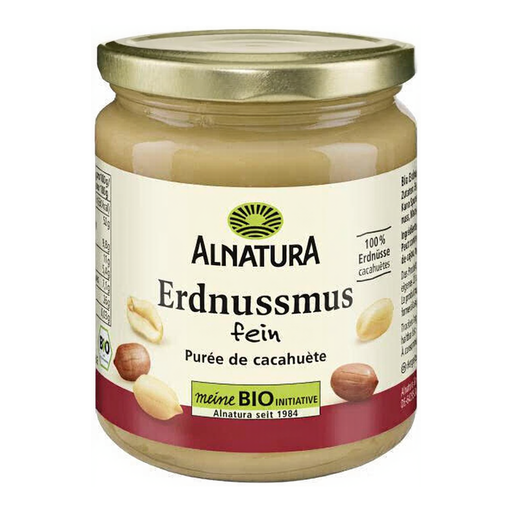 No image available
An option if you’d like to use peanut butter as a spread or an ingredient in sauces.
If you have allergies, check the labelling on the pack. If oil separates, follow the instructions for stirring and storage.
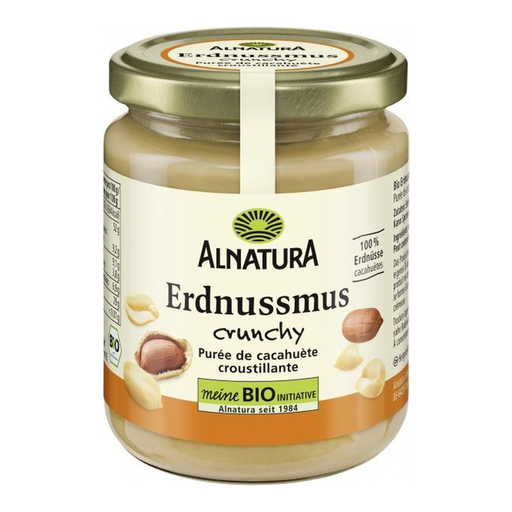 No image available
The crunchy variety could suit you if you’re looking for peanut butter to spread or cook with.
For this product, take particular care to check the allergen and ‘may contain’ information on the specific pack. Separated oil may need stirring in.
 No image available
Pine nuts are a good option if you’re looking for seeds to use in pesto, salads or other dishes.
If salt content matters to you, compare the information on the pack. Check the allergen and ‘may contain’ information too.
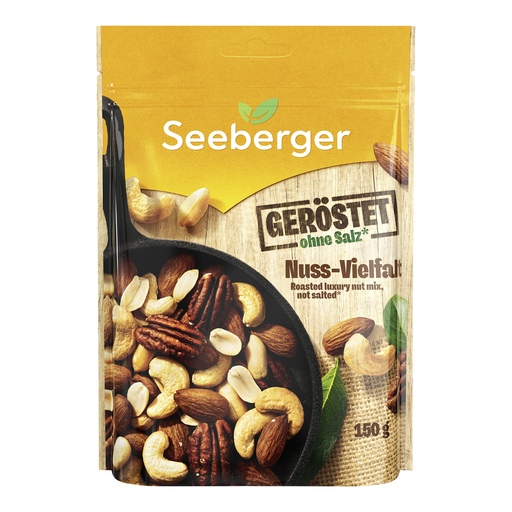 No image available
This roasted mix is a good choice if you’d like to snack on a variety of nuts.
If organic status is important for your shop, check the labelling on this product. For allergens, salt and protein, refer to the information on its own pack, not that of other Seeberger mixes.
Nuts can contribute protein, but shouldn’t be considered a complete meal solely because of their protein content. The Verbraucherzentrale explains that even people who are physically active can meet their protein needs with everyday foods that are high in protein.
Compare the declared protein per 100 g on the specific packs, and read the ingredients list and other nutritional information too. This also helps you see whether you’re comparing whole almonds, a mix or nut butter.
No. As EDEKA explains, peanuts are botanically legumes. When shopping, check the allergen information on each pack separately for peanuts and tree nuts.
Follow the storage instructions on the relevant pack. The natural oil in pure peanut butter may separate; Alnatura recommends stirring its smooth peanut butter if this happens.