Breakfast eaters keeping an eye on portions
You want to add nuts to muesli, porridge or yoghurt while keeping track of how much you actually use. This is especially helpful with a larger pack: decide on the amount before you eat.


For breakfast and snacks, plain organic nuts are an obvious choice if you want to avoid extra ingredients and keep track of how much you eat. The organic label tells you nothing about energy content: compare the nutritional information and, for pre-packed EU organic products, check the EU organic logo, inspection body code and country of origin on the pack.
You want to add nuts to muesli, porridge or yoghurt while keeping track of how much you actually use. This is especially helpful with a larger pack: decide on the amount before you eat.
You want to tell plain nuts apart from sweetened or seasoned mixes. The ingredients list shows whether they contain anything besides nuts, such as sugar, chocolate or salt.
You don’t want to rely on the product name alone to tell you whether something is organic. For pre-packed EU organic products, look for the EU organic logo, inspection body code and country of origin.
First decide whether you want plain nuts or a mix. Then compare the ingredients and nutritional information, and consider how much you’ll actually add to breakfast or have as a snack.
| Criterion | What to check | Who it matters to |
|---|---|---|
| Energy and portion size | Compare the energy value per 100 g and decide how much to have with breakfast or as a snack. | When I add nuts to breakfast, I don’t want to eat more than I planned without noticing. Portion control is a priority for around 36% of shoppers. |
| Ingredients | Check the ingredients list on mixes and seasoned varieties; compare the sugar and salt content with a plain option. | I want to know whether I’m buying plain nuts or a sweet or salted mix for my snack. Around 29% of shoppers focus first on the ingredients. |
| Organic labelling | For pre-packed EU organic products, check the EU organic logo, inspection body code and country of origin on the pack itself. | When I’m specifically looking for organic nuts, I want to be able to verify the labelling on the product. This is the most important buying criterion for about 21% of shoppers. |
| Pack size and freshness | Choose a pack size that suits you and check whether it can be resealed; store opened walnut kernels in an airtight container in a cool place. | I want to use the nuts over several breakfasts and keep them in good condition until I’ve finished them. This practicality matters most to around 14% of shoppers. |
Organic describes how food is produced, not its energy content. For example, ALDI SÜD lists its organic almonds at 604 kcal per 100 g, so the amount you eat still matters.
Measure out the amount you want into a bowl or add it straight to breakfast, rather than eating from the pack as you go.
Organic nut products can also contain other ingredients, such as salt, sugar or chocolate. You can’t compare a mix like this with plain nuts based on its organic status alone.
Read the ingredients list and, when comparing different recipes, check the nutritional information per 100 g too.
According to the Federal Centre for Nutrition, pre-packed organic food from the EU must be labelled with the EU organic logo, an inspection body code and an indication of origin.
Check the information on the current packaging when you buy, even if an online listing already describes the product as organic.
The consumer advice centre recommends storing cracked walnuts in an airtight container in the fridge or freezer. If you have allergies, check the ingredients and precautionary allergen information on the specific pack.
Seal opened kernels well, throw away any mouldy nuts and read the allergen information before eating.
REWE’s online range includes organic cashews, organic walnuts, organic peanuts and nut mixes. This gives you a choice of nut types and recipes to compare.
EDEKA describes its plain organic almonds as a 200 g product in a resealable pouch. They may suit shoppers who want to use almonds in small amounts over several occasions.
ALDI SÜD lists nutritional values per 100 g for its organic almonds. This helps you gauge your planned portion using the information on the product itself.
Lidl describes an organic range and products carrying the Bioland label. If you’re looking for organic nuts there, check the labelling on the individual product.
Seeberger’s range includes walnut kernels, cashews and almonds in various preparations. This is useful if you want to compare plain nuts with roasted or seasoned options.
This selection includes ground hazelnuts for breakfast and pine nuts to use as a topping. Both can be used in small amounts; check each product individually to make sure its preparation and on-pack information suit what you have in mind.
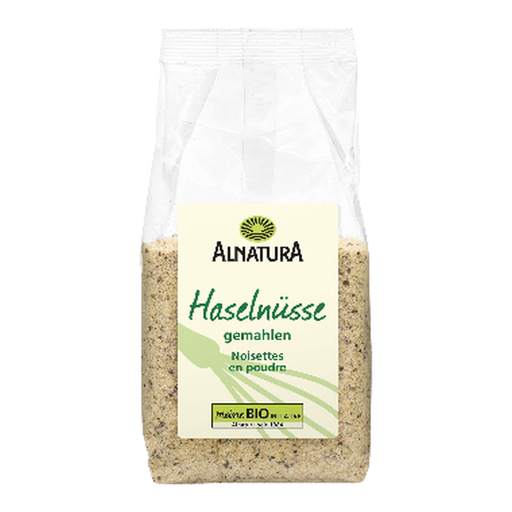 Image unavailable
The ground form may suit you if you’re looking for hazelnuts to add to porridge or yoghurt.
Roasted; pack size: 150 g. Check the organic labelling, nutritional information and allergen information on the current packaging.
 Image unavailable
Pine nuts may work as a topping if you’d like to add their flavour to breakfast or other dishes.
Pack size: 50 g. Before buying, check the organic labelling as well as the nutritional, storage and allergen information on the current packaging.
According to the Federal Centre for Nutrition, pre-packed organic food from the EU must be labelled with the EU organic logo, an inspection body code and an indication of origin. The German organic seal may also appear on the pack.
No. Organic labelling relates to how food is produced, not how much you want to eat. If you’re including nuts in your weight management plans, compare the energy value per 100 g with the portion you actually intend to have.
If you want to avoid extra ingredients, choose a plain variety and check its ingredients list. Ground nuts and whole kernels are also used differently; the best choice depends on your breakfast and how much you plan to add.
The consumer advice centre recommends storing cracked walnuts in an airtight container in the fridge or freezer. You should throw away any mouldy nuts.
A precautionary allergen statement doesn’t mean the allergen mentioned is definitely present in the product, but it doesn’t rule out the possibility either. If allergens are a concern for you, read both the ingredients list and the precautionary allergen information on the current pack.