Parents who want to make a soft porridge
You want a spoonable porridge rather than a coarse, chunky texture. Fine or extra-fine oats could fit the bill; Alnatura describes its extra-fine variety as becoming soft and porridge-like.


For a soft porridge you can eat with a spoon, fine or extra-fine organic oats are an obvious choice. What matters is the consistency you want, not an overall quality ranking. Check the organic label, ingredients and precautionary allergen statements on the specific pack. If a gluten-free diet is medically necessary, also look for an explicit gluten-free label – organic certification alone is not enough.
You want a spoonable porridge rather than a coarse, chunky texture. Fine or extra-fine oats could fit the bill; Alnatura describes its extra-fine variety as becoming soft and porridge-like.
You’re looking for organic oats as a simple breakfast base and check the ingredients list and any precautionary allergen statements, as well as the organic label.
If a gluten-free diet is medically necessary, check for an explicit gluten-free label. An oat allergy is a separate matter: Lebensmittelklarheit notes that oats are listed as an allergen even in products labelled gluten-free.
When choosing organic oats for a toddler’s breakfast in Germany, your main priority might be the porridge’s consistency, the ingredients list, or specific gluten or allergen requirements.
| Criterion | What to check when buying | Who it matters most to |
|---|---|---|
| Soft consistency | Compare the type of oats, such as ‘fine’ or ‘extra-fine’, and the preparation instructions. | If my child prefers soft, easy-to-eat porridge, the texture of the oats is the deciding factor for me. Around 42% of consumers might consider consistency their main priority. |
| Organic certification and ingredients | Check the EU organic logo or inspection body code, along with the ingredients list and precautionary allergen statements on the pack. | I want a simple organic oat base and to know exactly what ingredients are listed on the pack. This is likely to be the main consideration for around 33% of consumers. |
| Gluten and allergens | If a gluten-free diet is required, look for ‘gluten-free’; if there are allergies, check the ingredients and allergen information separately. | If my child has specific gluten or allergen requirements, the choice must be guided by the information on the specific product. Around 25% of consumers might have this as their main priority. |
According to the European Commission, the EU organic logo indicates that a product has been produced under controlled organic conditions; it does not indicate a particular gluten content. Oats sold commercially may come into contact with other cereals containing gluten.
If a gluten-free diet is medically necessary, check the pack for an explicit gluten-free label.
Gluten-free requirements and an allergy to oats are two different things. Lebensmittelklarheit explains that oats are listed as an allergen even in oat flakes labelled gluten-free.
If you have a diagnosed allergy, read the ingredients and allergen information and follow the advice of your healthcare professional.
Finer oats can be a good match for a softer porridge. Other types of oats may be more suitable for different recipes or if you want a more noticeable texture.
Choose the type of oats to suit the consistency you want and how you plan to prepare them, rather than relying on the ‘extra-fine’ label alone.
The products from Alnatura, REWE Bio and EDEKA Bio described here each mention possible traces of certain other allergens or cereals containing gluten. The statements vary from product to product.
If you have relevant allergies, check the current packaging of the specific product.
Kölln offers fine organic wholegrain oats as a base for porridge or muesli.
The extra-fine organic oats are an option if you want a porridge that becomes soft and creamy.
An own-brand option for organic oats; the variety reviewed is listed as small-flake oats.
The fine organic oats reviewed could be a simple oat base for porridge.
The brand describes different oat products for porridge, muesli and baking.
Brüggen processes oats and is listed as a contact company on the REWE Bio product page reviewed.
This selection includes organic oats for porridge and an organic oat-flour cereal porridge. The cereal porridge is not a type of oat flakes, so compare its form with the consistency you want to prepare.
 No image available
For a soft porridge: the product description says the extra-finely rolled oats soften even when mixed with cold liquid. The listed ingredient is wholegrain oats from organic agriculture. If you have allergies, check the current packaging; if a gluten-free diet is medically necessary, also look for an explicit gluten-free label.
 No image available
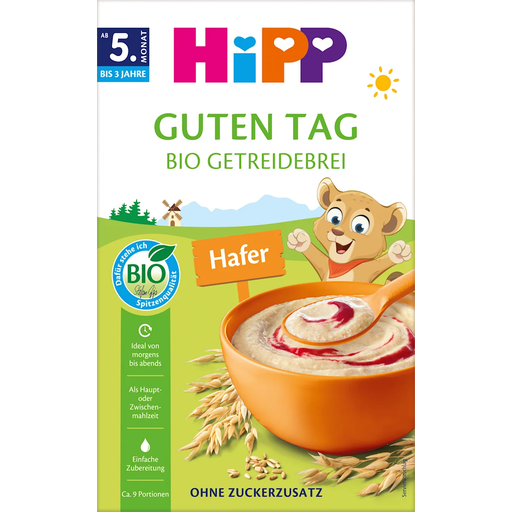
For a smooth oat porridge rather than porridge made from flakes: this product is described as an organic oat-flour cereal porridge with vitamin B1 and is labelled for use from 5 months. Follow the preparation instructions on the pack; if a gluten-free diet is required, check the specific product’s labelling.
 No image available
An organic oat base for porridge, muesli or baking. The product description lists wholegrain oats from organic agriculture as the ingredient. The consistency of your porridge will depend on how you prepare it; if a gluten-free diet is required, check for an explicit label on the pack.
Look for the EU organic logo and inspection body code on the pack. According to the European Commission, only appropriately certified products may carry the logo. If you’re choosing products because of allergies, you’ll still need to check the ingredients and allergen information separately.
No. The organic label does not mean a product is gluten-free. Lebensmittelklarheit notes that oats may come into contact with other cereals containing gluten. If a gluten-free diet is medically necessary, check for an explicit label on the specific product.
‘Gluten-free’ does not tell you whether someone with an oat allergy can tolerate oats. Lebensmittelklarheit explains that oats are therefore listed as an allergen even in oat flakes labelled gluten-free.
Fine or extra-fine oats are an obvious choice if you want a soft, spoonable porridge. Alnatura describes its extra-fine variety as becoming soft and porridge-like, even when mixed with cold liquid. Prepare the porridge in a way that’s appropriate for your child’s eating abilities.