Organic popcorn kernels are a good choice if you want to control how much oil, sugar and salt you add. Ready-made organic popcorn saves preparation time, but the recipe has already been decided for you. Neither option is automatically a suitable snack during a long run just because it is organic. According to the German Nutrition Society, the right amount of carbohydrates depends, among other things, on your body weight and how much physical activity you do.
Which option might suit you?
Runners who want to create their own recipe
If you want to control how much oil, sugar and salt you add, unseasoned organic popcorn kernels make a good starting point. However, the nutritional values for the kernels alone won’t tell you everything about your finished serving.
Runners looking for a ready-made snack
Ready-to-eat popcorn is easy to take with you for everyday snacking, travelling or after a training session. For sweet and sweet-and-salty varieties, check the ingredients, serving size and nutritional information.
Shoppers who look for organic certification
If clear organic certification matters to you, check the EU organic logo, inspection body code and country of origin of the agricultural ingredients. The European Commission explains what these details on the organic logo mean; they don’t tell you how much sugar or fat a product contains.
What should you look for when buying?
Organic popcorn kernels to pop at home
A good choice if: You want to choose the added ingredients yourself.
Bear in mind: The kernels need to be prepared, and adding oil, sugar or salt changes the nutritional values of your finished serving.
Ready-to-eat organic popcorn
A good choice if: You want to take a portion-sized snack that’s ready to eat.
Bear in mind: The recipe is fixed and may include sugar, oil and salt, depending on the variety.
| What to consider |
What to check when buying |
Who it matters most to |
| Carbohydrates and serving size |
Compare the carbohydrates per 100 g and work out how much you’d actually eat. The German Nutrition Society points out that requirements depend on body weight and physical activity. |
When I plan food for training sessions of different lengths, I want to know how my portion fits in. Around 33 % of shoppers put this planning first. |
| Ingredients in the finished serving |
Read the ingredients list and check the sugar, fat, saturated fat and salt per 100 g. If you make popcorn at home, remember to include any added ingredients too. |
I want to decide how much oil, sugar or salt goes into my snack, rather than settle for a ready-made recipe. Around 27 % of shoppers put this control first. |
| Organic certification |
For packaged products, look for the EU organic logo, inspection body code and country of origin of the agricultural ingredients, as explained by the European Commission. |
It matters to me that I can verify the organic certification on the pack; taste alone doesn’t tell me. Around 20 % of shoppers put this first. |
| Preparation and portability |
Check whether the popcorn is ready to eat and how large the pack is. Popcorn kernels need to be prepared before eating. |
For travelling or a busy training day, I want a snack I can pack without needing to prepare it. Around 20 % of shoppers put convenience and readiness to eat first. |
Which common assumptions should you avoid?
-
Assuming organic means it’s made for training
Organic certification doesn’t tell you how much sugar, fat or salt a ready-made snack contains. For example, Heimatgut lists cane sugar, coconut oil and sea salt as ingredients in its sweet-and-salty variety.
As well as checking the organic certification, read the ingredients list and nutritional information per 100 g, and take the amount you’ll eat into account.
-
Assuming the nutritional values for the kernels apply to your finished serving
The figures for plain popcorn kernels don’t automatically include oil, sugar or salt added during preparation.
Use the pack’s nutritional information as a starting point, then allow for any ingredients you add. Follow the preparation instructions for the kernels you buy.
-
Planning to eat an unfamiliar snack during a long run
No single popcorn product can provide a one-size-fits-all fuelling plan for long periods of exercise. The German Nutrition Society says carbohydrate requirements depend on body weight and the amount of physical activity.
Try a new food before an important long run, rather than assuming it’s suitable just because it’s organic.
Brands and product ranges to consider
Heimatgut
Ready-to-eat organic popcorn in a range of flavours, including a sweet-and-salty option.
- Heimatgut gives a pack size of 30 g for its sweet-and-salty variety.
- The manufacturer lists cane sugar, coconut oil and sea salt as ingredients in this variety. Check its nutritional values separately from its organic certification.
Ährenbrüder
Sweet organic ready-made popcorn, listed by REWE Deutschland as produced in Germany.
- For the listed variety, REWE gives the inspection body code DE-ÖKO-013 and lists organic maize, organic cane sugar and organic sunflower oil as ingredients.
- REWE lists 34 g of sugar per 100 g for this sweet variety. The country-of-origin information doesn’t replace checking the nutritional information.
dmBio
Unseasoned organic popcorn kernels to prepare at home.
- The dm product page lists organic maize as the ingredient, so you can choose what to add when popping it.
- According to dm, the kernels aren’t intended to be eaten raw and must be heated thoroughly. Added ingredients change the nutritional values of the finished serving.
Organic popcorn kernels at Joybuy
These organic popcorn kernels may suit shoppers who want to make popcorn at home and choose the added ingredients themselves.
 No image available
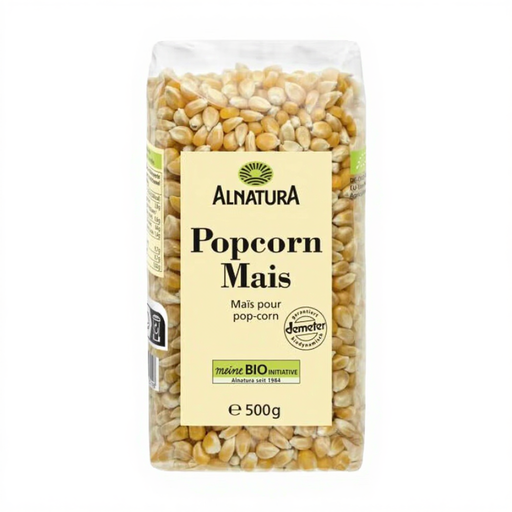
Alnatura organic popcorn kernels, 500 g
For homemade popcorn when you want to choose the added ingredients yourself.
Pack size: 500 g. Prepare before eating, and remember to include any added ingredients when assessing the nutritional values of your finished serving.
View at Joybuy
Frequently asked questions
How can I identify packaged organic popcorn?
Check for the EU organic logo, inspection body code and country of origin of the agricultural ingredients. The European Commission explains what these details on the organic logo mean. When choosing a snack, you should also read the ingredients list and nutritional information.
Is organic popcorn automatically suitable for a long training run?
No. Organic certification doesn’t mean that a product is generally suitable as fuel during a long run. According to the German Nutrition Society, the right amount of carbohydrates depends, among other things, on body weight and how much physical activity you do.
Can I eat popcorn kernels before popping them?
The product information for dmBio popcorn kernels specifically says they aren’t intended to be eaten raw and must be heated thoroughly. Follow the preparation instructions on the pack of the product you buy.
Which nutritional values should I compare for ready-made popcorn?
In particular, compare carbohydrates, sugar, fat, saturated fat and salt per 100 g, and take the amount you’ll eat into account. The European Union lists this information alongside energy and protein in the nutritional information for prepacked foods.


