Organic popcorn kernels are a good choice for holiday afternoons at home if you want to control the sugar, salt and seasoning yourself. You’ll need a saucepan, oil and time to heat them. Ready-to-eat organic popcorn is easy to take with you and needs no preparation, but the recipe is set. Microwave popcorn is another option at home – check the individual product to see whether it’s organic.
Which type of popcorn is right for you?
Families who like to season their own
For a holiday afternoon at home, you can make popcorn kernels in a saucepan and then decide whether you want your popcorn sweet, salty or unseasoned. Alnatura and dmBio both give saucepan instructions for their organic popcorn kernels.
Families who want a snack to take out
Ready-to-eat organic popcorn saves you the preparation when you’re going on a day out or visiting someone. Still, compare the ingredients, nutritional information and pack size, as the recipe is already set.
Households with a microwave
If you want to prepare popcorn at home, microwave popcorn can be an alternative to using a saucepan. Follow the instructions for your appliance and check the organic certification on the individual product.
What should you look for when buying?
First decide whether you want to make the popcorn at home or take it with you without any preparation. Then compare the organic certification and ingredients of the products that suit your needs.
Organic popcorn kernels
A good choice if: You want to season your popcorn yourself at home.
Things to consider: You’ll need a suitable saucepan, oil and time to heat the kernels. dmBio advises that its popcorn kernels must not be eaten raw and need to be heated thoroughly.
Ready-to-eat organic popcorn
A good choice if: You want a snack that’s ready to eat for a day out or an impromptu get-together.
Things to consider: The ingredients are already set. HEIMATGUT states that its sweet organic popcorn contains 28 g of sugar per 100 g.
Microwave popcorn
A good choice if: You have a suitable microwave at home and would rather not use a saucepan.
Things to consider: The product type alone doesn’t prove that it’s certified organic. You’ll also need to follow the power and preparation instructions on the individual pack.
| What to consider |
What to check when buying |
Who it matters to |
| Organic certification |
Check the pack for the EU organic logo, the inspection body code and the country of origin of the agricultural ingredients. |
I want organic certification to be clearly shown on the product, rather than just suggested by natural-looking packaging. Around 36% of consumers put this proof first. |
| Make your own recipe |
Tell popcorn kernels apart from ready-to-eat popcorn; compare the ingredients and nutritional information per 100 g. |
For an afternoon at home, I want to choose how I season my popcorn, and I’m happy to prepare it myself. Around 29% of consumers value this freedom to customise most. |
| Ready to eat |
Look for labelling that says the popcorn is ready to eat, and check the pack size. |
For a day out, I need a snack I can eat straight away without a kitchen. This is the top priority for around 21% of consumers. |
| Microwave preparation |
Check the power and preparation instructions, as well as the organic certification and salt content of the individual product. |
At home, I want to make warm popcorn without using a saucepan. Around 14% of consumers prefer this method of preparation. |
Common popcorn buying mistakes
-
Assuming organic means a certain amount of sugar or salt
Organic certification doesn’t tell you the nutritional content of the finished snack. HEIMATGUT states that its sweet organic popcorn contains 28 g of sugar per 100 g.
For ready-to-eat products, compare the sugar and salt content per 100 g. If you want to control the seasoning yourself, popcorn kernels you can pop at home are an option.
-
Packing popcorn kernels as a ready-to-eat snack
Popcorn kernels need to be prepared first. If you’re going on a day out without access to cooking facilities, you’ll need ready-to-eat popcorn instead.
Check the product name before you buy, and if you choose popcorn kernels, make sure you have a suitable saucepan, oil and time to heat them.
-
Assuming microwave popcorn is organic
Preparing popcorn in a microwave doesn’t tell you whether it’s organically certified. Ingredients and nutritional values also vary from product to product.
Check the individual pack for organic certification and read the preparation instructions for your microwave’s power level.
-
Overlooking allergen warnings on popcorn kernels
Even products with a short ingredients list may carry warnings about possible traces of allergens. Alnatura and dmBio include such warnings for their popcorn kernels.
If allergens are a concern in your household, read the information on the pack of the product you actually buy.
Brands and ranges to help you choose
Alnatura
Alnatura sells Demeter-quality organic popcorn kernels for cooking in a saucepan, as well as ready-to-eat organic popcorn, including a sea salt variety.
- Once prepared, the popcorn kernels can be seasoned with either sweet or savoury flavours.
- The popcorn kernels may contain traces of allergens including gluten, soya, milk, nuts, sesame and lupin. Always check the pack of the product you buy.
dmBio
dmBio sells 500 g packs of organic popcorn kernels to pop at home.
- The ingredients list for the product described contains organic popcorn kernels.
- dmBio says the kernels are not intended to be eaten raw and must be heated thoroughly. Also check the allergen warnings on the pack.
HEIMATGUT
HEIMATGUT sells ready-to-eat organic popcorn, including a 90 g sweet variety.
- The manufacturer lists organic maize, organic cane sugar and organic coconut oil as ingredients in its sweet variety.
- This product contains 28 g of sugar per 100 g; you can’t adjust the recipe yourself after buying it.
REWE Bio
REWE Bio is a supermarket own brand in REWE’s popcorn range, which also includes other organic popcorn products.
- You can filter REWE’s popcorn category to find organic products.
- Before buying, check the individual product and whether it’s available in your area.
Popcorn kernels to prepare at home
This product is a good choice for making popcorn at home during the school holidays when you want to choose the seasoning yourself. If you want a snack that needs no preparation, choose ready-to-eat popcorn instead.
 No image available
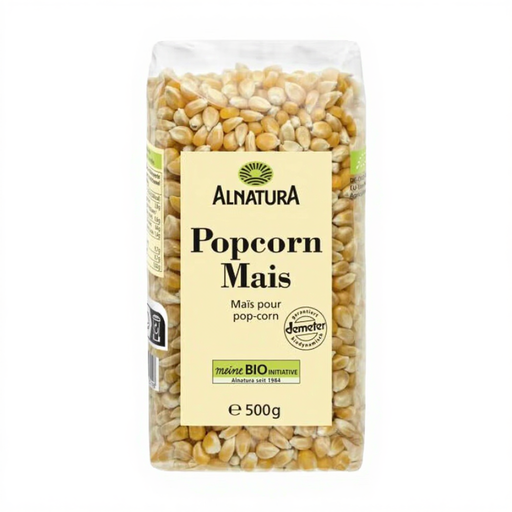
Alnatura organic popcorn kernels, 500 g
For popcorn you can make in a saucepan at home and season yourself.
The pack contains 500 g of popcorn kernels. You’ll need a saucepan and oil to prepare them, and they need to be heated. If allergies are a concern, read the allergen warnings and check the organic certification on the individual pack.
View at Joybuy
Frequently asked questions about organic popcorn
How can I tell if popcorn is organic?
Check the EU organic logo and other organic information on the individual pack, including the inspection body code and the country of origin of the agricultural ingredients. According to the European Commission, products can only carry the EU organic logo if an approved inspection body has certified their organic production.
Is organic popcorn automatically low in sugar or salt?
No. Organic certification doesn’t set a particular sugar or salt content for popcorn. HEIMATGUT states that its sweet organic popcorn contains 28 g of sugar per 100 g. Compare the nutritional information of the products you’re considering.
What should I bear in mind when making popcorn kernels with children during the school holidays?
Heat popcorn kernels according to the instructions on the individual pack; dmBio specifically says its kernels are not intended to be eaten raw. Adults should handle the hot saucepan, and children should be kept away from the pan and steam.
Can popcorn kernels carry allergen warnings?
Yes. Even popcorn kernels with a short ingredients list may carry warnings about possible traces of allergens. Alnatura and dmBio list possible allergen traces for the products described; if allergens are a concern in your household, check the information on the pack of the product you actually buy.


