If you regularly make several portions of popcorn at home, a 500 g pack of organic popcorn kernels is an obvious choice for stocking up. If you want a snack with no preparation, ready-to-eat organic popcorn is a better fit. However, a larger pack doesn’t necessarily make kernels the right choice if you rarely use them or can’t store them properly.
Which pack is right for you?
Regular home popcorn makers
If you want to make several portions from one pack and choose your own seasoning, organic popcorn kernels could be a good option. EDEKA points out that popcorn kernels are suitable for making popcorn – not just any type of maize.
People short on time
Ready-to-eat organic snack bags are a good choice when you want to eat your popcorn straight away. Microwave popcorn saves you having to make it in a pan, but you’ll need a suitable microwave and should follow the instructions on the pack.
People who look for organic certification
When choosing between supermarket own-label and branded products, check the pack for the EU organic logo and the organic control body code. Ingredients and pack size are also important factors in their own right.
What should you look for when buying?
First, decide whether you want to prepare loose kernels or eat ready-made popcorn. Then check the pack size, labelling and storage requirements for the type of product you’ve chosen.
| Criteria |
What to check |
Who it matters to |
| Pack size |
Net weight and the number of portions you’re likely to need; compare popcorn kernels and ready-made popcorn separately. |
If I make popcorn regularly, I want to be able to get several portions from one pack. Around 36% of consumers prioritise a generous pack size for stocking up. |
| Preparation |
Is it ready to eat, made for the microwave or loose popcorn kernels for you to prepare? |
If I want a snack that’s ready with no effort, a ready-made bag matters more to me than choosing my own portion size. Convenience comes first for around 29% of consumers. |
| Organic labelling |
The EU organic logo, the organic control body code and the ingredients list on the specific pack. |
When choosing between brands, I want to check the organic labelling on the product itself. This is the main consideration for around 21% of consumers. |
| Storage and portioning |
Whether opened popcorn kernels can be kept dry and in an airtight container. |
I want to prepare only as many kernels as I need and keep the rest protected. Around 14% of consumers value this flexibility most. |
Common buying mistakes
-
Buying a large pack without planning your portions
You can use a 500 g pack over several batches. That’s only practical if you’re likely to use the kernels and can store the opened pack properly.
Before buying, think about how often you make popcorn at home and where you’ll keep the opened pack.
-
Assuming sweet ready-made popcorn is the same as plain popcorn kernels
Heimatgut Organic Sweet Popcorn, stocked by REWE, contains cane sugar and coconut oil as well as maize. Its ingredients are therefore different from those of unseasoned popcorn kernels.
Compare ingredients and nutritional information within the same product type, and check whether the popcorn is ready to eat.
-
Buying any type of maize to pop
According to EDEKA, popping maize, also known as pearl maize, is suitable for making popcorn. Other types of maize aren’t necessarily suitable.
Look for the terms popcorn kernels or popping maize and read the preparation instructions.
-
Leaving opened kernels out in the open
It’s harder to use up your supply if dry food is exposed to moisture. The Verbraucherzentrale recommends storing dry foods in a dry place in tightly sealed containers.
Keep opened popcorn kernels dry and in an airtight container.
Brands to help guide your choice
Davert
REWE stocks Davert Organic Popcorn Kernels in a 500 g pack for you to prepare at home.
- The ingredients list provided by REWE names popcorn kernels from certified organic farming.
- The kernels need to be prepared before eating; follow the instructions on the pack.
Heimatgut
REWE stocks Heimatgut in the organic popcorn formats considered here, including ready-to-eat sweet popcorn.
- The 90 g pack of Organic Sweet Popcorn is a portion-sized snack that needs no preparation.
- According to the ingredients list provided by REWE, this variety contains cane sugar and coconut oil as well as maize.
REWE Bio
REWE Bio is a supermarket own-label brand with an organic popcorn option in a 90 g pack in the range considered here.
- As with branded products, it’s worth checking the labelling and ingredients of organic own-label products.
- The 90 g option considered here meets a different portion requirement from a 500 g pack of loose kernels.
Organic popcorn kernels at Joybuy
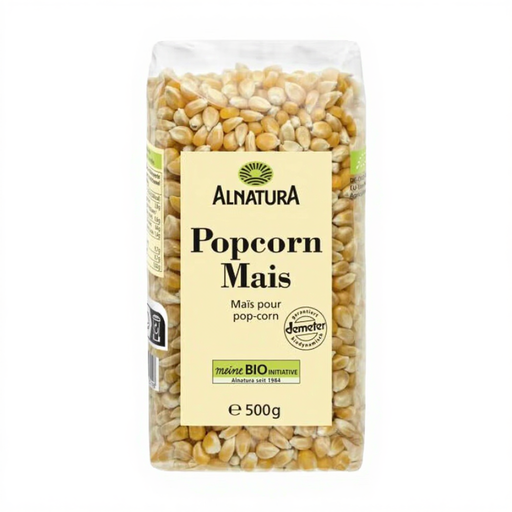
If you want to make several portions at home, this 500 g pack of popcorn kernels is a good option. Check the organic labelling on the pack and plan how you’ll store any kernels left over once it’s opened.
 No image available
Alnatura organic popcorn kernels, 500 g
For anyone who wants to make several portions of popcorn at home and use only as much as they need each time.
The product name states that this is 500 g of popcorn kernels. Check the organic labelling and preparation instructions on the pack.
View at Joybuy
Frequently asked questions
Is a 500 g pack of popcorn kernels right for every household?
No. It’s best suited to people who make popcorn at home regularly and can store opened kernels somewhere dry in a well-sealed container. For a one-off snack with no preparation, a ready-to-eat bag may be a better fit.
What type of maize do I need to make popcorn at home?
You’ll need popping maize, also known as pearl maize. EDEKA points out that not every type of maize is suitable for popping, so check the product name and preparation instructions.
What should I check on the pack when buying organic popcorn?
Look for the EU organic logo and the organic control body code. Also read the ingredients list: ready-made sweet popcorn may contain additional ingredients such as sugar and oil.
How should I store opened popcorn kernels?
Store the kernels somewhere dry in a tightly sealed container. The Verbraucherzentrale recommends this method for storing dry foods.


