For popping at home
You want to prepare organic popcorn kernels yourself and decide whether to season them, and how, once they’re popped. You’ll need a pan or a suitable appliance.


If you want to prepare and season your own organic popcorn, loose organic popcorn kernels are a good choice. If you want to eat it straight away, ready-popped organic popcorn may suit you better. Good & Günstig is a brand name, not proof that a product is organic: check the label on the specific product.
You want to prepare organic popcorn kernels yourself and decide whether to season them, and how, once they’re popped. You’ll need a pan or a suitable appliance.
You want to eat organic popcorn without preparing it. For sweet or seasoned varieties, check the ingredients and nutritional information on the specific pack.
You want to stick with a familiar supermarket own-brand, but need a product labelled as organic. Check the specific pack rather than assuming it’s organic based on the brand name.
First decide whether you want to prepare the popcorn yourself or eat it straight away. Then check the organic certification and the details for the specific variety.
| Criteria | What to check | Who it matters to |
|---|---|---|
| Preparing it yourself | Check the pack size, ingredients and preparation instructions. | If you want to decide how much sugar, salt and fat to add when popping, preparing it yourself puts you in control. This is the main priority for around 46% of consumers. |
| Organic certification | Check for the EU organic logo and the organic control body’s details on the specific product. | If a familiar supermarket own-brand is to meet my organic requirements, I need proof on that exact pack. This is the top priority for around 36% of consumers. |
| Ready to eat | Choose a ready-made variety by checking its ingredients and nutritional information. | I want to be able to open a snack and eat it without a pan or any other preparation; the seasoning is part of the choice. Around 18% of consumers value this most. |
The Gut & Günstig brand name alone tells you nothing about the organic certification of a particular popcorn product.
Check the specific pack. For packaged organic foods from the EU, the Verbraucherzentrale says to look for the EU organic logo and the details of the responsible organic control body.
Heimatgut lists 30% cane sugar and 13% coconut oil as ingredients in its sweet organic variety. Popcorn kernels for popping at home, by contrast, leave you free to choose what to add.
Choose according to how you want to prepare your popcorn, and check the ingredients and nutritional information for the specific variety.
Popcorn kernels for popping at home.
Ready-popped organic popcorn, including a sweet variety.
A supermarket own-brand with a ready-popped variety called Popcorn Pumpkin Spice.
EDEKA’s value brand; one microwave popcorn product is prepared in the microwave.
EDEKA describes this own-brand as a range of products from controlled organic farming.
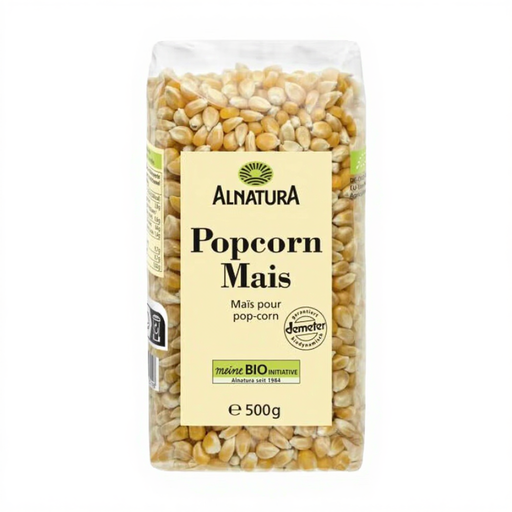
These popcorn kernels are an option if you want to prepare and season your own popcorn. Check the label on the specific pack to see whether it meets your organic requirements.
 No image available
For anyone who wants to prepare and season their own popcorn.
Pack contents: 500 g popcorn kernels. Check the organic certification and, if you have allergies, the information on the specific pack.
Check the organic certification on the specific product. The Verbraucherzentrale explains that packaged organic foods from the EU must carry the EU organic logo and state the responsible organic control body.
No. The brand name alone doesn’t prove that a product is organic. If you want to buy a particular Gut & Günstig popcorn product as organic, check its own label.
Choose popcorn kernels if you want to pop them yourself and decide what to add. Ready-made organic popcorn saves you the preparation, but may already contain sugar, oil or seasoning; always check the ingredients for the variety you choose.
Read the ingredients list and allergen information on the specific pack, including for popcorn kernels. The Verbraucherzentrale notes that food labelling includes information about ingredients and allergens; details for one variety don’t necessarily apply to others.