What should you look for when buying?
First, decide whether organic is essential for your choice and whether the pretzel is suitable for your child’s eating situation. Then compare the salt information and ingredients, making sure you’re comparing like with like on the nutritional and packaging information.
Organic crunchy pretzels from a bag
Suitable when: You’re looking for a ready-to-eat pretzel for a small, occasional portion and your child can chew its crunchy texture well.
Consider: An organic label doesn’t mean the pretzel is low in salt or that its hard texture is suitable for every toddler.
Organic pretzel dough piece to bake
Suitable when: You’d like a freshly baked pretzel and can fit defrosting and baking into your snack routine.
Consider: The Ditsch dough piece takes time to prepare. The separate salt sachet doesn’t mean the pretzel is salt-free without the salt topping.
| Criterion |
What to check when buying |
Who it matters most to |
| Salt and snack portion |
Salt per 100 g and the amount you’ll actually offer; compare nutritional values directly only when they use the same basis. |
If pretzels are an occasional addition to the snack plate, I want to keep the portion small and understand the salt content. This is a priority when buying for around 50% of consumers. |
| Organic certification, ingredients and allergens |
EU organic logo, organic control body code, and the ingredients and allergen information on the current pack. |
If you specifically buy organic and need to watch certain ingredients, you don’t want to rely on the front of the pack alone. This check takes priority for around 30% of consumers. |
| Texture and preparation |
Texture and piece size in relation to your child’s ability to chew; for dough pieces, also check the defrosting and baking steps. |
For my day-to-day routine, it matters whether a ready-to-eat crunchy pretzel is suitable or whether I want to bake one. This is the main buying criterion for around 20% of consumers. |
The Federal Centre for Nutrition advises using salt sparingly in food for toddlers. The consumer advice centre classifies salty nibbles as snacks. On texture, the Healthy Start – Young Family Network gives general advice about the choking risk posed by small, hard foods. Your child’s ability to chew and the eating situation are therefore also important considerations.
Brands and product ranges to consider
These examples show different types of pretzels and labelling. A brand alone doesn’t determine the salt content or whether a particular product is right for a toddler’s snack time.
Huober
The Bio Prinzess pretzel and Bio Schwäbische crunchy pretzel are packaged crunchy pretzels.
- EDEKA24 lists the organic control body code DE-ÖKO-001 on both product pages.
- EDEKA24 declares 6.4 g and 5.5 g of salt per 100 g respectively. Check for wheat and barley malt; the Schwäbische crunchy pretzel may contain traces of sesame.
Ditsch
The organic pretzel is sold as a pre-proved dough piece with a separate salt sachet and needs to be defrosted and baked.
- Ditsch provides ingredients, preparation instructions and nutritional information for the baked product.
- Ditsch lists 1.93 g of salt per 100 g of baked product; this figure isn’t directly comparable with information for packaged pretzels. It contains wheat and barley and may contain traces of lupin, mustard and soya.
EDEKA / Gut & Günstig
The Gut & Günstig salted pretzels are included here as an example of conventional packaged pretzels, not as an organic option.
- EDEKA24 provides ingredients and nutritional information for this specific product.
- EDEKA24 lists 4.5 g of salt per 100 g, wheat, and possible traces of sesame and milk. If you specifically want to buy organic, you’ll need a different product with the appropriate label.
Organic crunchy pretzels at Joybuy
This selection features two packaged organic pretzels for an occasional snack portion. Check the salt information on each pack and, before offering them, make sure the crunchy texture is suitable for your child’s ability to chew.
 No image available
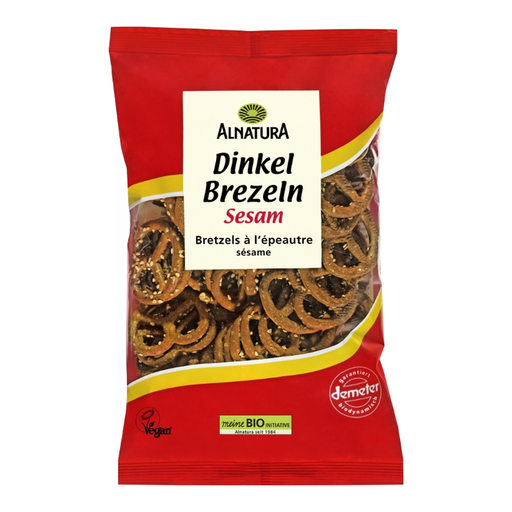
Alnatura organic spelt pretzels with sesame, 125 g
For a small, occasional portion from the bag, provided the crunchy texture is right for your child.
Spelt and sesame are already listed in the product name. Check the current pack for any other ingredients, allergen information and salt per 100 g.
View at Joybuy
 No image available
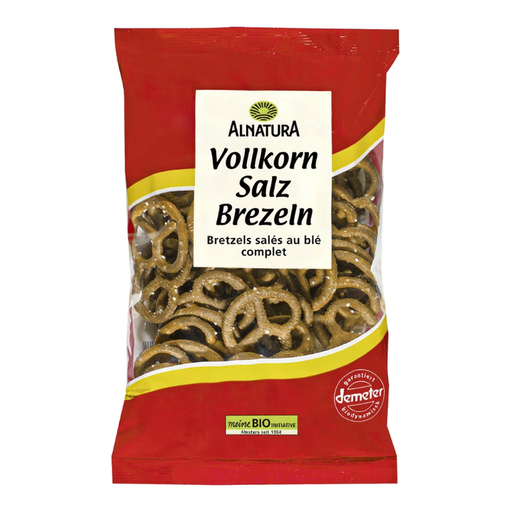
Alnatura organic wholegrain salted pretzels, 125 g
For a planned, occasional snack portion when you’re looking for a ready-to-eat crunchy pretzel that your child can chew well.
Read the full ingredients and allergen information on the current pack, paying particular attention to the sesame labelling, as well as the salt per 100 g.
View at Joybuy
Frequently asked questions
How can I identify a packaged organic pretzel?
Check the organic labelling on the pack, particularly the EU organic logo and the organic control body code. The Federal Ministry of Food and Agriculture explains that prepacked organic food from the EU which meets EU organic farming requirements must carry the EU organic logo, as of 1 July 2010. For the Huober products described here, for example, EDEKA24 lists DE-ÖKO-001.
Are organic pretzels an everyday snack?
You can’t tell from the organic label alone. It doesn’t mean that a pretzel is low in salt or that its texture is suitable for every toddler. The Federal Centre for Nutrition advises using salt sparingly in food for toddlers; the consumer advice centre also counts salty nibbles as snacks.
What should I look for in the texture?
Check whether your child can chew the particular pretzel and the pieces you’re offering, and stay with them while they eat. The Healthy Start – Young Family Network gives general advice about the choking risk posed by small, hard foods; it doesn’t specifically mention pretzels. So assess a crunchy pretzel based on its actual shape and hardness, not just your child’s age.
Which ingredients and allergens matter in the pretzels mentioned here?
Pay particular attention to the grains and any may-contain warnings on the specific pack. The Huober varieties described list wheat and barley malt; one may contain traces of sesame. Ditsch lists wheat and barley in its organic dough piece, which may also contain traces of lupin, mustard and soya. Sesame is already mentioned in the name of the spelt variety among the Joybuy products; check the current sesame labelling on the wholegrain salted pretzels particularly carefully.


