Which pretzel suits you?

Shoppers for whom organic certification is essential

If you only want to buy pretzels labelled as organic, start by checking the information on the specific pack. For relevant pre-packed organic food from the EU, the European Commission says the EU organic logo must be accompanied by the code of the control body and an indication of where the agricultural raw materials were sourced.

Shoppers with a freezer and an oven

If you’d like to bake several warm pretzels as and when you need them, a frozen pack could be a good option. REWE describes Herzberger organic pretzels as a pack of six unbaked, frozen dough pieces. Before buying, check that the quantity and preparation suit how much you’ll use.

Shoppers looking for a savoury snack on the go

If you want a pretzel you can eat without defrosting or baking, long-life salted pretzels are a different product type from pretzels that need baking. Check the salt content per 100 g and think about how much you’re likely to eat; for example, EDEKA24 lists 6,4 g of salt per 100 g for Huober Bio Prinzess pretzels.

What to look for when choosing

First, decide whether the pretzel must be certified organic and whether you’re after a warm pretzel or a long-life snack. Then compare pack size, storage, preparation and nutritional information within the product type that suits you.

What matters What to check Who it matters to
Organic labelling Check the EU organic logo, control body code and origin indication on the specific pack; for loose products, ask for proof of organic certification. If organic certification is essential to me, I want to be able to verify the labelling rather than infer it from the appearance or vegan recipe. For around 36% of shoppers, proof of organic certification is the main priority.
Pack size that suits you Compare the number of pretzels and pack weight with how much you’ll actually use; if you’re buying a larger quantity, consider how you’ll store it. I want a pack that won’t run out too soon or sit around for longer than I can use it. For around 29% of shoppers, getting the right quantity is the main priority.
Product type and preparation Distinguish between frozen dough pieces and ready-to-eat salted pretzels; read the defrosting and baking instructions for the pretzel you choose. If I want to keep pretzels in stock for a warm snack, I need to allow for freezer space and time to bake them. Around 21% of shoppers put having a supply on hand and preparation at the top of their list.
Salt and ingredients Compare salt per 100 g and per portion eaten; check the ingredients, allergens and any vegan labelling you need on the specific product. When choosing salted pretzels, I want to know how much salt is in my portion and whether the ingredients meet my requirements. For around 14% of shoppers, this is the most important consideration.

Common misconceptions

  • Assuming “vegan” means “organic”

    The fresh pretzel described by ALDI SÜD is labelled vegan, but not organic. These labels tell you about different things.

    If organic certification is essential, check the labelling on the specific product. For relevant pre-packed organic products from the EU, the European Commission says the control body code and origin indication must appear alongside the logo.

  • Treating pretzels for baking and pretzels for snacking as the same portion

    A pack of several pretzels to bake at home serves a different purpose from a small pack of long-life salted pretzels. Pack weight alone also won’t tell you whether you’ll use the whole amount.

    First decide which type you want, then choose a pack size that suits how much you’ll use.

    A larger pack of frozen pretzels takes up freezer space. If it stays there longer than planned, some may go unused.

  • Confusing organic certification with low salt

    Organic labelling doesn’t tell you how much salt a product contains. EDEKA24 lists 6,4 g of salt per 100 g for Huober Bio Prinzess pretzels; this figure applies to that specific salted snack, not to all organic pretzels.

    Read the nutritional information on the pack you choose and take into account how much you’ll eat. If the dough pieces come with salt separately, check the preparation instructions too.

  • Overlooking storage and allergen information

    Frozen dough pieces need to be stored and baked before eating. Ditsch’s organic dough piece is also labelled as potentially containing traces of lupin, mustard and soya.

    Before choosing a larger quantity, check the storage instructions, baking directions, ingredients and allergen information for the exact product.

Brands and retailers to consider

Herzberger

Organic pretzels to bake at home, for households that want to keep frozen dough pieces in stock and bake them when needed.

  • REWE describes Herzberger organic pretzels as a pack of six unbaked, frozen dough pieces.
  • You’ll need suitable freezer space and an oven for this product type.

Ditsch

Organic pretzel dough pieces for retailers and larger requirements.

  • Ditsch describes a pre-baked 110-g dough piece supplied with salt separately and baking instructions.
  • The pack size described is 80 pieces. For a household, the way you buy it, the storage space available and how much you’ll use all need to make sense.

Huober

Organic salted pretzels for a ready-to-eat snack rather than a warm pretzel to bake at home.

  • EDEKA24 describes Huober Bio Prinzess pretzels as a 125-g pack and lists the control body code DE-ÖKO-001.
  • The nutritional information lists 6,4 g of salt per 100 g; remember to consider how much you actually eat.

REWE

A retailer where you can compare specific organic pretzels for baking at home using their product information.

  • The listing for Herzberger organic pretzels includes details of ingredients, nutritional values, the organic control body and preparation.
  • Check the specific product listing for your area and make sure the pack size suits your needs.

ALDI SÜD

A retailer with a fresh pretzel described separately from its own-label organic range.

  • The fresh pretzel described is labelled vegan and can be eaten without baking.
  • This pretzel isn’t labelled organic. The retailer’s general own-label organic range doesn’t prove that this particular pretzel is organic.

Organic salted pretzels at Joybuy

These two Alnatura products are salted pretzels for a snack you can enjoy without baking. If you’re looking for warm pretzels to serve as a snack instead, choose a suitable pack for baking and check its storage and preparation instructions.
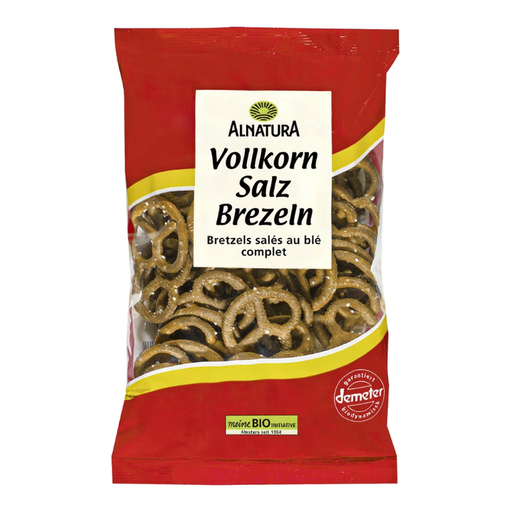
Alnatura organic wholegrain salted pretzels, 125 g

Alnatura organic wholegrain salted pretzels, 125 g

For a salted pretzel snack rather than a warm pretzel to bake at home; the pack contains 125 g. Check the ingredients and nutritional information on the specific pack if salt or allergens are important to your choice.

View at Joybuy
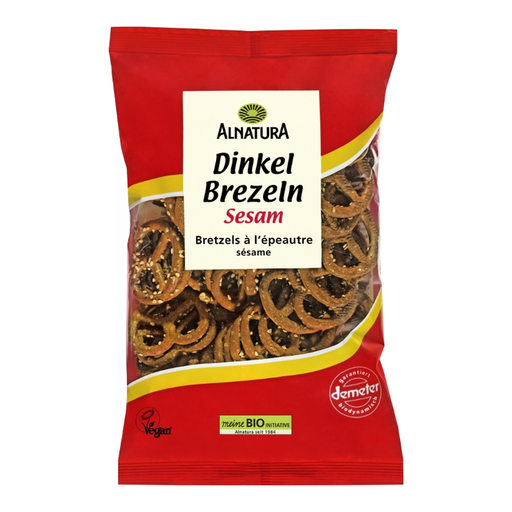
Alnatura organic spelt pretzels with sesame

Alnatura organic spelt pretzels with sesame

For shoppers looking for spelt pretzels with sesame as a snack instead of a warm pretzel to bake at home. Before buying, check the pack size and the ingredients, allergen and nutritional information for the specific product.

View at Joybuy

Frequently asked questions

How can I tell if a pretzel is organic?

For relevant pre-packed organic food from the EU, look for the EU organic logo, the control body code and an indication of where the agricultural raw materials were sourced. According to the European Commission, these details are part of the labelling. For loose products, ask for proof of organic certification for the specific item.

Is a fresh vegan pretzel automatically organic?

No. Vegan and organic describe different characteristics. The fresh pretzel described by ALDI SÜD is labelled vegan, but not organic. If organic certification is essential, check the labelling on the pretzel itself.

Can long-life salted pretzels replace pretzels for baking at home?

Long-life salted pretzels can be a good option for a snack that doesn’t need an oven, but they serve a different purpose from a warm pretzel to have with a meal. So choose the product type first, then check the pack size, storage and, where relevant, preparation time.

Does organic labelling tell me how much salt a product contains?

No. Check the nutritional information for the specific product to find out its salt content. EDEKA24 lists 6,4 g of salt per 100 g for Huober Bio Prinzess pretzels; the portion size also matters when working out how much salt you’ll eat.