If you want a grain-based snack with your coffee, consider an oat or cereal bar. For a fruitier recipe, compare date, fruit and nut bars; for a recipe with a stronger nut flavour, look at nut and seed bars. The exact variety is what matters: check its organic certification, ingredients, allergens and nutritional information per 100 g. “Organic”, “vegan” and “gluten-free” don’t answer these questions on their own.
Which details matter to you?
Organic-minded rail commuters
You want to buy a wrapped bar to have with your coffee, with clear organic certification. According to the Federal Ministry of Agriculture, Food and Home Affairs, the EU organic logo has been compulsory for pre-packaged organic food from the EU since 1 July 2010. Also look for the organic control body code and the stated origin of the ingredients.
Commuters with allergen or dietary requirements
If you’re looking for a vegan or gluten-free variety, or need to avoid certain ingredients, check the labelling on the individual bar. A vegan or gluten-free claim doesn’t tell you whether it contains almonds, cashews or peanuts.
Coffee drinkers looking for a small snack
You want something wrapped to eat on your commute or between trains, not a full breakfast. Oat, fruit and nut bars have different ingredient bases; the size, allergens and nutritional information for the specific variety also matter when choosing one.
What should you look for when buying?
Start by choosing an ingredient base that suits the kind of snack you want. Then check the organic certification and the details for the specific variety before comparing bars of different sizes.
Oat or cereal bars
A good fit if: You’d like a small, grain-based snack with your coffee; the dmBio Oat, Apple and Cinnamon Bar is one example.
Worth noting: This example bar contains gluten-containing cereals and nuts. Another dmBio oat and nut bar also contains honey, so the varieties aren’t interchangeable if you have dietary requirements.
Date, fruit and nut bars
A good fit if: You’re looking for a fruity recipe. REWE lists RAWBITE Vanilla Berries as vegan and gluten-free.
Worth noting: This particular RAWBITE variety contains almonds and cashews. Vegan and gluten-free doesn’t mean nut-free.
Nut or seed bars
A good fit if: You’d prefer a recipe with more nuts than oats. The EDEKA Bio Crunchy Nut Mix Bar contains peanuts, almonds and pumpkin seeds, among other ingredients.
Worth noting: The EDEKA example bar contains honey, peanuts and almonds. Its gluten-free and lactose-free labelling doesn’t change that.
| What to check | What to look for | Who it matters most to |
|---|
| Organic certification |
The EU organic logo, organic control body code and stated origin of the ingredients on the specific pack. |
When I’m deliberately buying an organic bar on the go, I want to be able to check its certification on the label rather than rely on the variety name. Around 33% of consumers put this proof first. |
| Allergens and dietary requirements |
The full ingredients list, highlighted allergens and any precautionary allergen statements; claims such as “vegan” or “gluten-free” apply only to the specific variety. |
If I have an allergy or follow a particular diet, the individual variety needs to meet my requirements, even if the front of the pack looks promising. Around 27% of consumers give this check priority. |
| Format for your journey |
Bar weight, single bar or multipack, and storage instructions. |
For a coffee break between trains, I want a bar I can take with me in a format that suits my commute. The format is the most important buying factor for around 20% of consumers. |
| Ingredients and nutrition |
Ingredient order, plus sugar, fat, protein and salt per 100 g; check fibre and per-portion information too if needed. |
If several varieties could work for me, I want to compare their recipes and nutritional information using the same basis. Around 20% of consumers put this first. |
Common selection mistakes
-
Assuming “organic” tells you about sugar or allergens
Organic certification relates to how food is produced; it doesn’t replace checking the recipe. Sugar and allergenic ingredients can still be important factors when choosing an organic bar.
Use the certification to identify organic options, then check the ingredients list, allergen information and nutritional values per 100 g.
-
Confusing “vegan” or “gluten-free” with “nut-free”
RAWBITE Vanilla Berries is labelled vegan and gluten-free, but contains almonds and cashews. These claims describe different characteristics of the same variety.
Every time you buy a bar, check the full ingredients list and allergen labelling on the specific pack.
-
Taking the variety name as the ingredients list
According to Lebensmittelklarheit, ingredients are listed in descending order by weight. A highlighted flavour or picture therefore doesn’t necessarily indicate the main ingredient.
Check the product name and, in particular, the first ingredients listed if you’re choosing a bar for its recipe base.
Brands to help you choose
These examples show how specific bar varieties differ; the details don’t automatically apply to every product from a brand.
dmBio
dmBio offers options to compare, including an oat, apple and cinnamon bar and a multipack of oat and nut bars.
- dm-drogerie markt’s product information lists the ingredients, allergens and nutritional values for these varieties.
- The varieties differ: the oat, apple and cinnamon bar is labelled vegan, while the oat and nut bar contains honey. Always check the allergen information for the specific product.
RAWBITE
RAWBITE Vanilla Berries is one example of an organic bar made with dates, berries and nuts.
- REWE lists this specific variety as vegan and gluten-free.
- Vanilla Berries contains almonds and cashews; check the allergen labelling for this variety.
EDEKA Bio
The Crunchy Nut Mix Bar is an example of a recipe containing peanuts, almonds, raisins, pumpkin seeds and honey.
- EDEKA describes this bar as gluten-free and lactose-free.
- It contains peanuts and almonds. Check the details on the pack for the specific variety and its availability at your local store.
REWE Bio und REWE-Riegelsortiment
The REWE fruit and cereal bar category has an organic filter and includes a range of different bar types.
- The filter can help you narrow down organic options before choosing a specific variety.
- Always check the product information and labelling on the pack for ingredients, allergens, nutritional values and local availability.
An oat-based bar at Joybuy
This oat-based bar could be a handy small snack to have with your coffee on the train. If you specifically want to buy organic, check the EU organic logo and organic control body code on the pack of the product you’re considering.
 No image available
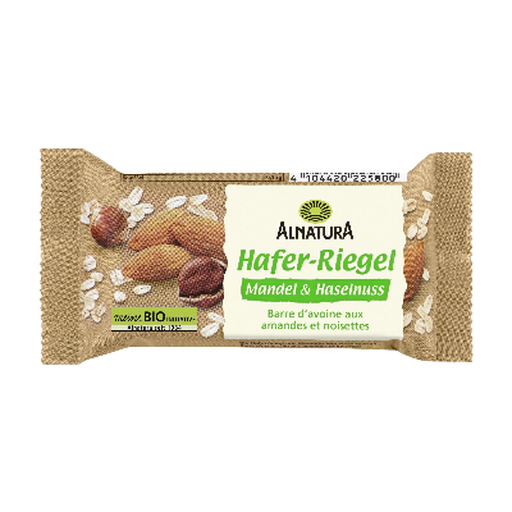
Alnatura Organic Almond & Hazelnut Oat Flapjack, 60 g
An oat-based option for a small snack with your coffee on the go, if an almond and hazelnut variety suits you.
The product name states that it weighs 60 g. For organic certification, check the labelling on the pack. If you have dietary requirements, read the full ingredients and allergen information.
View at Joybuy
Frequently asked questions
How can I identify an organic bar from the EU?
Look for the EU organic logo, the organic control body code and the stated origin of the ingredients. According to the Federal Ministry of Agriculture, Food and Home Affairs, the logo has been compulsory for pre-packaged organic food from the EU since 1 July 2010.
Does “organic” mean a bar is low in sugar?
No. Organic certification doesn’t tell you how much sugar a bar contains. Compare the ingredients lists and sugar values per 100 g in the nutritional information for the varieties you’re considering.
Are “vegan” or “gluten-free” enough if I have a nut allergy?
No, neither claim tells you whether a bar contains nuts. RAWBITE Vanilla Berries is labelled vegan and gluten-free but contains almonds and cashews. So check the allergen labelling and, if relevant, precautionary allergen statements on the specific pack.
How do I compare bars of different sizes?
Start by comparing the nutritional values per 100 g on the same basis. Then check the weight of each bar and, if shown, the values per portion, so you can relate the information to the bar you’ll actually take with you.
Can the Nutri-Score help me choose an organic bar?
If available, the Nutri-Score can help you compare similar products, but it doesn’t replace checking the ingredients list or nutritional information. The Verbraucherzentrale recommends comparing it only within the same product group or between foods with the same purpose.


