Parents looking for proof of organic certification
For packaged bars from the EU, they check for the EU organic logo and the organic control body code, rather than relying on the packaging design alone.


For days out during the school holidays, an organic snack bar is a suitable choice only if the specific variety meets your child’s age, ingredient preferences and any allergy requirements. For packaged organic products from the EU, check the EU organic logo and the organic control body code on the packaging. Then compare the ingredients and sugar information: neither ‘organic’ nor ‘no added sugar’ automatically means low in sugar.
For packaged bars from the EU, they check for the EU organic logo and the organic control body code, rather than relying on the packaging design alone.
They check the nutrition information and ingredients list, even when a bar is sold as an organic product or labelled ‘no added sugar’.
The details for the specific variety are what matter: age recommendation, ingredients, possible allergen traces and warnings about hard pieces can vary from one bar to another.
First, decide what the bar needs to offer your child. Then compare the nutrition information and portion size for the day out you have planned.
| Criterion | What to check | Especially important for |
|---|---|---|
| Organic labelling | For packaged organic bars from the EU, check the EU organic logo and organic control body code on the packaging. | If I specifically want to buy an organic bar for a day out, green packaging alone isn’t enough proof for me. Around 31% of consumers prioritise organic labelling when making this choice. |
| Sugar and ingredients | Compare the sugar per 100 g and per portion, as well as the ingredients list; don’t take ‘no added sugar’ to mean low in sugar. | When choosing a snack for my child, I want to know what’s in the bar and how much sugar a portion contains. This comparison is a priority for around 31% of consumers. |
| Allergens and age | Check the allergens, possible traces, age recommendation and warnings about hard pieces for the specific variety. | If a child is younger or has an allergy, the individual variety needs to meet their requirements. That’s why around 23% of consumers focus first on age and allergen information. |
| Portioning | Match the portion size and number of individually wrapped snacks to the days out you have planned. | For a day of travelling, I want to be able to pack snacks without having to divide them up. Easy portioning is the most important criterion for around 15% of consumers. |
The organic logo relates to how a product is produced, not its sugar content. The Verbraucherzentrale (German consumer advice centre) points out that children’s snacks can also contain a lot of sugar.
For suitable organic bars, also compare the sugar per 100 g and per bar.
This does not mean sugar-free or low in sugar. Freche Freunde’s organic Mango-Orange fruit bar is sold as having no added sugar; REWE still lists 27 g of sugar per 100 g.
Check the nutrition information and ingredients list together, rather than judging the product by the front of the pack alone.
These labels answer different questions. For its Apple-Strawberry Fruit Cream Bar, foodloose lists possible traces of peanuts, nuts, sesame and soya at dm, alongside the ‘vegan’ and ‘gluten-free’ labels.
If your child has an allergy, check the ingredients and trace warnings for each individual variety.
A bar sold as a children’s snack is not necessarily suitable for every age. For the foodloose Apple-Strawberry bar, dm recommends it for children aged 3 and over and warns that it may contain hard kernel pieces.
Before buying, read the age recommendation and warnings on the specific packaging.
The brand offers organic bars for breaks and days out, including a muesli and honey bar.
The brand makes organic fruit and cereal bars, including a Mango-Orange variety with spelt and oats.
The range includes fruit bars; for its Apple-Strawberry Fruit Cream variety, dm provides specific age and dietary information.
This own brand offers organic bars and slices; check the ingredients for the specific variety.
EDEKA sells organic fruit and cereal bars, including apple and banana varieties.
This selection includes a muesli bar and a fruit snack in multipacks for days out. Check the product format of the FruchtBar item particularly carefully: the name refers to a fruit pouch, while the other product details describe a biscuit bar.
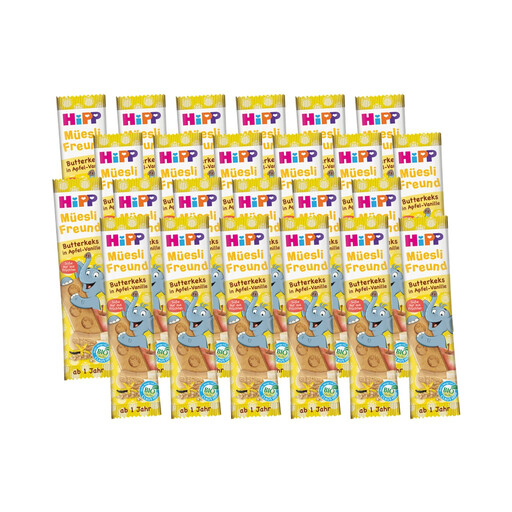 No image available
These individually portioned bars may be suitable for days out with children aged 12 months and over, provided the specific pack meets their needs.
If your child has allergies, check the ingredients and trace warnings. According to the product information, give only under supervision and not while the child is lying down or walking. To check its organic credentials, look for the EU organic logo and organic control body code on the pack.
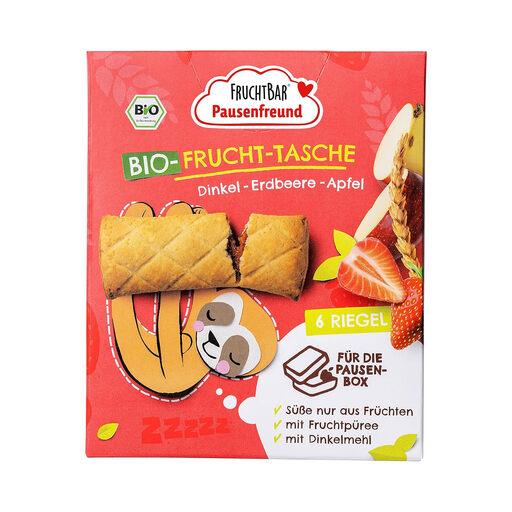 No image available
This multipack of six is designed as a portioned snack for days out with children aged 3 and over. Before buying, check the packaging to confirm whether the version on offer is a fruit pouch or a biscuit bar.
If sugar content is important to your choice, compare the nutrition information: ‘no added sugar’ does not mean low in sugar. If your child has allergies, check the ingredients and trace warnings on the specific pack; also look for the EU organic logo and organic control body code.
For packaged organic food from the EU, look for the EU organic logo and the organic control body code. Green packaging alone is not proof that a product is organic.
No, these claims mean different things. Compare the nutrition information per 100 g and per bar: REWE lists 27 g of sugar per 100 g for Freche Freunde’s organic Mango-Orange bar, which the brand describes as having no added sugar.
For each variety, check the allergens, trace warnings, age recommendation and warnings about texture. For example, dm recommends the foodloose Apple-Strawberry Fruit Cream Bar for children aged 3 and over, and lists possible allergen traces and possible hard kernel pieces.
No, organic labelling alone doesn’t tell you what ingredients a product contains or whether it’s suitable for a particular child. Choose a specific variety based on the packaging information, portion size and your needs for the planned day out; a bar is no substitute for a varied meal.