Holiday planners who prefer organic
If a recognised organic standard matters to you, check the packaging rather than relying on words such as “natural”. The Verbraucherzentrale explains the EU organic logo used on qualifying foods.


For sharing during the school holidays, an organic nut or nut-and-fruit mix could be a good option, provided the ingredients are suitable for everyone. Individually wrapped bars are another kind of snack, handy for breaks on the go. In either case, check the organic certification, ingredients, allergens, sugar and salt content, and how much will actually be eaten.
If a recognised organic standard matters to you, check the packaging rather than relying on words such as “natural”. The Verbraucherzentrale explains the EU organic logo used on qualifying foods.
For days out or breaks with children, pack size and individual portions can help you plan how much to bring. You can compare sugar and salt using the nutritional information per 100 g.
If you’re sharing a mix, the information on the specific pack must be suitable for everyone. Pay particular attention to the ingredients, highlighted allergens and any precautionary allergen warnings.
When choosing a snack for several people, first check which ingredients are suitable. Then compare the organic certification, nutritional information and pack format for the occasion.
| Criteria | What to check | Who it matters to |
|---|---|---|
| Organic certification | Check the EU organic logo and organic control body code on the pack. According to the Verbraucherzentrale, the logo is compulsory for packaged organic foods produced within the EU. | When I’m specifically shopping for organic food for the holidays, I want to be able to identify the organic standard on the product. For around 37% of consumers, this certification is a key factor in their choice. |
| Sugar, salt and quantity | Compare sugar and salt per 100 g, and also consider the pack size and planned portion. | When buying snacks for children, I want to gauge how much of a bar or mix will actually be eaten. Around 27% of consumers prioritise nutritional values and portion size. |
| Allergens | Check the ingredients, highlighted allergens and any precautionary allergen warnings on the specific pack you’re buying. | When several people are sharing, I need to check that the ingredients are suitable for everyone before handing the snack around. For around 18% of consumers, this check takes priority. |
| Pack format | Check the net weight and number of individual portions: a multipack of bars is more convenient to take with you than a sharing bag. | For an individual break, I want something I can pack easily; for sharing, the quantity should be easy to divide. Around 18% of consumers choose mainly on the basis of this format. |
Organic certification describes the production standard, not the nutritional values. For example, the Bio Knusperriegel Nussmix listed by EDEKA contains 26.7 g of sugar per 100 g.
For sweet and savoury options, compare the nutritional information per 100 g and take into account how much is likely to be eaten.
According to REWE, its REWE Bio Nuss-Mix contains cashews, almonds, hazelnuts and peanuts. Even with an organic product, the ingredients must be suitable for everyone sharing it.
Check for known allergies before you shop, then read the ingredients and precautionary allergen warnings on the specific pack.
Terms such as “natural”, “vegan” or “baked” don’t mean the same thing as organic certification.
If organic certification is important to you, check for it on the product itself, separately from its other features.
These examples give you an idea of the different types of snack available. A brand name alone doesn’t tell you the ingredients or certification of an individual product.
REWE lists both nut mixes and a cashew and cranberry mix under REWE Bio.
The EDEKA Bio Knusperriegel Nussmix is an example of an individually portioned bar rather than a loose mix.
Lidl describes a range of organic products; when choosing a snack mix, the details of the individual product are what matter.
According to its own range overview, Lorenz offers nut-and-fruit snacks as well as classic savoury snacks.
According to its own range overview, funny-frisch offers a variety of savoury snacks, including crisps, crackers and pretzel sticks.
These bars are options for individual breaks on the go, not loose snack mixes to share. If organic certification matters to you, check it alongside the ingredients and allergen information on the specific pack.
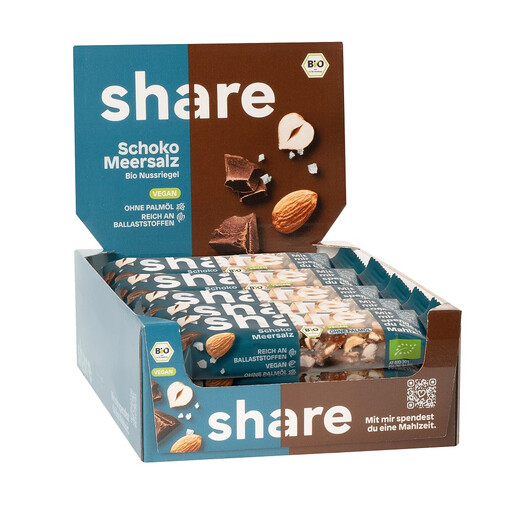 Image unavailable
The 15 bars, each weighing 35 g, are easy to plan for individual holiday breaks. If you have a known allergy, check the ingredients and precautionary allergen warnings on the pack before buying. You should also check the organic certification and salt content on the product.
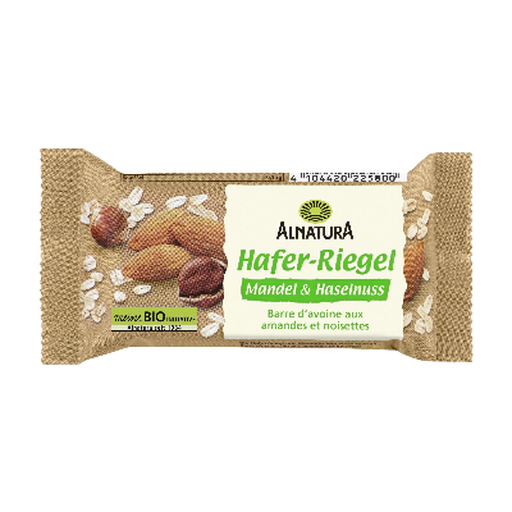 Image unavailable
This 60 g oat and nut bar is a single-serve option to take with you, rather than a sharing mix. The described variety contains almonds and hazelnuts; if you have an allergy or intolerance, check the full details on the pack. If organic certification is important to you, check the product labelling too.
Check for the EU organic logo and the organic control body code on the pack. According to the Verbraucherzentrale, the EU organic logo is compulsory for packaged organic foods produced within the EU; a term such as “natural” is not a substitute for this certification.
No. On its own, the organic logo doesn’t tell you how much sugar or salt a snack contains, or how much will be eaten. Compare the nutritional information per 100 g and plan the portion to suit the occasion.
First, check whether the ingredients are suitable for everyone sharing the snack. Read the ingredients list, highlighted allergens and any precautionary allergen warnings on the specific pack.
This warning doesn’t confirm that the named allergen is actually present. However, as the Lebensmittelverband Deutschland explains, its presence cannot be ruled out with certainty. If you have a known allergy, the warning should not be taken as clearance to eat the product.