An organic snack may be suitable as a supervised addition to baby-led weaning, provided its age guidance, shape and ingredients are right for your child; the organic logo alone cannot answer these questions. A snack for nibbling is not a substitute for a planned solid-food meal either: according to Netzwerk Gesund ins Leben, the quality of a child’s diet depends on what is offered and what they actually eat.
Who should take care when choosing?
Parents thinking about their child’s ability to eat
You’re looking for an occasional snack to nibble and want to check first that the age guidance and shape are right for your child. You should also consider the guidance on sitting upright and eating under close supervision, as well as the allergen labelling.
Parents checking organic status and ingredients
You want clear organic labelling, but you know it doesn’t mean that a product is suitable for your child to eat. As well as looking for the organic logo, you compare the ingredients and nutritional information, particularly the sugar and salt content per 100 g.
Families looking for a snack to take out and about
You need a handy snack between meals and want to decide when a solid-food meal would be a better choice. It’s not just the individual snack that matters, but also the rest of the solid foods you offer.
What should you look for when buying?
First, decide whether you’re planning a small snack or a meal. If you’re choosing a packaged snack, check the age guidance and how it should be eaten, then look at the ingredients and nutritional information.
| What to consider |
What to check when buying |
Who it matters to |
| Age and how it should be eaten |
Check the age guidance and advice on the product’s shape; plan for supervision and sitting upright. |
If my child is nibbling independently, I need to be able to judge whether the shape is right for their ability to eat. This is a priority for around 42% of consumers. |
| Organic status, ingredients and nutritional information |
Look for the EU organic logo and check the ingredients list; compare sugar and salt in the nutritional information per 100 g. |
I want to be able to verify organic status without assuming anything about the sugar content or suitability as a solid food. Around 33% of consumers say this is their main priority. |
| Role in everyday life |
Decide whether the snack is for a little something on the go or is intended to be part of a planned meal. |
I need something handy for when we’re out and about, but I don’t want it to replace a solid-food meal. For around 25% of consumers, this is the most important reason for buying. |
Common mistakes when choosing
-
Assuming organic means the product is suitable to eat
According to the European Commission, the EU organic logo indicates certification by an approved control body. It doesn’t tell you whether a snack is suitable for your child’s age or ability to eat it.
Check the age guidance, advice on how to eat the product and its ingredients separately from its organic labelling.
-
Confusing “no added sugar” with a low sugar content
A claim about added sugar doesn’t replace the information about the product’s total sugar content in the nutritional table.
Read the full ingredients list and, when comparing similar products, check the “of which sugars” figure per 100 g.
-
Offering snacks to nibble without close supervision
The product pages for the baby snacks in question advise that children should not be left unattended while nibbling. An age recommendation doesn’t remove the need for this precaution.
Make sure your child is sitting upright and supervise them closely; also follow the guidance on the packaging.
-
Choosing an adult snack mix as a snack for your baby
A short ingredients list or natural-looking product is not an age recommendation. For ready-made products for infant feeding, Netzwerk Gesund ins Leben recommends avoiding added salt and a strongly sweet taste.
Instead of choosing from the adult snack category, look for a product specifically intended for babies and check its age guidance, shape, ingredients and advice on how to eat it.
Brands to help you choose
REWE
REWE has a dedicated category for baby and children’s snacks, with a range of product types, including organic options.
- The category can make it easier to find products with specific age guidance.
- Being listed as a baby snack doesn’t replace checking the shape, ingredients, nutritional information and safety advice for each individual product.
Lorenz
Lorenz markets Snack-Hits as a snack mix for social occasions, not as a food for infants.
- The mix offers a variety of nibbles for adults.
- According to Lorenz, Snack-Hits contains 2.1 g of salt per 100 g. For a baby-led weaning snack, questions about age and how it should be eaten still need to be answered by choosing a product intended for that purpose.
funny-frisch
funny-frisch offers Chipsfrisch gesalzen, a salted potato snack.
- Chipsfrisch gesalzen lists potatoes, sunflower oil and table salt as its ingredients.
- A short ingredients list doesn’t mean the product is suitable for infant feeding; it isn’t marketed as a baby snack with age guidance and advice on how to eat it.
Organic snacks on Joybuy
This selection includes packaged organic snacks to nibble, biscuits and cereal bars for the age groups stated. They should be treated as an occasional addition, not as a replacement for a solid-food meal. Check the shape, ingredients and advice on how to eat each product individually.
 No image available
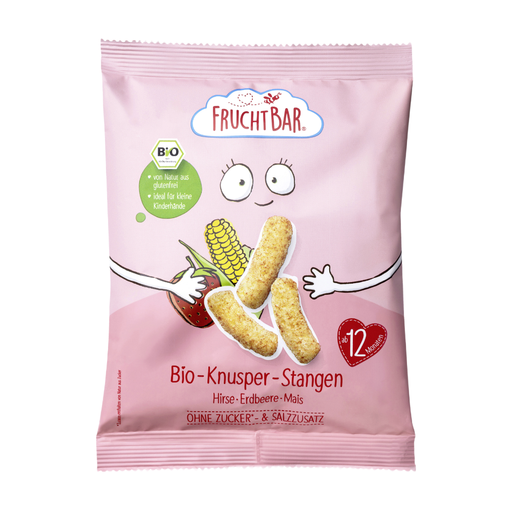
FruchtBar Organic Crispy Sticks Millet & Strawberry, 30 g
A snack to nibble if you’re looking for sticks as an occasional addition. The product name lists millet and strawberry, and the pack size is 30 g. Before offering them to your child, check that the shape and age guidance are suitable, and supervise them while they eat.
View on Joybuy
 No image available
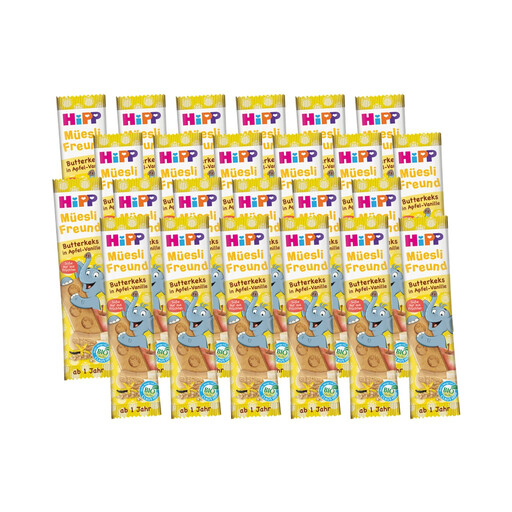
Hipp Organic Muesli Bars Butter Biscuits in Apple-Vanilla, from 12 months, 24 x 20 g
These individually portioned cereal bars may be suitable as a snack for children aged 12 months and over, provided the way they should be eaten is right for your child. According to the product name, the pack contains 24 bars of 20 g each. Check the ingredients and sugar content per 100 g when choosing, and make sure your child is supervised closely while eating.
View on Joybuy
 No image available
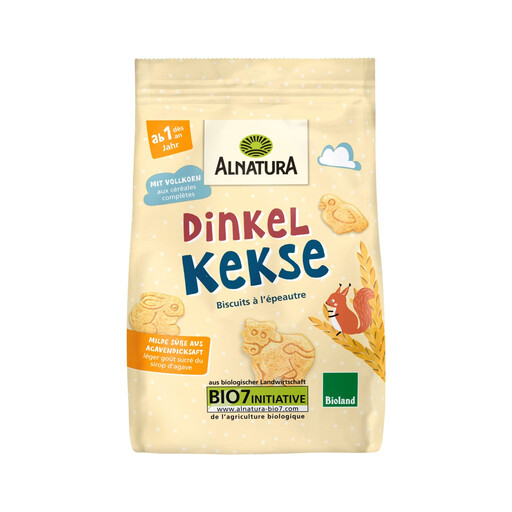
Alnatura Organic Spelt Biscuits, from 1 year, 125 g
According to the product name, these organic spelt biscuits are intended for children aged 1 year and over; the pack contains 125 g. If you’re considering biscuits as an occasional snack, check the ingredients, allergen information and nutritional details as well as the age guidance. Don’t leave your child unattended while they nibble.
View on Joybuy
 No image available
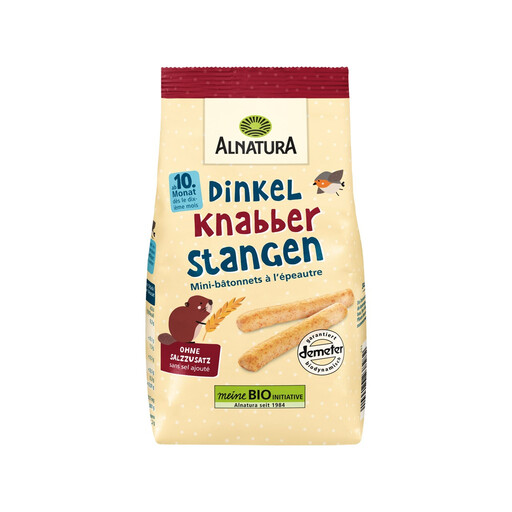
Alnatura Organic Spelt Snack Bars, from 10 months, 80 g
According to the product name, these organic spelt snack bars are intended for children aged 10 months and over; the pack size is 80 g. Check the packaging to find out how the bars should be eaten and whether their shape is right for your child’s ability to eat. Also check the ingredients and allergen information, and make sure your child is supervised closely while eating.
View on Joybuy
Frequently asked questions
Is an organic logo enough to make a snack suitable for baby-led weaning?
No. The organic logo alone doesn’t tell you whether a product is suitable for a particular age or how it should be eaten. The European Commission describes the EU organic logo as a mark of certification by an approved control body. Also check the product-specific guidance, ingredients and nutritional information.
Can an organic snack to nibble replace a solid-food meal?
A snack to nibble shouldn’t be planned as a meal replacement just because it has organic labelling. According to Netzwerk Gesund ins Leben, with baby-led weaning the quality of a child’s diet depends on the food offered as a whole and what the child actually eats. If your child eats only solid foods, the network recommends discussing this individually at your paediatric practice.
Why isn’t a salty adult snack mix an easy alternative?
An adult snack mix doesn’t include age guidance or advice on how babies should eat it. Lorenz states that Snack-Hits contains 2.1 g of salt per 100 g. By contrast, Netzwerk Gesund ins Leben recommends avoiding added salt in ready-made products for infant feeding.
What does “no added sugar” tell you about a baby snack?
It doesn’t tell you how much sugar the finished product contains overall. Read the ingredients list and, when comparing similar snacks, check the “of which sugars” figure in the nutritional information per 100 g.


