Parents of younger party guests
If toddlers or younger pre-schoolers will be eating, age guidance, an appropriate snack shape and supervision at mealtimes all matter. The Healthy Start in Life network advises against giving whole nuts to toddlers.


If toddlers are joining the celebrations, age-labelled organic corn or millet snacks are a more sensible place to start than an open mix containing whole nuts: the Healthy Start in Life network warns that whole nuts pose a choking risk for toddlers. Then check the organic certification, ingredients and allergen information on every pack. Even snacks labelled for a particular age should only be eaten under supervision.
If toddlers or younger pre-schoolers will be eating, age guidance, an appropriate snack shape and supervision at mealtimes all matter. The Healthy Start in Life network advises against giving whole nuts to toddlers.
You want to check the organic certification on the specific product and compare the ingredients, nutritional information and allergen advice for different snacks.
If children of different ages are invited, or you need to take allergies into account, serving different snacks separately and keeping the original packaging makes it easier to hand them out.
First, check the guests’ ages and any known allergies. Then compare the labelling on each organic product and plan how you’ll serve the different varieties separately.
| Criteria | What to check | Who it matters most to |
|---|---|---|
| Age and allergens | Check the age and serving guidance, ingredients list and precautionary allergen information. Don’t offer whole nuts to toddlers. | If younger children will be eating or allergies are known, I want to choose a snack shape that’s suitable for those guests. Around 40% of consumers prioritise suitability for age and allergens. |
| Organic certification and ingredients | Look for the EU organic logo and organic control body on the product; compare the ingredients and nutritional information per 100 g. | I don’t want to mistake claims such as “natural” for organic certification, and I want to be able to check the recipe before buying. For around 30% of consumers, verifiable organic certification and the ingredients take priority. |
| Serving and portioning | Check the pack size and storage instructions, and decide how you’ll keep the different varieties separate when serving them. | When catering for a group, I want to be able to serve snacks without losing track of the ingredients in open mixes. Around 30% of consumers consider easy, separate serving their top priority. |
A name such as “Naturals” or a claim about protein and fat doesn’t, by itself, tell you whether a particular snack is certified organic.
If organic certification is a must, check the EU organic logo and organic control body on the product packaging. The consumer advice centre explains these labels for packaged organic food.
According to the Healthy Start in Life network, whole nuts pose a choking risk for toddlers. With a shared bowl, it can also be harder to identify which ingredients are suitable for each child.
Don’t offer whole nuts to toddlers. Check with parents or carers about any known allergies, and keep different snacks separate with their original packaging.
An organic own-label brand doesn’t tell you which ingredients, precautionary allergen statements or age guidance apply to a particular snack.
Use the brand as a starting point, but make your decision based on the labelling of the specific product you plan to buy and serve.
An organic snack is still just a snack, and won’t replace planning the rest of the food and drinks for the party.
Make snacks part of your spread, and plan the rest of the food and drink around the ages and needs of the children you’ve invited.
These examples show a range of product lines and labelling. The specific pack will tell you whether a snack is suitable for your guests.
Organic own-label brand, with REWE Bio Baby Mais-Hirse-Flips as an example.
Organic own-label brand offering maize sticks that EDEKA describes as suitable from 12 months.
Children’s snack range featuring Organic Crunchy Sticks Colourful Vegetable Mix in a 30-g pack.
ALDI SÜD’s organic own-label brand, which can be a starting point when looking for packaged party snacks.
An organic range that offers another way to search for individual snacks.
The Naturals range illustrates the difference between a product name and organic certification.
The Protein Chips range is used here to highlight the difference between nutritional information and organic claims.
These corn and millet snacks could make a handy packaged addition to your party buffet. Before buying, check that the age guidance and allergen information suit the needs of the children you’ve invited.
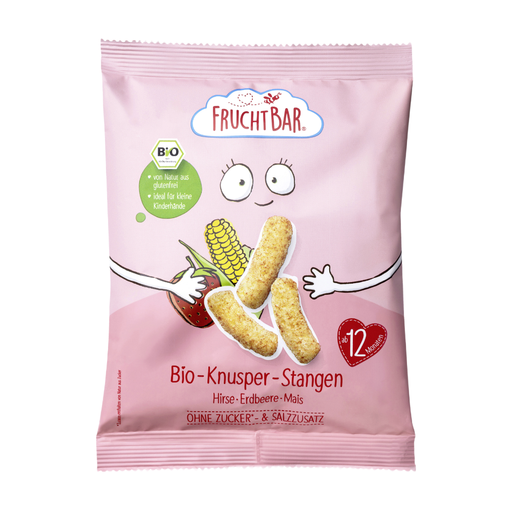 No image available
For guests aged 12 months and over, the age guidance in the product description is a useful starting point. Children should eat the sticks under supervision and not while lying down. If anyone has a known allergy, check the ingredients and allergen information on the pack.
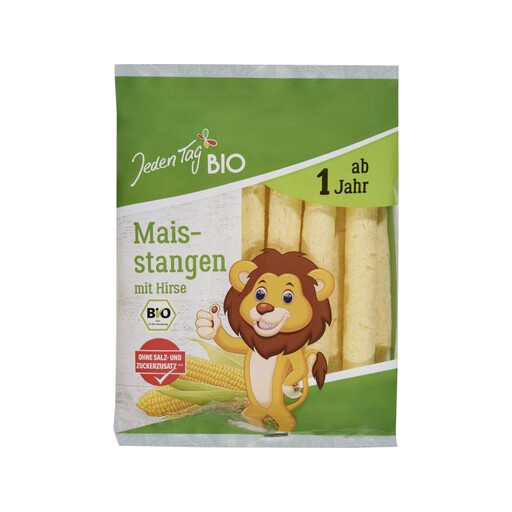 No image available
These corn and millet puffs are a packaged snack option for your buffet. Before serving, check that the age guidance and allergen information on the pack are suitable for your guests. The product description says children need to be supervised while eating them because of the choking risk.
Check the EU organic logo and the organic control body details on the pack. The consumer advice centre explains these labels for packaged organic food; words such as “natural” are no substitute.
As the Healthy Start in Life network explains, you shouldn’t offer whole nuts to toddlers because of the choking risk. If you’re planning to serve nuts to older guests, check for known allergies with their parents or carers beforehand and keep the varieties separate.
No. It doesn’t tell you whether the product is organic, or whether it’s suitable for a particular age or allergy. Also check the labelling and ingredients of the specific product. For example, EDEKA describes its organic maize sticks as having “no added salt”.
Read the ingredients list and any precautionary allergen information on every pack before serving the snacks. If a child has a known allergy, check with their parent or carer which products are suitable, and keep the packs to hand when serving the snacks separately.
Check the best-before date and storage instructions on the pack. The German Food Federation explains that, for unopened products stored as directed, a best-before date is not an automatic use-by date.