What should you look for when buying?
When choosing organic tortilla chips for a post-workout snack, first decide whether organic certification, nutritional values or ingredient suitability matters most to you. Then compare the details for the specific varieties on the same basis.
| Criteria |
What to check |
Who it's important for |
| Organic certification |
Check the EU organic logo, the inspection body details and the ingredients of your chosen variety. |
If I'm specifically looking for organic tortilla chips, I want to be able to check the certification on the product. For around 42% of shoppers, this organic certification is a priority when choosing. |
| Nutritional values and the role of the snack |
Compare protein, carbohydrates and fat per 100 g, and take your planned portion into account. |
After my workout, I want to know whether the chips are just the crunchy part of my snack or whether I need to plan for protein separately. This nutritional consideration is the main buying criterion for around 33% of shoppers. |
| Ingredients and suitability |
Read the current ingredients and allergen information; if needed, compare salt per 100 g too. |
If I need to avoid certain ingredients or allergens, I need details for the specific variety rather than a general statement about the brand. Around 25% of shoppers focus primarily on suitability when choosing. |
Brands and products to help you choose
The details below relate to individual varieties, not a brand's entire range. Chio and Lorenz help to put things in perspective: not every corn-based or spicy snack is an organic-certified tortilla chip.
REWE Bio
The REWE Bio salted tortilla chips considered are an organic corn chip variety sold in a 125-g pack.
- REWE lists corn, sunflower oil and sea salt as ingredients, with 6.5 g of protein and 0.8 g of salt per 100 g.
- Possible traces of gluten and milk are listed for the variety considered.
biozentrale
The organic sea salt tortilla chips considered are another organic corn chip variety sold in a 125-g pack.
- The ingredients listed by REWE include 77% organic corn flour and 1% sea salt; the variety contains 6.7 g of protein per 100 g.
- This variety contains 1.2 g of salt per 100 g and may contain traces of soya.
HEIMATGUT
The organic sea salt Tortilla Rolls considered are roll-shaped rather than traditional chips.
- HEIMATGUT lists organic corn flour, organic sunflower oil and sea salt, and describes the variety as vegan and gluten-free.
- The manufacturer lists 26 g of fat and 6.0 g of protein per 100 g, and says the product may contain traces of soya.
Chio
Chio Tortillas Salted is included here as a corn tortilla comparison if organic certification isn't essential to your choice.
- EDEKA24 lists 5.2 g of protein and 1.3 g of salt per 100 g for the Salted variety considered.
- Unless the specific pack carries the relevant certification, don't consider this variety an organic option.
Lorenz
Lorenz Crunchips Burrito Style are spicy potato crisps, not tortilla chips.
- This variety can help you distinguish tortilla chips from other types of spicy snack.
- A Mexican-inspired seasoning doesn't make a product a tortilla chip or mean that it's organic.
A suitable snack option at Joybuy
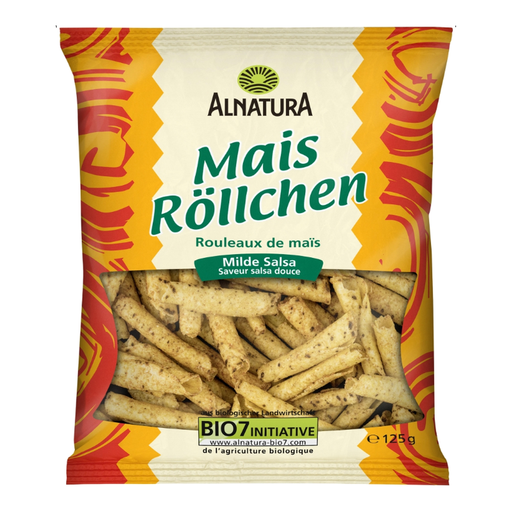
Joybuy features an organic corn snack in a roll shape here. If you're specifically looking for flat tortilla chips, bear this difference in mind.
 No image available
Alnatura Organic Mild Salsa Corn Rolls, 125 g
If you're looking for an organic corn snack with a mild salsa flavour after your workout, these rolls could be a good option.
The 125-g pack is labelled Corn Rolls, not specifically tortilla chips. Check the pack for the latest ingredients, allergen information and nutritional values before choosing.
View at Joybuy
Frequently asked questions
How can I tell if tortilla chips are organic?
For packaged tortilla chips, look for the EU organic logo and the organic details for the specific variety, including the inspection body. According to the European Commission, the logo can only be used on certified products. For processed foods, at least 95% of the agricultural ingredients must be organically produced, and other conditions must also be met.
Are organic tortilla chips enough as a post-workout protein snack?
If you're specifically planning to include protein in your snack, don't rely on the chips considered here alone. REWE, biozentrale and HEIMATGUT list 6.0 to 6.7 g of protein per 100 g for the organic tortilla products mentioned here; consider another suitable food and the rest of your meal too.
Are organic tortilla chips automatically vegan and gluten-free?
No. Those claims apply only to varieties labelled accordingly, and don't answer every question about allergens. HEIMATGUT describes the organic Tortilla Rolls considered as vegan and gluten-free, but says they may contain traces of soya; REWE Bio lists possible traces of gluten and milk for the variety considered. If necessary, check the current information on the specific pack.
Why should I read the pack if the ingredients are listed online?
The current ingredients and allergen information for the specific variety you're buying are what matter. The Verbraucherzentrale identifies this information as an important part of food labelling, so check the pack against your requirements, especially if you need to avoid allergens.


