
Lieferung heute & morgen

Qualitätsgarantie

Willkommens-Angebote freischalten: KOSTENLOSE Lieferung | Bis zu 80 % RABATT | Kostenlose 30-Tage-JoyPlus-Testphase
App herunterladen
An organic white wine can be a great choice for dinner, celebrations, or stocking up your own collection. Even so, it pays to take a close look at the label and product details. Terms like "natural", "sustainable" or "vegan" are used differently across the wine trade, and on their own they don't tell you anything about taste, certification or ingredients.
A wine cannot be considered organic simply because the label uses words like "natural" or "environmentally conscious". Look for the EU organic logo, a control body number, or a clear statement about organic production. For imported wines, national control codes may be used, for example a code like CL-BIO-001.
Certification mainly relates to how the grapes are grown and the methods permitted. It is not an automatic guarantee of a particular taste or level of sustainability.
A vegan white wine is made without animal-derived fining agents. However, this does not mean it is free from sulphites, stabilisers, or other permitted oenological aids and additives. You should therefore also check the product information for allergens. Some of the wines mentioned here contain sulphites.
If you are buying vegan wine, also look for clear labelling. "Vegetarian" and "vegan" are not automatically the same thing.
"White wine" only describes the colour of the wine. A dry organic white wine usually contains less residual sugar than an off-dry wine and often tastes more acidic. An off-dry white wine can feel softer and more approachable due to its higher residual sugar. If you are buying wine to keep in stock, also bear in mind that an organic white wine 6-bottle case contains 4.5 litres in total. For occasional drinking, a single bottle or a smaller pack might be more practical.
Check whether the product page mentions an organic certification, the country of origin and, if possible, the region. For example, the Landlust Riesling-Grauburgunder states that it is produced according to EU organic regulations and comes from Germany and Rheinhessen. The Miguel Torres Andica Sauvignon Blanc lists Chile as the country of origin and the control number CL-BIO-001.
Knowing the origin helps you place the wine, but it doesn't replace tasting it. Climate, grape variety, winemaking style and vintage can all affect the result.
The grape variety is a practical filter for narrowing down your choices:
Alongside taste, consider the alcohol content, bottle size and storage conditions. The 6-bottle cases mentioned each contain six 0.75-litre bottles. The alcohol content varies by product, for example 11.5%, 12%, 12.5%, 13.5% or 14% ABV.
Unopened bottles should be stored in a cool, dry place away from direct sunlight. Once opened, white wine should be kept in the fridge and consumed within about three to five days, depending on the manufacturer's instructions. A 6-bottle case is practical for a party; for a household with low consumption, think realistically about how much you actually need.
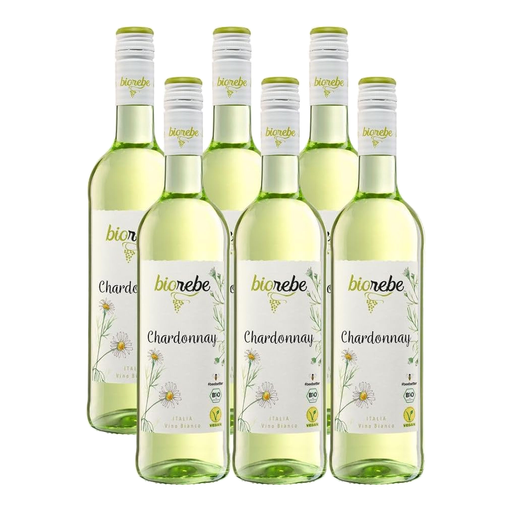
Why this product suits the profile: This dry Chardonnay comes in a bulk pack of six 0.75-litre bottles and is labelled as both organic and vegan white wine. The product details list Italy as the country of origin.
The grape variety, sweetness level, pack size and ingredients are clearly stated in the product data. This makes it easier to compare this wine with other dry options before buying.
Organic and vegan certification; six bottles; 71 kcal and 1.2 g carbohydrates per 100 ml according to the product information.
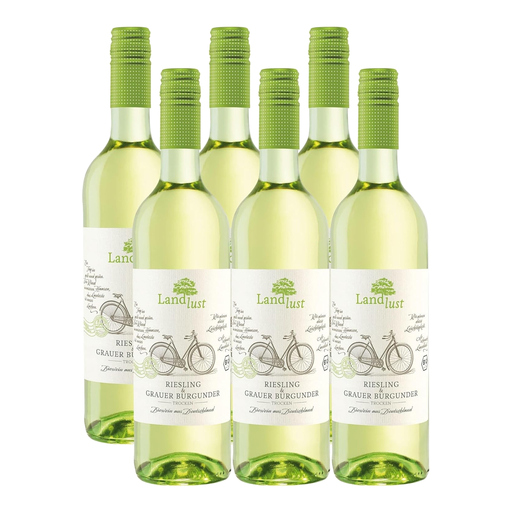
Why this product suits the profile: The blend of Riesling and Pinot Gris is labelled as dry, vegan and EU organic certified. At 12% ABV, this wine is suitable for meals with cheese, pasta or salads.
The EU organic label, grape varieties and German origin are all documented. This reduces the uncertainty that can come from general sustainability claims.
EU organic certified and vegan; six bottles with a total volume of 4.5 litres; stated food pairing recommendations.
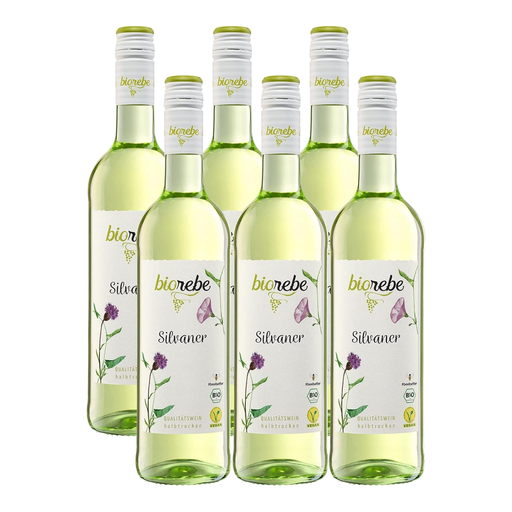
Why this product suits the profile: This off-dry Silvaner is labelled as an organic and vegan white wine from Germany. The style suits buyers who are deliberately looking for a milder sweetness than a dry wine offers.
The term "semi-dry" and the residual sugar value of 1.3 g per 100 ml are stated. Buyers therefore don't have to rely solely on vague terms like "mild".
11.5% ABV; six bottles; clear information about organic origin, vegan suitability and sulphites.
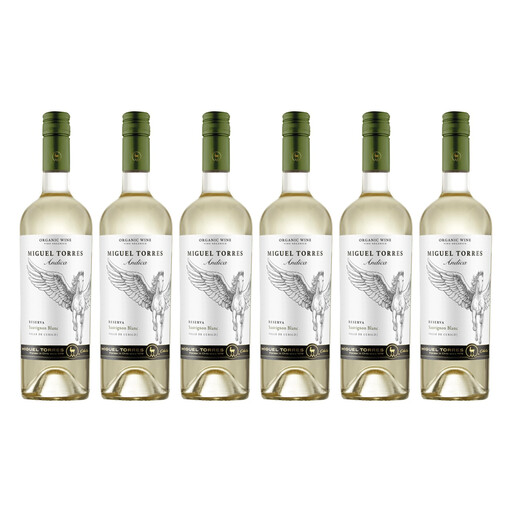
Why this product suits the profile: According to the product details, this dry Sauvignon Blanc comes from Chile's Valle Central, is made from 100% Sauvignon Blanc, and is described as using organic and sustainable growing practices.
Country of origin, region, grape variety percentage, organic control number and alcohol content are all stated. This information makes the term "sustainable white wine" easier to verify.
Dry style; six 0.75-litre bottles; stated serving temperature of 8 to 10 °C and food pairing recommendation for fish and seafood.
We have put together a complete, regularly updated list of products that fully meet these strict selection criteria and the safety regulations in force in the EU.
No. Organic and vegan describe different characteristics. Organic refers to ecological production according to the relevant regulations. Vegan means that no animal-derived fining agents were used during production. Therefore, check both labels separately. Sulphites can also be present in vegan organic white wine.
Once opened, white wine should be resealed and stored in the fridge. Depending on the product information, it is best consumed within about three to five days. Temperature, contact with oxygen and the amount of wine left in the bottle all affect how long it keeps.
A 6-bottle case contains six 0.75-litre bottles. This is suitable for regular personal enjoyment, dinners or parties. If you only drink wine occasionally, first think about how much you actually use. Alcoholic drinks are not intended for children and young people; alcohol should be avoided during pregnancy.