
Lieferung heute & morgen

Qualitätsgarantie

Willkommens-Angebote freischalten: KOSTENLOSE Lieferung | Bis zu 80 % RABATT | Kostenlose 30-Tage-JoyPlus-Testphase
App herunterladen
Finding the right wine that not only tastes great but also meets criteria like organic farming and vegan production can be overwhelming. The growing number of options doesn't always make it easy to come to an informed decision. This article serves as a guide. We present a selection of organic wine cases based on objective features like certification, origin, and grape variety to help simplify your choice.
To make the right choice, some basic information is helpful. The following points provide clear guidance for your next online purchase.
When you're buying organic wine, the EU organic logo (a stylised leaf made of stars on a green background) is a reliable indicator. It certifies that the grapes were grown according to the strict guidelines of the EU's organic regulation. This includes, among other things, avoiding synthetic chemical pesticides and fertilisers. Compliance with these standards is regularly monitored.
An organic seal alone does not guarantee that a wine is also vegan. In conventional winemaking, animal-based aids such as gelatine, casein (milk protein), or egg whites are often used to clarify and stabilise the wine (a process called fining). A wine declared as vegan wine completely avoids such substances. Instead, mineral alternatives like bentonite (a type of clay) or plant-based proteins are used, or the wine clarifies itself through extended ageing. A vegan wine case offers the assurance that all included wines meet this standard.
A case of 6 wine bottles offers several practical advantages. Firstly, the price per bottle is often more affordable than buying them individually. Secondly, a bulk wine pack ensures you always have a suitable wine on hand for various occasions—whether it's for a dinner with friends or a relaxing glass after work. Furthermore, it reduces packaging material compared to buying six individual bottles.
Here you will find a selection of wine cases that are certified both organic and vegan. The descriptions are based on manufacturer information and objective product characteristics.
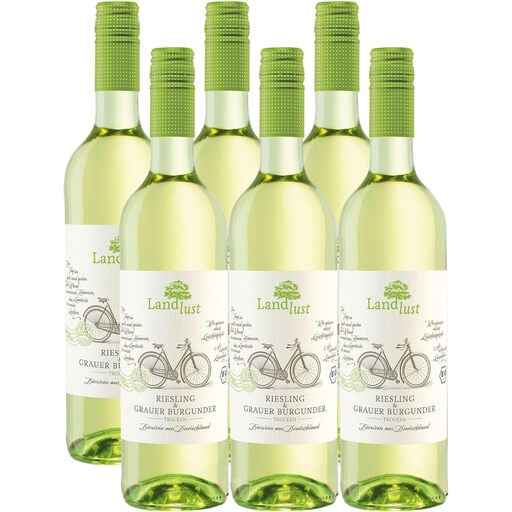
Why it stands out: This case contains a dry organic white wine from Germany that combines the Riesling and Pinot Gris grape varieties. The blend comes from the Rheinhessen growing region and is both certified organic according to EU guidelines and declared vegan.
Advantages:
Who it's for: For those who appreciate a dry, German white wine with a clean aroma profile and value a verifiably organic and vegan production method.
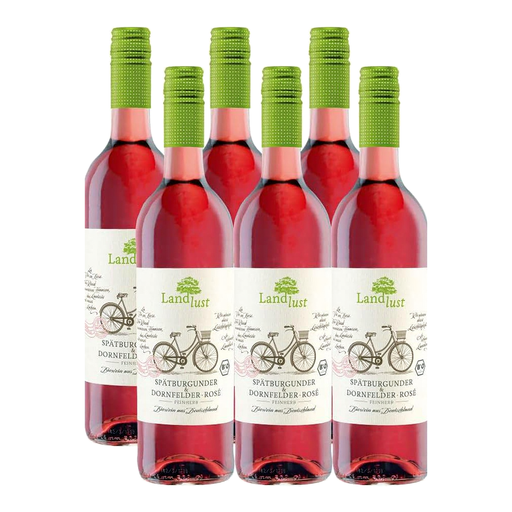
Why it stands out: This rosé wine from Rheinhessen is made from Pinot Noir and Dornfelder grapes. Its off-dry character offers an alternative to dry wines, making it an approachable companion for many occasions.
Advantages:
Who it's for: For wine drinkers who prefer a light, fruity rosé with a touch of sweetness. It is well-suited for social gatherings or as an accompaniment to light dishes like antipasti and salads.
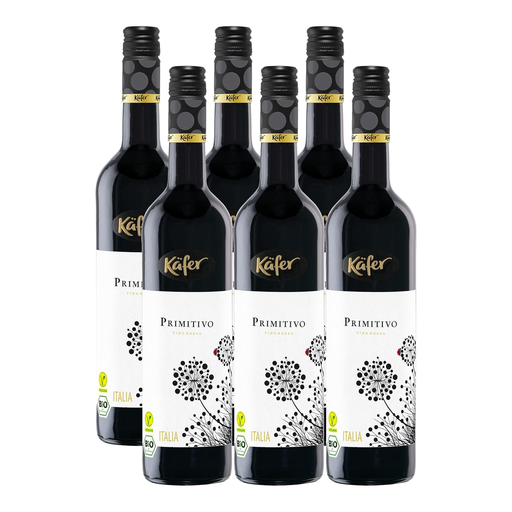
Why it stands out: A single-varietal organic red wine from the Italian region of Puglia, made from 100% Primitivo grapes. Primitivo is known for its bold and fruit-forward wines, and this example is also produced organically and vegan.
Advantages:
Who it's for: For lovers of bold, dry red wines from Italy. It pairs excellently with hearty dishes like pasta, grilled meat, or mature cheese, but can also be enjoyed on its own.
Our selection covers a range of tastes, from dry white wine to robust red wine. If you are looking for a different grape variety, another origin, or a mixed case, you will find more possibilities in our wider collection. Each product is presented with transparent information on its origin, certification, and flavour profile.
Browse our complete selection of Organic Vegan Wine and find the perfect case for your palate.
No. The term "organic" refers to the cultivation of grapes according to ecological guidelines, meaning without synthetic pesticides and fertilisers. However, during processing in the cellar, particularly during clarification (fining), animal-based aids like gelatine or egg whites may still be used. A vegan wine explicitly avoids these substances. For a completely conscious choice, you should look for both labels.
A wine is considered vegan if no animal-derived products are used throughout the entire production process. This primarily affects the clarification of the wine. Instead of animal proteins, mineral substances like bentonite (a type of clay), plant-based proteins (e.g., from peas), or activated carbon are used. Alternatively, the wine can clarify naturally through extended ageing and sedimentation.
To preserve the quality of the wines, the bottles should be stored in a cool, dark place with a temperature that is as constant as possible (10–15 °C is ideal). Bottles with natural corks are best stored lying down to keep the cork moist. Once opened, the wine should be kept in the refrigerator and consumed within 3–5 days to minimise any loss of aroma.