
Lieferung heute & morgen

Qualitätsgarantie

Willkommens-Angebote freischalten: KOSTENLOSE Lieferung | Bis zu 80 % RABATT | Kostenlose 30-Tage-JoyPlus-Testphase
App herunterladen
Introducing solid food brings many questions: Which jar is right for your baby’s age? Is an organic baby purée automatically suitable? And is an organic baby meal multipack really worth it? When choosing organic baby food, it is not just the organic certification or a familiar brand name that matters. The recipe, consistency, portion size and storage requirements are just as important in everyday life.
A product labelled “from 6 months” is not automatically suitable for every baby at the same stage of development. Finely puréed baby food jars from 6 months can make it easier to start introducing solid food. Products from 8 months, on the other hand, often contain softer pieces to help support learning to chew. Parents should therefore check the age recommendation on the label and adapt the consistency to their child’s individual abilities.
Organic baby food is subject to requirements governing the organic production of its ingredients. However, this does not mean that every product has the same composition. Looking at the ingredients list shows whether vegetables make up the largest proportion, whether meat or pulses are included, and whether allergens such as milk, wheat or celery need to be taken into account.
A multipack can make shopping easier and help you build up supplies. However, consumption, the best-before date and available storage space remain important considerations. When buying an organic baby meal multipack, parents should check whether all varieties are suitable for their child’s current age. A large supply is less useful if the baby will soon need a different consistency or cannot tolerate certain ingredients.
The age recommendation is the first selection criterion. A pure vegetable jar such as parsnip purée from 5 months is suitable as one part of introducing solid food. A baby food jar from 6 months may already combine vegetables with other ingredients such as cereals, oil or meat. A baby meal from 8 months often has a chunkier texture and is intended as a complete meal within the range.
Portion size also plays a role. Small 125-g jars are suitable for first tastes. 190-g or 220-g portions are more appropriate for an established meal. For food safety reasons, any warmed leftovers that have not been eaten should not be offered again.
When choosing a product, specific information is more important than general advertising claims. Parents can look out for the following:
It is therefore worth comparing the labels directly when choosing organic vegetable purée, organic baby purée and baby food with no added salt. The term “vegetable meal” alone says nothing about the energy or nutrient content.
Most jars can be heated portion by portion in a bain-marie or microwave. Before feeding, the meal should be stirred thoroughly and its temperature checked. Unheated leftovers should be sealed and stored in the fridge, then used according to the manufacturer’s instructions, often the following day. Unopened jars should be kept in a cool, dry place. The lid and jar should be undamaged before opening.
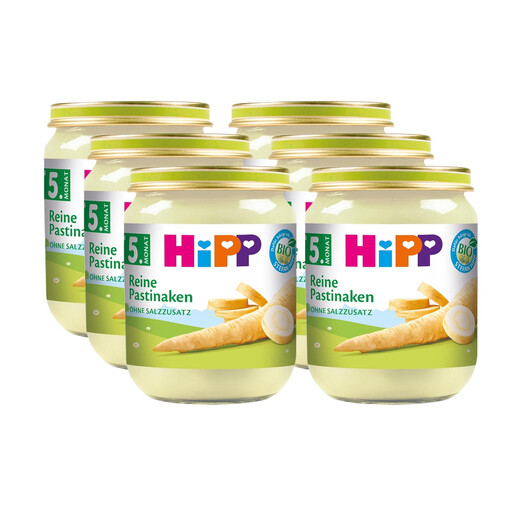
Why this product fits the profile: The 125-g portions are suitable for gradually introducing solid food. The ingredients list contains only organically produced parsnips.
The clear single-ingredient recipe reduces the risk of introducing several new components at the same time.
Suitable from 5 months, finely puréed, gluten-free and with no added salt, flavourings, preservatives or colourings according to the product information.
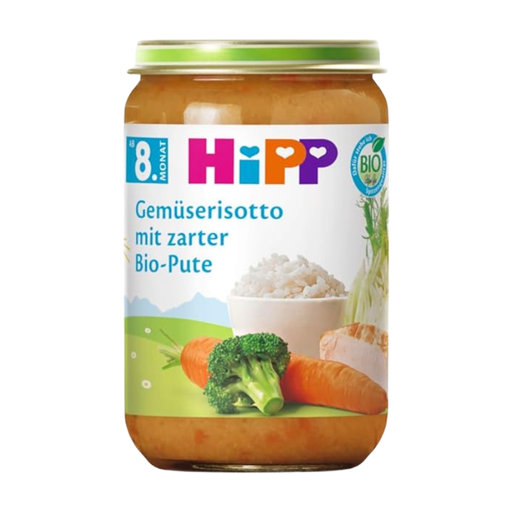
Why this product fits the profile: The six-pack combines organic vegetables, rice and turkey in a 220-g portion. Fine pieces are intended for babies from 8 months.
The age range and texture are clearly stated. This makes it easier to tailor the meal to the appropriate stage of introducing solid food.
No added salt; according to the product information, the meal contains rapeseed oil with alpha-linolenic acid.
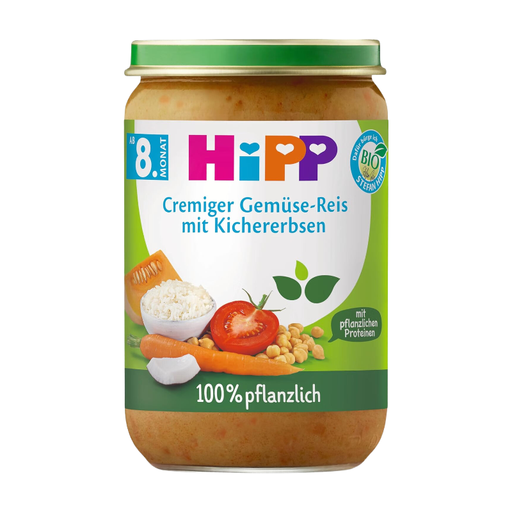
Why this product fits the profile: This plant-based meal with vegetables, rice, chickpeas and pea protein is an appealing option for families looking for a meat-free meal from 8 months.
The recipe lists the key ingredients and quantities. This enables parents to take pulses and possible intolerances into account more easily.
51% organic vegetables according to the product description, 6 x 220 g, no added salt and with rapeseed oil as a source of alpha-linolenic acid.
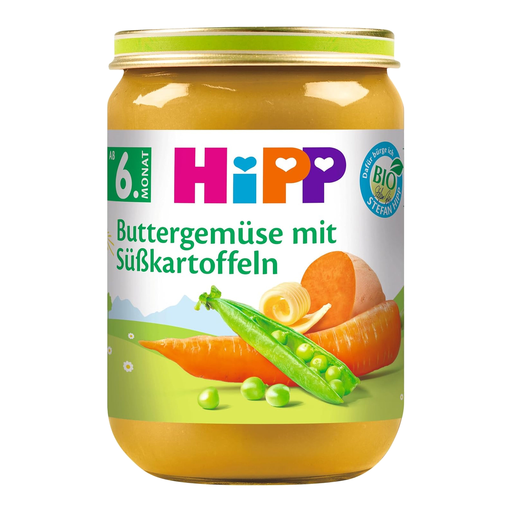
Why this product fits the profile: This vegetable meal from 6 months combines carrots, potatoes, sweet potatoes and peas in a creamy consistency.
The ingredients list shows which vegetables and how much butter are included. This makes it easier to take known intolerances into account.
Intended from 6 months, with no added salt and no seasoning according to the product description; pack of 6 x 190 g.
We have put together a complete, regularly updated list of products that fully meet these strict selection criteria and the safety regulations applicable in the EU.
Before buying organic baby food, parents can compare the following points:
For products containing meat, milk, cereals or pulses, parents should introduce new ingredients into the diet as clearly and systematically as possible. If you have questions about allergies, intolerances or introducing solid food individually, it is advisable to consult a paediatrician or midwife.
That depends on the individual product. Some pure vegetable purées are labelled as suitable from 5 months, while other baby food jars are suitable from 6 months. Baby meals containing softer pieces are often offered from 8 months. The specific age recommendation on the jar is the deciding factor.
No. “No added sugar” means that no sugar has been added as an ingredient. Vegetables, fruit or milk ingredients may still contain naturally occurring sugar. Parents should therefore consider the nutritional information and ingredients list together.
This depends on the manufacturer’s instructions. As a rule, any unheated leftovers should be sealed, stored in the fridge and used the following day. Leftovers that have already been heated or touched with a spoon should not be stored again. Always check the smell, appearance and packaging, and follow the information on the label.