
Lieferung heute & morgen

Qualitätsgarantie

Willkommens-Angebote freischalten: KOSTENLOSE Lieferung | Bis zu 80 % RABATT | Kostenlose 30-Tage-JoyPlus-Testphase
App herunterladen
There’s a wide range of organic baby food to choose from, including jars, cereal porridges, evening meals and multipacks in different age ranges and recipes. For parents, price isn’t the only consideration. The ingredients, texture, potential allergens, portion size and ease of preparation in everyday family life all matter.
Marketing claims can easily lead to the wrong purchase, though. For example, a product labelled “no added sugar” doesn’t automatically contain little sugar, as cereals, milk and fruit can all provide naturally occurring sugars. An organic label also doesn’t tell you whether a porridge is gluten-free, dairy-free or suitable for a particular stage of development.
“From 5 months”, “from 6 months” and “from 8 months” aren’t interchangeable. They offer guidance on the relevant stage of development and the intended texture. Baby porridge from 5 months is often finely puréed, while meals for older babies may have more texture.
Always check the age recommendation on the packaging against your child’s individual development. If you’re unsure about introducing solid foods, advice from a healthcare professional or nutritionist may be helpful.
Baby porridge with no added sugar can still contain naturally occurring sugars from apples, bananas, milk or cereals. So it’s worth checking the ingredients list and nutritional information. Don’t judge ingredients such as sugar, glucose syrup, fruit juice concentrate or sweetening ingredients by the front of the pack alone.
A multipack can make shopping easier, but it’s only worthwhile if you regularly use that flavour and quantity. Once opened, jars must be refrigerated and used promptly, as directed on the packaging. For powdered porridges, pay particular attention to the recommended time for using the product after opening. A lower price per gram is no saving if you end up throwing food away.
Choose products that match the age recommendation. For example, finely puréed vegetable dishes or plain rice porridge may be suitable when starting solids. Later on, you could introduce cereal porridge for babies, multigrain options and more textured baby meals.
Also check whether the product is intended to be eaten with a spoon. Prepare powdered porridges fresh according to the instructions, and don’t use them in a baby bottle unless the manufacturer specifically says to.
The EU organic logo indicates that a product meets the requirements of European organic regulations. It doesn’t replace checking the individual ingredients, though. If your baby has an intolerance to milk, wheat, oats or other ingredients, read the allergen information carefully.
For vegetable purée with meat, the proportion of meat, choice of vegetables and type of oil are all relevant. According to the product information, HiPP’s “BIO Vegetable Rice with Organic Chicken” contains ingredients including carrots, rice, tomatoes, peas, chicken and rapeseed oil. The manufacturer states that it uses organic ingredients, contains no added salt and provides alpha-linolenic acid from rapeseed oil. These are manufacturer claims, so check them against the latest packaging.
For powdered porridges, distinguish between the nutritional values per 100 grams of powder and those for a prepared serving. Also check how much water is needed, the recommended temperature and how to store the product after opening.
Depending on the product, jars can be warmed in a bain-marie or microwave. Stir the food well and check its temperature before feeding. Don’t reuse leftovers that have already been heated. Unheated leftovers should be refrigerated as directed by the manufacturer and usually used the following day.
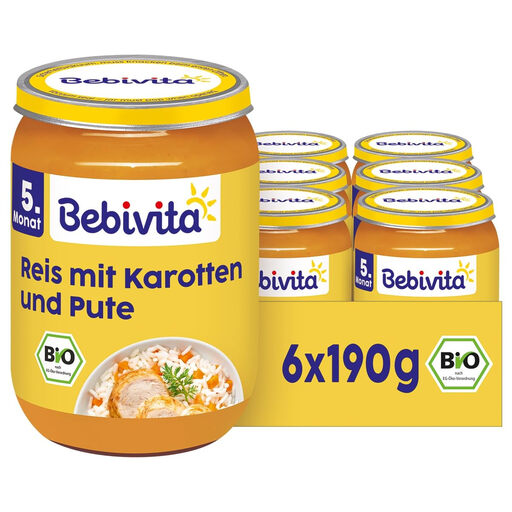
Why it suits this profile: The pack of six 190 g jars offers a handy, predictable portion size for introducing savoury solid foods.
The ingredients list specifies the proportions of carrots, turkey and rice. According to the product information, no salt is added.
Suitable from 5 months; six 190 g jars; finely puréed recipe according to the product description.
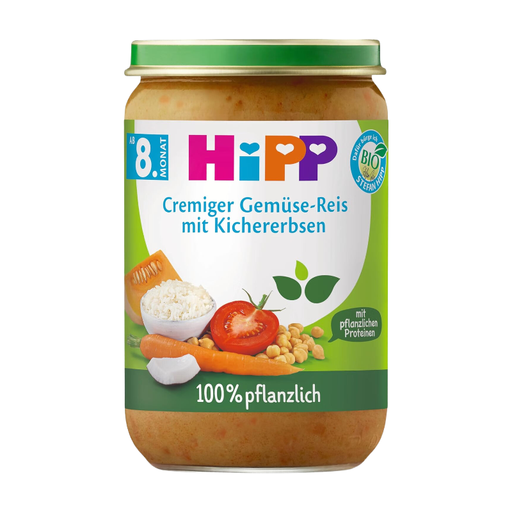
Why it suits this profile: This meal combines organic vegetables with chickpeas and rice, and is intended for babies from 8 months.
The product information lists 51% organic vegetables, as well as chickpeas and pea protein. The description doesn’t mention added salt.
6 x 220 g; plant-based protein sources; organic ingredients and alpha-linolenic acid from rapeseed oil according to the manufacturer.
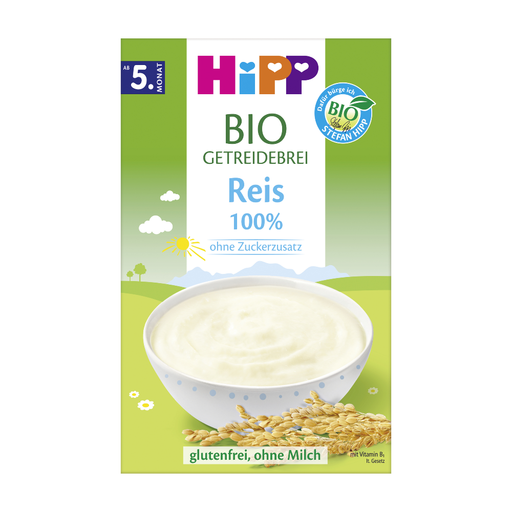
Why it suits this profile: This plain rice porridge is a good choice for families looking for a simple, gluten-free cereal base from 5 months.
According to the product information, the ingredients are 100% rice flour and vitamin B1. Milk and added sugar aren’t listed.
Seven 200 g sachets; gluten-free recipe according to the description; versatile and can be prepared with water or milk.
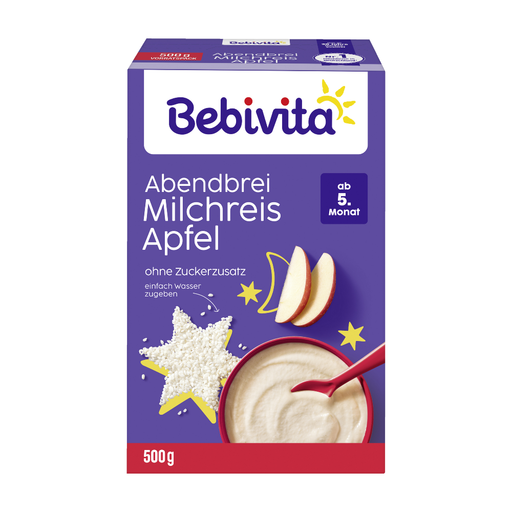
Why it suits this profile: This quick-to-prepare evening porridge for babies from 5 months is designed for busy families.
According to the product description, the packaging states that there is no added sugar or sweetening fruit juice concentrates. Naturally occurring sugars may still be present.
500 g pack; prepared with water; according to the nutritional information, contains calcium, iron and vitamin C, among other nutrients.
We’ve put together a comprehensive, regularly updated list of products that meet these strict selection criteria and fully comply with the safety regulations in force in the EU.
Products labelled “from 5 months” are intended for babies of this age. However, your baby’s readiness for solid foods and individual development also matter. Always prepare the product exactly as directed on the packaging.
Check the age recommendation, milk and cereal ingredients, allergens and sugar information. Evening porridge doesn’t automatically replace other meals. Your baby’s diet should remain varied and follow the advice of their healthcare professionals.
It depends on the type of product. Opened jars are usually refrigerated and used within the following day. Opened packs of powder should be kept dry, sealed tightly and used within the period shown on the packaging. Always follow the instructions on the relevant pack.