When stocking up on organic cereal bars, first check the organic certification and ingredients of the specific variety. Then compare the pack size with how quickly you plan to use them and the best-before date. Small multipacks give you the chance to try a variety, while a larger box may be a better fit if you already know the variety, how to store it and how quickly you’ll get through it. Organic certification alone doesn’t tell you whether a bar meets specific allergy or dietary requirements.
Who might benefit from stocking up?
Shoppers looking for organic certification
If organic certification is your main buying priority, the certification and information on the specific bar matter more than claims such as ‘natural’. Germany’s Federal Ministry of Food and Agriculture describes the German organic seal as a mark of certified organic production.
Households planning to eat cereal bars regularly
If you’re stocking up on bars for school, work or days out, choose a pack size that suits how quickly you’ll use them and their best-before date. It’s also worth checking the storage instructions when buying larger boxes.
Shoppers with ingredient or allergen requirements
If you avoid certain ingredients or are looking for a specifically vegan or gluten-free option, check each variety individually. Ingredients and ‘may contain’ warnings can vary even within the same brand.
What should you look for when choosing?
When stocking up on organic cereal bars, certification, quantity, recipe and individual dietary requirements are separate things to consider.
| Criteria | What to check when buying | Who it matters to |
|---|
| Organic certification |
Check for the EU organic logo or German organic seal, as well as the organic inspection body code on the specific pack. |
If I’m specifically looking to stock up on organic cereal bars, I want to check the certification rather than rely on a general claim that they’re natural. For around 31% of shoppers, this is the top priority. |
| Pack size and best-before date |
Compare the number of bars, weight per bar, best-before date and storage instructions with how quickly you plan to use them. |
A larger pack is only useful if I can store the bars properly and eat them within a timeframe that works for me; around 25% of shoppers put planning their supplies first. |
| Ingredients and nutritional information |
Compare the ingredients list, sugar and fibre using the same basis, such as per 100 g and per bar. |
If I eat bars from my stock regularly, I want to be able to tell the varieties apart by their recipes. For around 25% of shoppers, this is their main concern. |
| Allergens and dietary requirements |
Read the current ingredients list and ‘may contain’ warnings, and check that the specific variety has any vegan or gluten-free certification you need. |
If I need to avoid certain ingredients, ‘organic’ or ‘gluten-free’ on its own isn’t enough; this is the top priority for around 19% of shoppers. |
Which buying mistakes can you avoid?
-
Assuming organic certification guarantees a particular nutritional profile
Organic certification relates to how food is produced. Sugar, fibre and ingredients still depend on the recipe of each product.
Compare the nutritional information per 100 g and, if provided, per bar. Check the allergen information separately from the organic logo.
-
Choosing a large box before checking the variety and best-before date
HAFERVOLL sells organic flapjacks in boxes of 18; the stated best-before date can vary depending on the offer. If you buy a large box of a variety you haven’t tried before, you won’t get the chance to sample it first.
Check the best-before date on the box being offered and its storage instructions. If you don’t know the variety yet, consider starting with a smaller pack.
-
Assuming ‘gluten-free’ means free from all allergens
A gluten-free label doesn’t tell you whether a bar contains, for example, almonds or sesame. REWE’s organic oat bar with chocolate, which is labelled gluten-free, lists both ingredients.
If you have allergies, always check the ingredients list and ‘may contain’ warnings on the pack you’re buying; don’t rely on the product category alone.
Which brands can help you choose?
REWE Bio
REWE stocks organic oat bars and other organic bars, making it easy to plan your supplies alongside the rest of your food shop.
- The REWE Bio Oat and Chocolate Bar is sold in a pack of 3 × 35 g.
- Check the ingredients and allergens for your chosen variety; organic certification doesn’t indicate whether it’s suitable for you.
dmBio
dmBio offers individual organic cereal bars and small multipacks to add to your drugstore shop.
- The range includes an oat and cocoa bar and a three-pack of oat and nut bars.
- Ingredients vary: the oat and nut pack lists cashews, almonds and Brazil nuts, among other ingredients.
Alnatura
Alnatura also sells organic cereal bars in packs of six, making them an option if you want a modest supply of one variety.
- The chocolate cereal bar is sold in a pack of six bars, weighing 150 g in total.
- The chocolate variety includes oats, wheat, spelt and milk powder, among other ingredients, and may contain traces of other allergens.
HAFERVOLL
HAFERVOLL sells certified organic flapjacks in boxes of 18, either as single-variety or mixed selections, for shoppers planning to buy a larger quantity.
- Single-variety and mixed boxes offer different ways to plan your supplies.
- Before choosing a box, make sure the variety, stated best-before date and available storage space suit your needs.
EDEKA Bio
EDEKA Bio sells crunchy bars in small packs of three, which can be a handy, limited supply to add to your supermarket shop.
- The sesame and nut mix varieties are both sold in packs of 3 × 25 g.
- The varieties aren’t interchangeable if you have ingredient requirements: the nut mix contains peanuts and almonds, while the sesame variety contains sesame.
ALDI BIO / NUR NUR NATUR
NUR NUR NATUR’s organic wholegrain oat bar with chocolate is an example of a small multipack available when shopping at a discount supermarket.
- The chocolate variety is sold in a pack of 3 × 35 g.
- When deciding how much to stock up on, the nutritional information and best-before date on the specific pack still matter.
Organic cereal bars on Joybuy
This six-pack is a good option if you want a smaller supply of cereal bars. Before buying, check the organic certification, ingredients and best-before date on the pack being offered.
 No image available
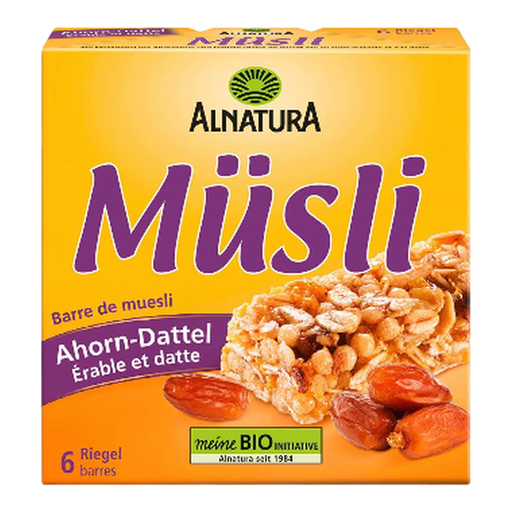
Alnatura organic cereal bar with maple and dates, 6 × 25 g
This six-pack is worth considering if you’re looking for a smaller supply of this variety rather than a large box.
Contains six bars, each weighing 25 g. If you have ingredient requirements, check the current pack for gluten and warnings about possible traces of soya, milk and nuts.
View on Joybuy
Frequently asked questions
How can I tell if a cereal bar is organic?
Check for the EU organic logo or German organic seal, as well as the organic inspection body code on the specific pack. Germany’s Federal Ministry of Food and Agriculture describes the German organic seal as a mark of certified organic production; a general claim that a product is natural is no substitute for this certification.
Can I eat cereal bars after their best-before date?
As Germany’s consumer advice centre explains, passing the best-before date doesn’t automatically mean unopened food that has been stored properly is no longer safe to eat. Check the packaging and the food before eating it; a best-before date is not the same as a use-by date.
How should I store cereal bars?
Follow the storage instructions on the specific pack. dmBio says to store its oat and cocoa bar in a cool, dry place; Alnatura says to store its chocolate cereal bar in a dry place away from heat. If you’re buying a larger quantity, make sure the best-before date gives you enough time to use them.
Are ‘gluten-free’ or ‘vegan’ labels enough if I have an allergy?
No, these labels don’t answer every question about allergens. Check the highlighted allergens in the ingredients list and the ‘may contain’ warnings on the specific pack; a gluten-free variety may still contain nuts or sesame, for example.


