
Lieferung heute & morgen

Qualitätsgarantie

Willkommens-Angebote freischalten: KOSTENLOSE Lieferung | Bis zu 80 % RABATT | Kostenlose 30-Tage-JoyPlus-Testphase
App herunterladen
An organic fruit purée for babies with no added sugar can be useful when you are out and about, travelling or between meals. However, products can vary considerably in their recommended age, ingredients, portion size and packaging. An eye-catching organic seal or the words “no added sugar” alone are therefore not enough to base your purchase on.
The following tips will help parents and families in Germany assess marketing claims and choose a suitable fruit purée from 6 months.
Fruit naturally contains sugar. Even in a purée with no added table sugar, the sugar content may still appear on the nutritional label. The ingredients list is key: if it includes ingredients such as apple or grape juice concentrate, syrup or sugar, the product does not rely solely on the natural sugars from the fruit.
According to the product information, the sugar in the FruchtBar squeeze pouch with blueberry, banana and rice comes from the ingredients it contains. It provides 15 g of sugar per 100 g. This should not be confused with “sugar-free”; it describes a purée with no added sugar.
“Organic” describes the agricultural origin of the ingredients, but it does not automatically indicate the composition or suitability for every baby. You should also check:
According to the product information, the FruchtBar blueberry and banana purée contains 84% banana purée, 14% blueberry purée and 2% rice flour. The organic inspection body is listed as ES-ECO-019-CT.
A baby purée in a squeeze pouch is easy to transport and can be portioned without a spoon. However, for dental care, it is sensible not to let your child suck the purée directly from the pouch for extended periods. Where possible, it is better to empty the contents into a bowl or offer them directly under supervision.
Children should always be supervised while eating. Before opening, check that the pouch, closure and contents are undamaged. A swollen or damaged pouch should not be used.
For families with babies aged 6 months and over, the age recommendation on the specific product should be considered alongside the child’s stage of development. A fruit purée from 6 months can be used as a snack or supplement, but it does not automatically replace a balanced weaning diet.
Pay attention to the order of the ingredients. This shows which ingredient is present in the greatest quantity. With a fruit purée with rice, you should also check whether it contains rice flour or another type of cereal flour and whether the label includes information about allergens.
Pre-portioned pouches are particularly convenient when you are out and about. The FruchtBar product contains 8 x 100 g, making 800 g in total. This pack size may appeal to families who regularly want to pack a snack for when they are out and about.
Once opened, follow the manufacturer’s instructions. For the blueberry and banana purée, it is recommended that the opened pouch is stored in the fridge and consumed within two days. Other products may have a shorter shelf life once opened, so always check the packaging.
Nutritional information such as energy, sugar, fibre or vitamins consists of objective figures. It allows you to compare products, but does not constitute a therapeutic or medical claim. The FruchtBar purée provides 89 kcal, 19 g of carbohydrate, 2.2 g of fibre and 1.2 g of protein per 100 g.
Terms such as “natural”, “mild” or “nutrient-rich” should also be assessed in conjunction with the ingredients list and nutrition table. For an individual dietary decision, it may be advisable to consult a paediatrician or nutritional adviser.
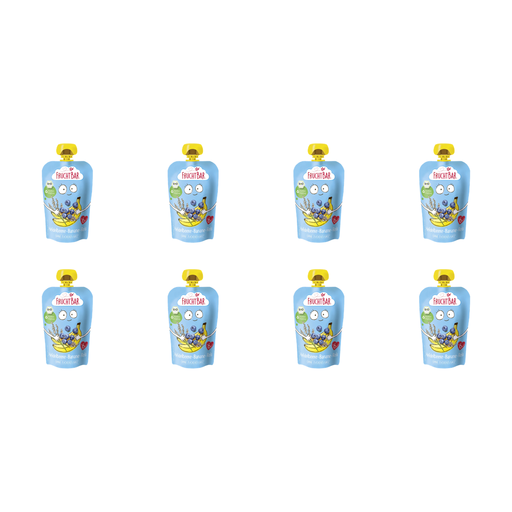
Why this product suits this profile: The eight individually portioned pouches make it easier to keep a supply at home and are ideal for families looking for an organic baby purée format to take with them.
The ingredients list clearly states the proportions of banana, blueberry and rice flour. It also expressly confirms that no sugar has been added.
Organic ingredients, 8 x 100 g, resealable pouch and stated organic inspection body ES-ECO-019-CT.
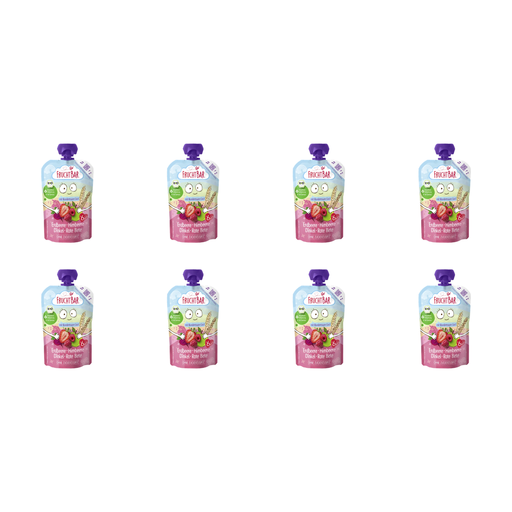
Why this product suits this profile: The recipe combines fruit, vegetables and spelt and, according to the product information, is suitable for babies from 6 months.
The ingredients and their proportions are stated. Because it contains spelt, it is particularly important to read the allergen information.
EU organic ingredients, 8 x 100 g, 2 g of fibre per 100 g and resealable packaging.
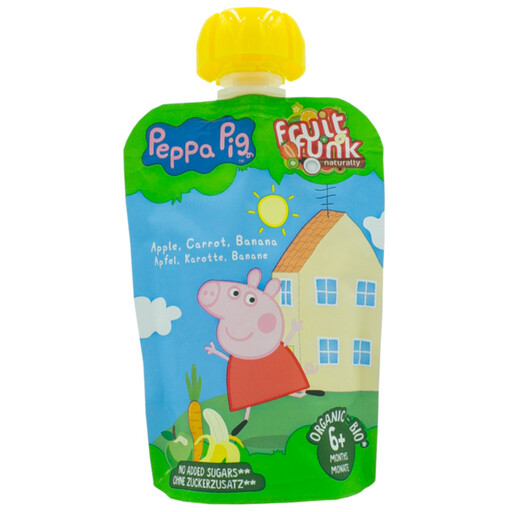
Why this product suits this profile: The smaller 90 g portion is ideal for individual trips and for families who want to offer different flavours containing vegetables.
The product information states that it contains 70% apple, 20% carrot and 10% banana purée. This makes it easy to check the recipe before buying.
90 g pouch, organic certification according to EU information, no added sugar and 2.7 g of fibre per 100 g.
We have put together a complete, regularly updated list of products that fully meet these strict selection criteria and the safety regulations applicable in the EU.
Before using a product for the first time, parents should check the packaging, ingredients list, recommended age and best-before date. A squeeze pouch can be offered directly or emptied into a bowl. A spoon is often more suitable for slower feeding.
Opened products should be stored in the fridge according to the manufacturer’s instructions and consumed within the stated period. Any leftovers that are not needed should not be kept for several days. If you are taking a snack for when you are out and about, a cool bag is also recommended if the correct storage temperature cannot be maintained.
Products with the relevant age label may be suitable from 6 months according to the manufacturer’s information. However, the information on the individual packaging and the child’s personal progress with weaning should always be the deciding factors. The products are not a substitute for individual advice from medical or nutritional specialists.
This depends on the product. For the FruchtBar blueberry and banana purée, refrigerated storage and consumption within two days are recommended. Other manufacturers specify shorter periods, such as one day. The information on the packaging takes precedence.
Both types of packaging have different uses. A squeeze pouch is light and space-saving, while a jar can be portioned at home with a spoon. When choosing between them, the main factors are recommended age, ingredients, portion size, storage and intended use.