What should you look for when buying?
First, check the organic labelling and ingredients on the specific pack. Then consider which pack size will work best for your study breaks, and whether allergen or precautionary ‘may contain’ information affects your choice.
| Criterion |
What to check |
Who should pay particular attention? |
| Organic labelling |
Check the EU organic logo, control body code and origin information on the specific pack. |
I want to verify the organic status of my study snacks, rather than rely on terms such as ‘natural’; around 31% of consumers prioritise this proof. |
| Simple ingredients |
Check the ingredients list for the types of nuts and, where applicable, salt, sugar, oils or seasonings. |
At my desk, I want a nut snack without any unwanted extras; around 31% of consumers prioritise this type of recipe. |
| Pack format |
Match the pack size and any resealable feature to how much you plan to use. |
When moving between study locations, I need a pack that’s easy to portion and store; around 23% of consumers prioritise this. |
| Allergen information |
Read the ingredients list, any highlighted allergens and, where applicable, precautionary ‘may contain’ information. |
If an allergy affects my choice, I need to check the information carefully for every new variety; around 15% of consumers put this first. |
Pine nuts at Joybuy
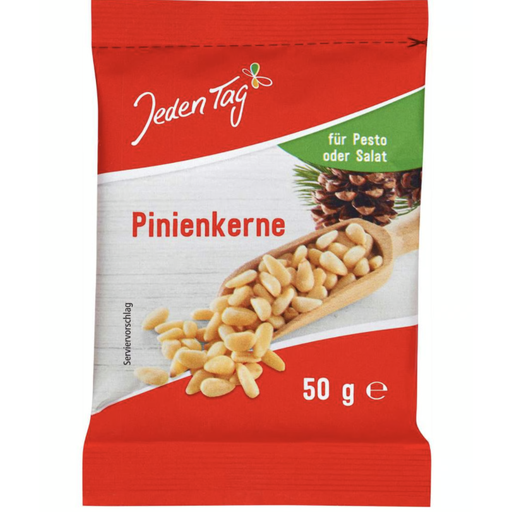
If you’re looking for a simple snack, these pine nuts come in a 50 g pack. Check the specific pack to make sure the organic labelling, ingredients and allergen information meet your needs.
 No image available
Jeden Tag Organic Pine Nuts, 50 g
These pine nuts are a good option if you’d prefer one type of nut rather than a mix for your study breaks.
Pack size: 50 g. Before buying, check the organic labelling, ingredients and any allergen or precautionary ‘may contain’ information on the specific pack.
View at Joybuy
Frequently asked questions
How can I tell if nuts are certified organic?
For prepacked organic food from the EU, check the EU organic logo, control body code and origin information on the pack. The European Commission lists these as labelling requirements; a product name in an online shop is no substitute for checking the packaging.
Are organic nuts automatically unsalted?
No. Organic nuts can also be sold salted or seasoned, as options in the REWE Bio range show. Check the ingredients list to see whether a product meets your preference for simple ingredients.
What portion size does the DGE recommend for nuts?
The German Nutrition Society recommends a small handful of nuts a day as general dietary advice. This isn’t individual guidance, and the size of a pack you buy doesn’t determine the portion size.
What should I check if I have a nut or peanut allergy?
Read the ingredients list, the labelling of any allergens present and, where applicable, the precautionary ‘may contain’ information on each specific pack. If you have a diagnosed allergy, which products are suitable for you depends on your individual medical advice.
How should I store nuts between study breaks?
Store nuts in a cool, dark place, as recommended by the consumer advice centre. Seal opened packs securely, and don’t eat nuts with visible mould or an unusual smell.


