For a movie night with organic tortilla chips, first check the organic certification on the actual pack. Then compare salt per 100 g, ingredients and allergen information across similar varieties: an organic logo won’t answer these questions. Plain varieties let you choose your own dip, while a seasoned variety already has its own flavour.
Which criteria matter to whom
If you’re specifically looking for organic tortilla chips
If organic is a must-have for you, don’t rely on words such as ‘natural’. Check the pack for the EU organic logo, the control body code and the origin of the agricultural ingredients. The European Commission explains that the EU organic logo may only be used on appropriately certified products.
If you serve your chips plain or with dip
If you want to choose the flavour yourself with salsa or guacamole, compare plain and sea-salt varieties. The products considered here from REWE Bio, dmBio, biozentrale and Alnatura list maize or maize flour, sunflower oil and sea salt as ingredients. Alnatura describes its variety as corn chips, not explicitly as tortilla chips.
If you’re comparing salt and allergen information
The products considered here list salt levels ranging from 0.8 g to 1.2 g per 100 g. They also differ in their ‘may contain’ warnings: depending on the product, these mention gluten, milk or soya. So compare the nutritional information and check the packaging if you have specific dietary requirements.
What to look for when buying
When choosing organic tortilla chips for movie night, start by checking the certification. Then decide whether flavour and dip, salt levels or particular ingredient and allergen information will have the biggest influence on your choice.
| Criterion |
What to check |
Who it matters to |
| Organic certification |
Check the EU organic logo, control body code and origin information on the actual pack. |
I want to buy organic tortilla chips and not rely on a description such as ‘natural’; for around 40% of consumers, verifiable organic certification comes first. |
| Flavour and dip |
Choose between a plain or sea-salt variety and a seasoned one; check the ingredients list too. |
Sometimes I eat the chips plain; other times I serve a selection of dips and want to choose the flavour myself. Around 30% of consumers put this flexibility first. |
| Salt and nutritional information |
Compare salt per 100 g and the other nutritional values of similar corn or tortilla chips. |
If I’m having a salty dip with my snack, I want to compare the information on the chip packets; for around 20% of consumers, this is their main consideration when buying. |
| Dietary and allergen information |
Check the ingredients, allergen information and any required claims, such as ‘gluten-free’, for each product. |
I need a variety with labelling that suits my dietary requirements, rather than relying on ‘organic’ or ‘vegan’ alone; this is the main consideration for around 10% of consumers. |
Common buying misconceptions
-
Assuming ‘natural’ means organic
A brand name or description of the ingredients does not, in itself, prove that a product is organically certified. Chio sells tortillas in its range, while Lorenz describes certain ingredient characteristics for its ‘Naturals’ products. Neither statement confirms organic certification for any specific pack.
If organic certification is a must-have for you, check the EU organic logo, control body code and origin information on the product you choose.
-
Assuming organic means a particular salt level
REWE Bio and dmBio each list 0.8 g of salt per 100 g for their products, while biozentrale lists 1.2 g per 100 g. Organic certification is no substitute for checking the nutritional information.
Compare salt per 100 g across similar products and consider what you’ll be serving with them.
-
Checking only for ‘organic’ or ‘vegan’ when it comes to allergens
The varieties considered here have different ‘may contain’ warnings. REWE Bio mentions possible traces of gluten and milk; dmBio mentions milk and milk derivatives; and Alnatura and biozentrale mention soya.
Read the ingredients and allergen information on the pack you’re actually buying. This applies even if a variety is specifically labelled vegan or gluten-free.
Relevant brands and product ranges
These examples relate to the specific products mentioned, not the brands’ entire ranges. Pay particular attention to whether a product is explicitly described as a tortilla chip or as a different type of corn chip.
REWE Bio
The ‘Salted Tortilla Chips’ are an organic tortilla chip option made with maize, sunflower oil and sea salt.
- REWE lists 0.8 g of salt per 100 g for this variety.
- According to the product information, it may contain traces of gluten and milk.
dmBio
The ‘Tortilla Chips with Sea Salt’ are an organic variety sold in a 125-g pack.
- dm labels this variety vegan and gluten-free, and lists 0.8 g of salt per 100 g.
- The product information mentions possible traces of milk and milk derivatives.
biozentrale
biozentrale describes its organic sea-salt tortilla chips as vegan and gluten-free.
- The stated recipe contains maize flour, sunflower oil and sea salt.
- biozentrale lists 1.2 g of salt per 100 g and mentions possible traces of soya.
Alnatura
‘Plain Corn Chips’ are an organic corn chip option to enjoy on their own or with dips.
- Alnatura describes the 125-g variety as vegan and lists maize flour, sunflower oil and sea salt as ingredients.
- The product is not explicitly called tortilla chips; according to the product information, it may contain traces of soya.
Joybuy products for movie night
Alnatura Corn Rolls with Mild Salsa flavour are a seasoned corn snack option for movie night. If you’re specifically looking for tortilla chips, check the product description on the pack.
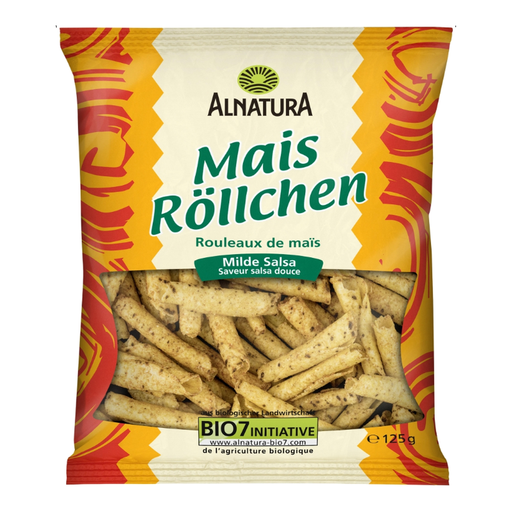 Image unavailable
Alnatura Organic Mild Salsa Corn Rolls, 125 g
An option if you fancy a corn snack with mild salsa flavour rather than a plain variety for movie night.
Check the actual pack to see whether the product is described as tortilla chips. For proof of organic status and if you have specific dietary requirements, the certification and allergen information on the pack are also important.
View at Joybuy
Frequently asked questions
How can I tell if tortilla chips are organic from the packaging?
Look for the EU organic logo, as well as the control body code and information about the origin of the agricultural ingredients. The European Commission says the logo may only be used on appropriately certified products. Check the information on the specific product rather than relying on terms such as ‘natural’.
Are organic tortilla chips automatically vegan and gluten-free?
No, organic certification does not tell you this. dm explicitly labels the dmBio variety considered here as vegan and gluten-free; ingredients and ‘may contain’ warnings vary across other products. So always check the information on the individual pack.
How do I compare the salt content of organic tortilla chips?
Compare salt in grams per 100 g across similar varieties. REWE Bio and dmBio each list 0.8 g per 100 g for the tortilla chips mentioned here, while biozentrale lists 1.2 g per 100 g. This lets you compare the information on the packs without assuming that the organic logo indicates a particular salt level.
How should I store an opened pack of chips until the next movie night?
Seal the opened pack well and store the chips somewhere dry and away from heat. An airtight container or clip will help keep the pack closed after opening.


