
Lieferung heute & morgen

Qualitätsgarantie

Willkommens-Angebote freischalten: KOSTENLOSE Lieferung | Bis zu 80 % RABATT | Kostenlose 30-Tage-JoyPlus-Testphase
App herunterladen
An orthopaedic dog bed is more than just a place to sleep. It's a vital investment in your dog's health and quality of life, especially for senior pets, large breeds, or dogs with joint problems. However, the market can be overwhelming, and many products don't live up to their descriptions. Before you make a decision, it's important to understand the common pitfalls that can lead to a poor purchase.
The 3 Most Common Pitfalls When Buying a Dog Bed:
To avoid these problems, you should focus on the verifiable core parameters of a product.
A functional and durable orthopaedic dog bed is defined by specific features. To make an informed decision, pay close attention to the following three points when making your choice.
The heart of any orthopaedic dog bed is its foam. The quality of the foam determines how well your dog's body weight is distributed and how much pressure is taken off their joints.
A good cover not only protects the foam core but also makes maintenance significantly easier.
Additional functional details contribute to safety and comfort.
Based on these objective criteria, we have identified a few products that are well-suited for different needs and types of dogs.
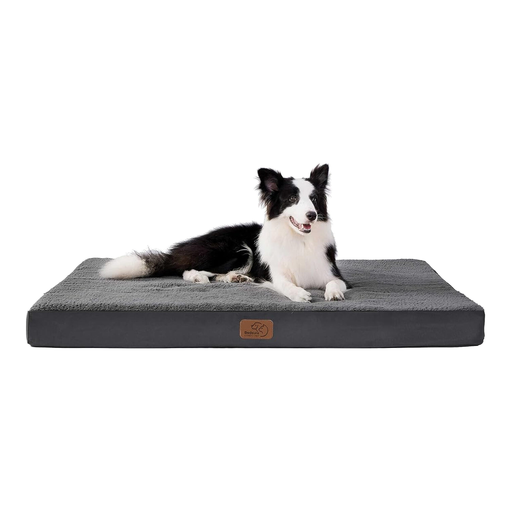
Why it's a great fit: With its generous dimensions and an 8 cm height, this cushion is specifically designed for large dog breeds or households with multiple smaller dogs. It offers ample space to stretch out and a stable sleeping surface.
It bypasses the "marketing orthopaedic" trap by using structured egg crate foam, which is proven to distribute weight and provide genuine, long-lasting support instead of quickly sagging.
The combination of a large surface area, pressure-relieving foam for pets up to 45 kg, and an easy-care, washable cover with a non-slip bottom.
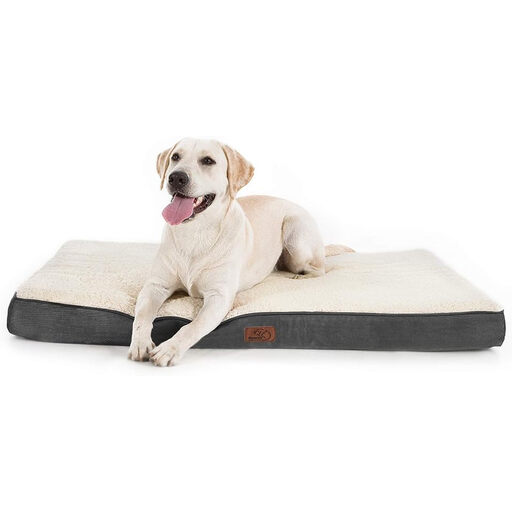
Why it's a great fit: This model is ideal for medium-sized or older dogs. The clear focus is on joint relief through its shock-absorbing foam, which was specially developed to meet the needs of senior pets.
It addresses the problem of using the wrong type of foam. Instead of a simple block, it uses a structured mat that specifically relieves pressure points, offering real added value for a dog bed for senior dogs.
The combination of a joint-friendly foam structure, a soft Sherpa surface for comfort, and a non-slip bottom for added safety.
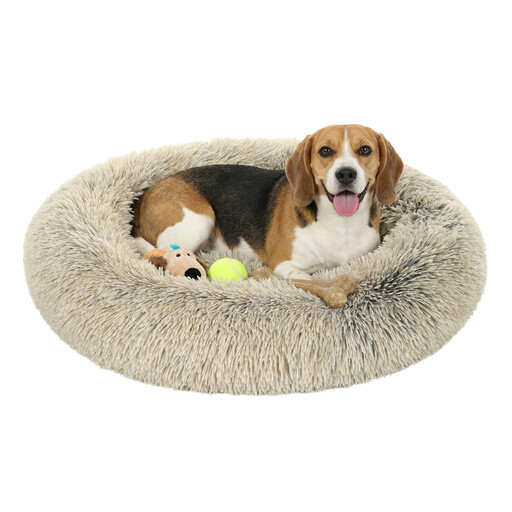
Why it's a great fit: For dogs that love to curl up, the donut shape provides a sense of security. The high, soft rim supports the head and neck. It's an excellent choice for owners who value a cosy retreat and easy maintenance.
It perfectly solves the problem of impractical covers: the central cushion is completely removable via a zipper on the bottom and can be washed separately. This makes regular cleaning straightforward.
The high level of comfort from the soft plush fabric and supportive PP cotton filling, combined with the practical, hygienic solution of a removable and washable cushion.
If you'd like to compare more models selected based on objective criteria like material quality, washability, and functionality, you can find our complete collection here.
Many foam dog beds are vacuum-packed for shipping. After unpacking, they typically need 24 to 48 hours to reach their final shape and height. Only then does the foam achieve its full supportive effect. It is recommended to wait this long before letting your dog use the bed.
Measure your dog while they are lying in a typical, stretched-out sleeping position, from the tip of their nose to the base of their tail. The length and width of the dog bed should be at least these dimensions so your dog can stretch out comfortably without any body parts hanging over the edge.
The convoluted structure of egg crate foam is designed to distribute body weight more evenly than a flat surface. This reduces pressure peaks on joints like the hips or shoulders. For dogs with arthritis or other joint conditions, this can lead to noticeable relief and greater comfort, as the pressure is dispersed rather than concentrated.