
Lieferung heute & morgen

Qualitätsgarantie

Willkommens-Angebote freischalten: KOSTENLOSE Lieferung | Bis zu 80 % RABATT | Kostenlose 30-Tage-JoyPlus-Testphase
App herunterladen
Finding an orthopaedic dog bed that lives up to its name and truly helps your four-legged family member can be a challenge. The market is flooded with products whose marketing promises often suggest more than the materials can deliver. Many dog owners invest in a supposedly high-quality bed, only to find that it has lost its function after just a few months. Before you make a decision, it's important to know the most common pitfalls.
The 3 Most Common Mistakes When Buying an Orthopaedic Dog Bed:
A truly joint-supporting dog bed is distinguished by specific, verifiable features. Instead of relying on advertising claims, you should pay attention to the following core parameters.
To make an informed choice that serves your dog's well-being, focus on three technical features: the fill material, the care properties of the cover, and the correct sizing.
The defining feature of an orthopaedic bed is its ability to distribute pressure evenly.
The most practical features become apparent in daily use. Keeping a washable dog cushion is essential for your pet's health and the cleanliness of your home.
The right size is crucial for the dog to be able to relieve all its joints. It should be able to stretch out completely without its head or legs hanging over the edge. Measure your dog from the tip of its nose to the base of its tail to determine the required sleeping surface. For use in a crate, a perfectly fitting dog mat for a crate is important, as it won't slip and will provide familiar comfort even when travelling.
Based on the objective criteria mentioned above, we have identified some products that are suitable for the specific needs of dog owners in the UK.
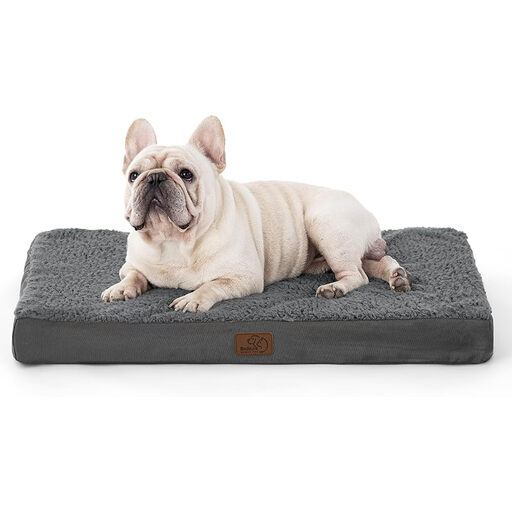
Why this product is a match: Ideal for owners who want to try the benefits of an orthopaedic bed without making a large initial investment. It offers the essential features for medium-sized dogs at a very accessible price point.
Despite the price, this model doesn't skimp on the basics: the cover is removable via a zipper and machine-washable, which bypasses the hygiene trap. The egg-crate foam provides a genuine pressure-relieving structure.
Pressure-relieving egg-crate foam; machine-washable cover with an L-shaped zipper.
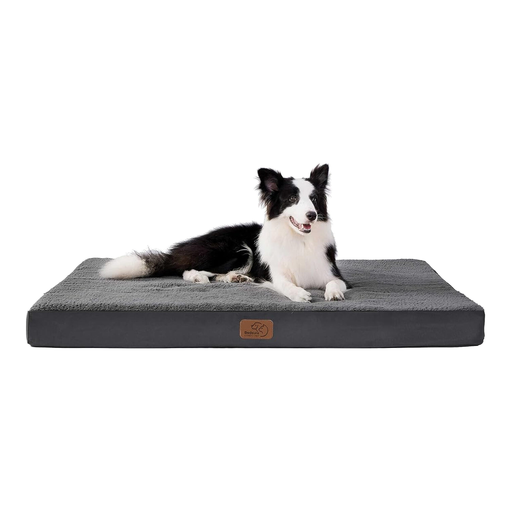
Why this product is a match: With a sleeping surface of 110x80 cm, this bed offers ample space for large breeds like Golden Retrievers, German Shepherds, or Labradors to stretch out completely. The construction is designed for pets up to 45 kg.
This model counters the "sagging" pitfall with an 8 cm thick foam base specifically designed for heavier weights. It maintains its supportive shape and prevents the formation of hollows.
Generous sleeping surface; designed for pets up to 45 kg; non-slip base for stability.
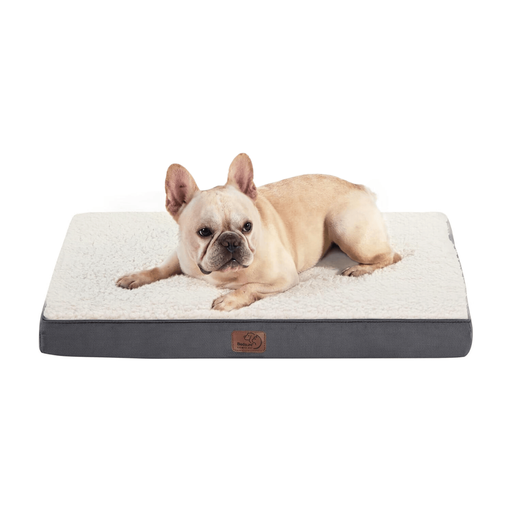
Why this product is a match: The standard dimensions of 75x50 cm make this mat the ideal upgrade for many common dog crates or kennels. It transforms a simple transport container into a comfortable, joint-supporting resting place on the go.
Unlike standard thin liners, this 8 cm high dog mat provides genuine orthopaedic support. The non-slip base ensures that the mat stays in place, even when moving around inside the crate.
Versatile for use at home and in crates; 8 cm thick, shock-absorbing foam.
We have compiled a complete, up-to-date list of products that fully meet these strict selection criteria and UK safety regulations.
Observe your dog's behaviour. Signs may include difficulty getting up after a long rest, moving stiffly, frequently changing sleeping positions, or generally sleeping restlessly. Senior dogs, large breeds prone to joint problems, or dogs recovering from surgery can particularly benefit from a supportive bed.
For good hygiene, it is recommended to wash the cover every one to two weeks. For dogs with allergies, skin problems, or in cases of heavy soiling, more frequent cleaning may be advisable. Always follow the manufacturer's care instructions to preserve the life of the material.
The lifespan depends on the quality of the foam, the weight of the dog, and the frequency of use. A high-quality orthopaedic dog mat with dense foam should retain its supportive function for several years. A clear sign that a replacement is needed is when the bed shows visible indentations even without weight on it and no longer returns to its original shape.