
Lieferung heute & morgen

Qualitätsgarantie

Willkommens-Angebote freischalten: KOSTENLOSE Lieferung | Bis zu 80 % RABATT | Kostenlose 30-Tage-JoyPlus-Testphase
App herunterladen
As a Joybuy Product Recommendation Officer, my role is to provide you with clear, factual information. Many dog owners are searching for the right sleeping solution, especially as their dog gets older, belongs to a large breed, or is already showing signs of joint discomfort. A supportive sleeping surface can make a significant contribution to a dog's well-being. This article is designed to help you understand the features of an orthopedic dog bed and make an informed decision.
Selecting the right bed depends on several factors. Here are some objective criteria to guide your decision.
The core of any orthopedic dog bed is its filling. Materials that reduce pressure on joints and bones are commonly used. A popular option is egg crate foam. This convoluted design allows for even distribution of body weight and promotes air circulation, which can be particularly beneficial in warmer months. Such a joint-support dog bed conforms to the dog's body, helping to relieve pressure on the spine and joints.
The size of the bed is crucial for comfort. The dog should be able to stretch out completely without its paws or head hanging over the edge. Measure your dog from the tip of its nose to the base of its tail to determine the required surface area. This is especially important for a dog bed for large dogs. Whether you choose a flat orthopedic dog mat or a bed with raised bolsters depends on your dog's sleeping habits. Some dogs like to curl up and prefer bolsters as a headrest, while others prefer to stretch out.
Keeping a washable dog cushion clean is essential for hygiene. Look for models with a removable cover that is, ideally, machine-washable. This simplifies the regular cleaning of hair, dirt, and odours. A non-slip bottom also ensures that the bed stays in place on smooth floors like tile or hardwood and doesn't slide when the dog gets on or off.
Based on the criteria above, we have compiled a few products that stand out for their specific features.
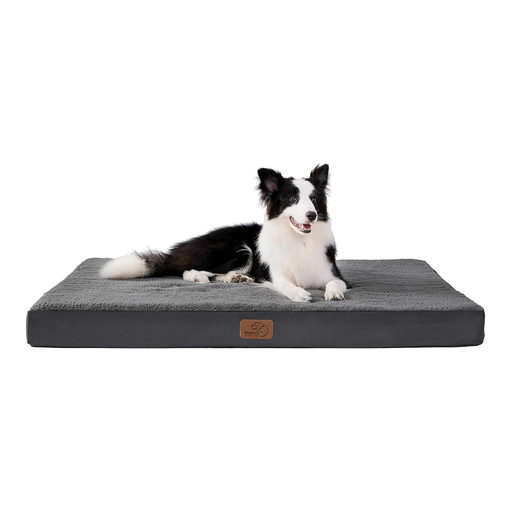
Why It Stands Out: This model combines a large sleeping surface with an 8 cm high egg crate foam mattress, designed for even weight distribution.
Benefits:
Who It's For: This bed is designed for large dogs or other pets up to 45 kg who prefer a flat and spacious sleeping area.
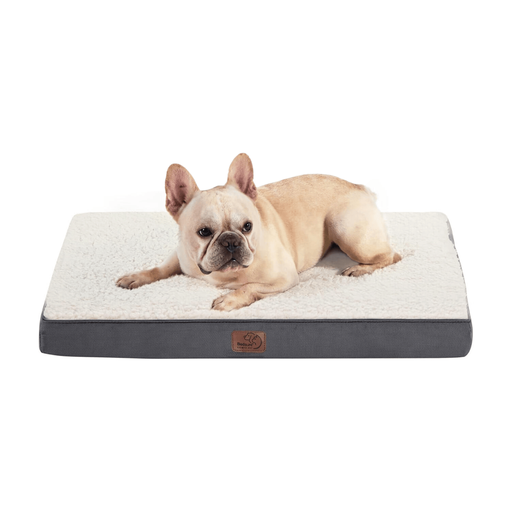
Why It Stands Out: A more compact version that offers the same orthopedic properties for small to medium-sized dogs.
Benefits:
Who It's For: Ideal for small to medium-sized dog breeds with a recommended maximum weight of 23 kg.
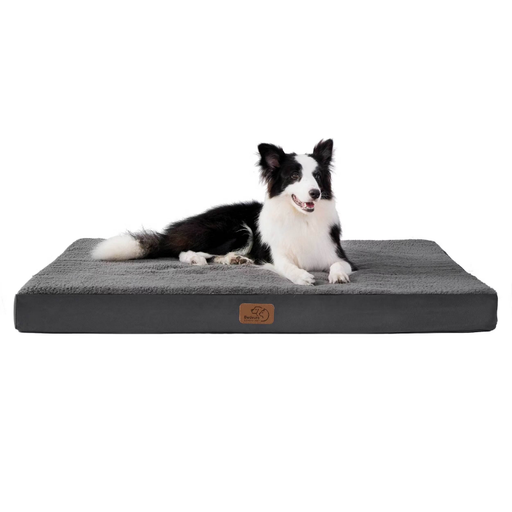
Why It Stands Out: This model is specifically designed for very large dog breeds, offering a robust, 8 cm thick foam base for maximum support.
Benefits:
Who It's For: A great choice for owners of very large dogs who are looking for an especially supportive and durable dog bed for senior dogs or as a preventive measure for young, large dogs.
The products presented here are just a selection. Every dog has individual needs and preferences. If you are looking for other sizes, shapes, or materials, you can find a wider range of sleeping options for your four-legged friend in our Dog Crate Furniture & Beds category.
1. What makes a dog bed orthopedic? A dog bed is considered orthopedic when it is made from materials designed to optimally support the dog's body and minimise pressure points. This is typically achieved through the use of memory foam, high-density foam, or special egg crate foam. The goal is to keep the spine and joints in a neutral position.
2. How often should you clean an orthopedic dog bed? The cleaning frequency depends on the dog's usage and condition. It is generally recommended to wash the removable cover weekly or every two weeks to remove hair, dander, and odours. The foam mattress itself should be spot-cleaned as needed, according to the manufacturer's instructions.
3. Is an orthopedic dog bed only useful for senior dogs? No, an orthopedic dog bed is not exclusively for seniors. It can also be a sensible preventive measure for large breeds to help prevent joint problems in old age. Likewise, dogs recovering from surgery or those with chronic conditions benefit from the pressure-relieving support. It is an investment in the long-term comfort and health of the animal at any stage of life.