
Lieferung heute & morgen

Qualitätsgarantie

Willkommens-Angebote freischalten: KOSTENLOSE Lieferung | Bis zu 80 % RABATT | Kostenlose 30-Tage-JoyPlus-Testphase
App herunterladen
Restful sleep is essential for your dog's health and well-being. Especially for senior pets, large breeds, or dogs with joint problems, choosing the right bed can make a significant difference. An orthopedic dog bed is designed to support the body and relieve pressure on joints. However, the market is flooded with products whose promises don't always match reality. As your Joybuy Product Recommendation Officer, I'll help you identify the crucial features and avoid common purchasing pitfalls.
Many dog owners invest in a supposedly high-quality bed, only to be disappointed a few months later when it fails to serve its purpose. These three problems are especially common:
To make an informed decision, you should focus on objective criteria rather than marketing buzzwords. Look for these three crucial aspects before you buy.
The core of any orthopedic dog bed is its filling. A joint-friendly dog bed is distinguished by its pressure-relieving materials.
The functionality of the cover is vital for daily use and the bed's longevity. Making a dog bed washable is the basic requirement for hygiene.
The right size is crucial for comfort, especially for a dog bed for large dogs. A bed that's too small forces the dog into an unnatural sleeping position.
Based on the objective criteria mentioned above, we have selected a few products suitable for different requirements and dog types.
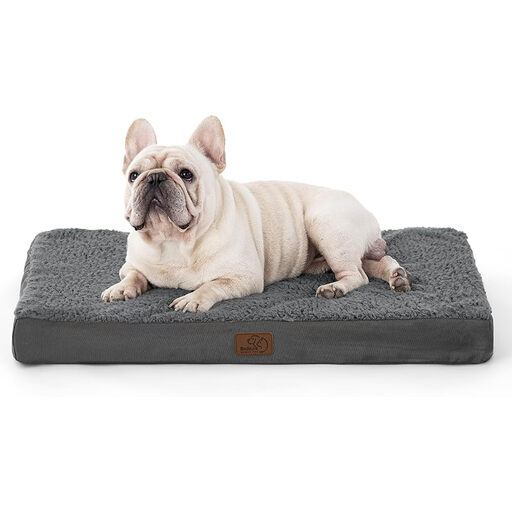
Why This Fits Their Persona: This model offers the core features of an orthopedic bed at a very accessible price point. It's a great choice for owners of small to medium-sized dogs or for those who want to try out the benefits of an egg-crate foam bed without making a large investment.
It avoids the "orthopedic bluff" by using genuine egg-crate foam for pressure relief instead of just a simple fibre fill. The cover is removable via a zipper and machine-washable.
Excellent value for money; non-slip base for stability on smooth floors; 8 cm mattress height.
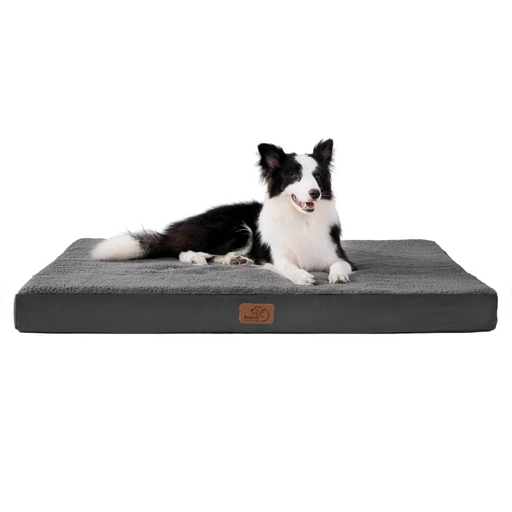
Why This Fits Their Persona: With its generous 110 x 80 cm sleeping surface, this bed is ideal for large breeds like Golden Retrievers, German Shepherds, or Labradors. It provides ample space for the dog to stretch out completely, which is important for muscle relaxation.
It solves the problem of a bed being too small and, thanks to its supportive foam, provides a stable surface that won't immediately sag, even under heavier body weights (up to 45 kg / 99 lbs according to the manufacturer).
Very large sleeping surface for maximum freedom of movement; L-shaped zipper for easy cleaning; non-slip base.
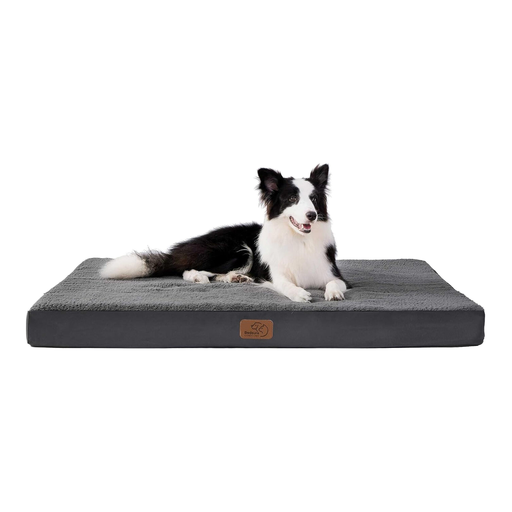
Why This Fits Their Persona: This model is designed as a flat orthopedic dog mat and has no raised edges. This makes it easier for dogs with arthritis or limited mobility to get on and off. The convoluted foam structure is specifically designed to relieve pressure points.
It directly addresses the needs of senior dogs by forgoing obstructive edges and offering a functional, pressure-relieving surface. The washable cover ensures the necessary hygiene for dogs that may be incontinent.
Barrier-free, low-profile entry; targeted pressure relief via convoluted structure; machine-washable cover.
We have compiled a complete, up-to-date list of products that fully meet these strict selection criteria and safety standards.
Measure your dog while it's in its favourite sleeping position—ideally, stretched out. Measure from the tip of the nose to the base of the tail. Add about 15 to 25 cm (6 to 10 inches) to both the length and width. This ensures your dog has enough room to stretch out comfortably and change positions.
The main difference is the filling material. An orthopedic dog bed uses pressure-relieving foam (like memory foam or egg-crate foam) that conforms to the body, distributes weight evenly, and supports the joints. A conventional dog mat is often filled with simple batting or thin, standard foam that quickly loses its supportive properties and offers no targeted relief.
Always follow the manufacturer's care instructions. Typically, you can remove the cover via the zipper and wash it in the machine. Use a gentle cycle at a low temperature (e.g., 30°C / 86°F) and a mild detergent. The foam core itself should not be machine-washed but can be aired out as needed. Allow the cover to air-dry completely before putting it back on to prevent mildew.