
Lieferung heute & morgen

Qualitätsgarantie

Willkommens-Angebote freischalten: KOSTENLOSE Lieferung | Bis zu 80 % RABATT | Kostenlose 30-Tage-JoyPlus-Testphase
App herunterladen
An orthopedic dog bed is more than just a place to sleep. It's a crucial investment in your dog's health and well-being, especially for senior pets, large breeds, or dogs with joint conditions. However, the market is crowded, and many products fail to deliver on their promises. As your Joybuy Product Recommendation Officer, I'm here to help you identify the key features and avoid common purchasing traps.
Many dog owners invest in a supposedly orthopedic bed, only to find it loses its function after just a few months. This is often due to three common problems:
A good orthopedic dog bed should provide a reliable, pressure-relieving, and hygienic surface for years to come.
To make an informed decision, you should examine three core parameters. These determine whether a dog bed is truly joint-friendly and durable.
The most important component is the filling. A true orthopedic dog bed is defined by its pressure-relieving core. Look for the following materials:
Sufficient material height (at least 7-8 cm) is critical to prevent the dog from "bottoming out" and making contact with the floor. This is especially important for a bed for large dogs or for those diagnosed with arthritis.
A high-quality cover is essential for durability and comfort. A washable cover is a basic requirement. Check for these details:
The external shape and the base of the bed significantly contribute to its acceptance and safety.
Based on the criteria above, we have identified several products suitable for different needs and types of dogs.
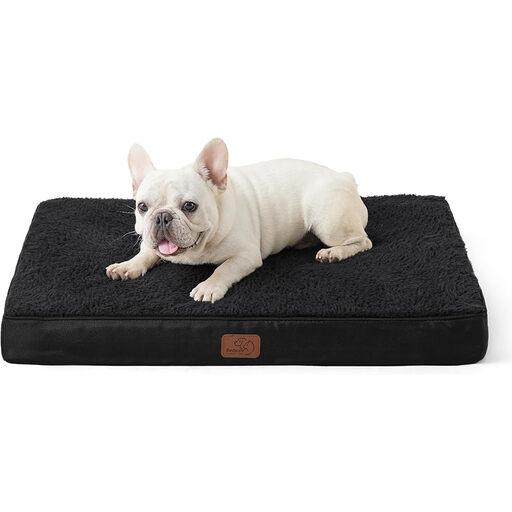
Why This Fits Their Persona: This model offers the essential orthopedic benefits in a compact size. It's a pragmatic solution for owners of smaller breeds or young dogs who want a joint-friendly base without the high cost.
It bypasses the "orthopedic bluff" by using egg-crate foam, which is proven to distribute pressure. The cover is removable and washable, and the base is non-slip.
A great balance of price and function. The contoured surface promotes air circulation. The non-slip bottom ensures stability.
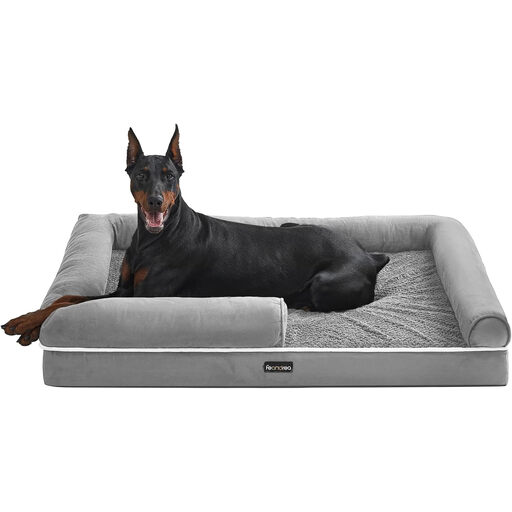
Why This Fits Their Persona: Designed for large dogs up to 45 kg who require maximum support. The generous dimensions and thick padding are ideal for breeds prone to joint issues or for senior dogs.
This bed uses a filling of supportive foam and PP cotton, specifically designed for orthopedic support. The cover is durable, removable, washable, and the base is non-slip.
The high, padded bolsters provide a sense of security and serve as a headrest. The sleeping surface features a durable, TPU-coated plush fabric.
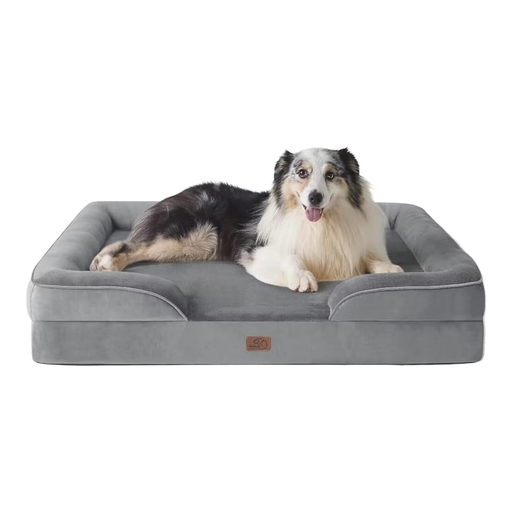
Why This Fits Their Persona: Ideal for dogs that love to curl up or rest their head on an elevated surface. This dog sofa's three-sided bolsters create a protective nook that many dogs, especially seniors, find very comforting.
The base of egg-crate foam provides genuine orthopedic support. It also features a washable zippered cover and a waterproof inner liner, avoiding the hygiene trap.
Combines the benefits of an orthopedic bed with the comfort of a sofa. The non-slip bottom ensures stability on all floor types.
We've compiled a complete, up-to-date list of products that fully meet these strict selection criteria and safety standards.
For logistical reasons, many orthopedic dog beds are shipped vacuum-packed. After unpacking, the foam typically needs 48 to 72 hours to reach its full size and supportive shape. It is advisable to leave the bed in a well-ventilated area at room temperature during this time.
The washing frequency depends on usage and how dirty it gets. As a general guideline, it is recommended to wash the cover every 2 to 4 weeks to minimise the build-up of hair, dander, and allergens. If it's visibly soiled or after an accident, the cover should be cleaned immediately. Always follow the manufacturer's washing instructions.
A high-quality foam core should last for several years. A sign of deteriorating quality is when the bed forms visible indentations that no longer bounce back, even after a long period without use. If the foam loses its elasticity and the dog is noticeably "bottoming out," it no longer provides adequate support, and the bed or its core should be replaced.