
Lieferung heute & morgen

Qualitätsgarantie

Willkommens-Angebote freischalten: KOSTENLOSE Lieferung | Bis zu 80 % RABATT | Kostenlose 30-Tage-JoyPlus-Testphase
App herunterladen
The right sleeping space is crucial for a dog's well-being. For older dogs, large breeds, or pets with joint problems, choosing the right bed can make a significant difference. An orthopedic dog bed is specifically designed to support the dog's body and relieve pressure points.
This article serves as your guide. It explains the key features of an orthopedic dog bed and presents a selection of models to help you make an informed decision.
Selecting the right dog bed depends on several factors. The following criteria will help you find a model that perfectly suits your dog's needs.
The core of any orthopedic bed is its filling. Unlike conventional dog pillows, which are often filled with loose fibers, these beds use firm, supportive materials.
A dog bed should be large enough for your dog to stretch out completely. Measure your dog from the tip of its nose to the base of its tail while stretched out, then add 15 to 20 cm to determine the required sleeping area. This is especially important for a dog bed for large dogs or an XL dog pillow.
Also, look for a dog bed with a non-slip bottom. Rubberized dots or a special coating prevent the bed from sliding on smooth floors like tile or hardwood, increasing safety when your dog gets in and out.
A washable dog bed makes hygiene significantly easier. Ideally, the bed should have a removable cover that can be unzipped and machine-washed.
For dogs prone to incontinence or for puppies, a waterproof dog bed or at least a water-resistant cover is a practical feature. A durable dog bed made from resilient materials like Oxford fabric can withstand heavy use and is less susceptible to scratches or bites.
Based on the criteria above, we have compiled a selection of dog beds that stand out for their specific features.
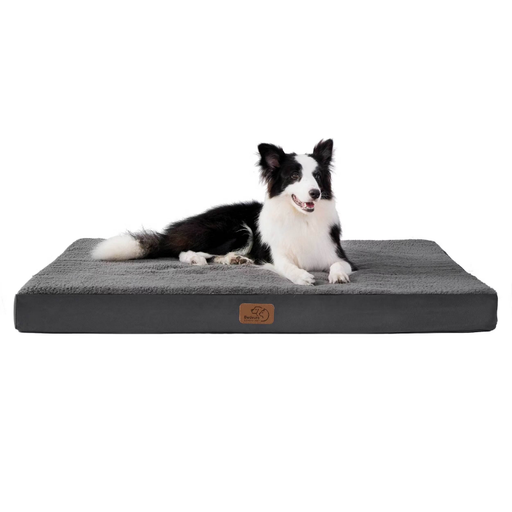
Why It Stands Out: The egg-crate foam design is engineered to distribute the pet's weight evenly, reducing pressure on joints and bones. The convoluted surface provides excellent shock absorption.
Key Features:
Who It's For: This bed is suitable for dogs of all ages, especially older pets who benefit from the foam's shock-absorbing properties. It fits well in standard dog crates and can be used as a dog mat for a crate.
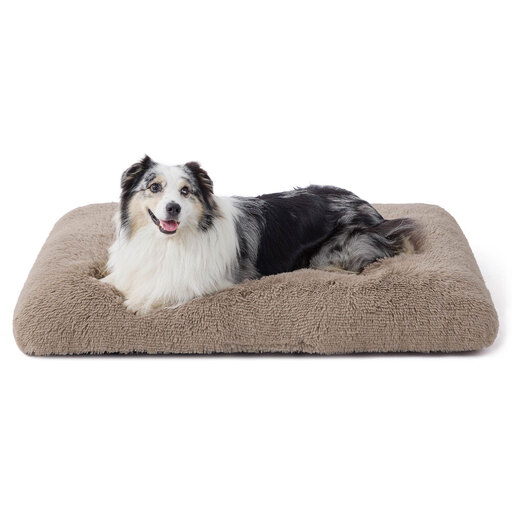
Why It Stands Out: The combination of a soft sherpa fleece surface and supportive filling provides high comfort and excellent insulation on cold floors.
Key Features:
Who It's For: Ideal for owners of large dogs looking for an exceptionally soft and cozy sleeping surface. Its non-slip bottom makes it a great choice for hard floors.
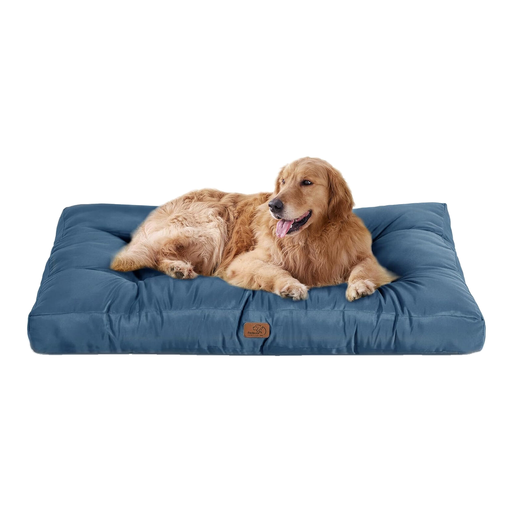
Why It Stands Out: This model is distinguished by its durable dog bed design. The Oxford fabric cover is water-resistant and hard-wearing, making it particularly easy to maintain.
Key Features:
Who It's For: An excellent choice for dog owners who need a durable and very low-maintenance bed. It's ideal for puppies, seniors, or dogs that spend a lot of time outdoors and bring dirt inside.
The models presented here cover a range of different needs. If you haven't found the perfect solution for your dog yet, there are more alternatives to discover.
Explore our full range of Dog Mats and Beds to find the perfect solution for your four-legged friend.
The main difference lies in the material of the sleeping surface. An orthopedic dog bed uses shape-retaining, pressure-relieving materials like memory foam or high-density cold foam. These actively support the spine and joints, whereas conventional beds often provide only soft padding with no supportive function.
This type of bed isn't just for dogs with diagnosed joint conditions like arthritis or hip dysplasia. It can also be used preventively for large and heavy breeds, highly active athletic dogs, or simply for any aging dog to increase comfort and protect their joints.
Measure your dog while it is in its favorite sleeping position. If it likes to stretch out, measure from its nose to the base of its tail and add about 15–20 cm to both the length and width. If it prefers to curl up, a slightly more compact size will suffice, as long as it still provides enough room to turn around.