
Lieferung heute & morgen

Qualitätsgarantie

Willkommens-Angebote freischalten: KOSTENLOSE Lieferung | Bis zu 80 % RABATT | Kostenlose 30-Tage-JoyPlus-Testphase
App herunterladen
Owners of large dog breeds know the challenge: a suitable sleeping space must not only be spacious and robust but should ideally also be easy on their joints. Especially for older dogs or those with joint conditions like arthritis, choosing the right bed becomes a crucial health decision. An orthopedic dog bed for large dogs is designed to optimally support the animal's body and minimise pressure points.
This guide is here to help. We'll explain which features to look for when making your choice and present a selection of models tailored to the needs of large dogs.
The term "orthopedic" is not a protected designation. Therefore, it's important to understand the material and construction details to make an informed decision.
The defining feature of an orthopedic bed is its filling. It should be pressure-relieving and retain its shape.
An XXL orthopedic dog bed must allow the dog to stretch out completely. Measure your dog while it's lying down, from the tip of its nose to the base of its tail, and add 20–30 cm (about 8–12 inches) to determine the required surface area.
A dog bed with a bolster or an orthopedic dog sofa offers additional benefits. The raised edge serves as a headrest and provides a sense of security and comfort, which many dogs appreciate. A low-profile entry is also important for dogs with limited mobility.
A large, washable dog bed is a practical necessity for hygiene reasons. Ensure the cover is easily removable via a zipper and is machine-washable. Water-repellent or waterproof inner liners offer extra protection for the foam filling against moisture and accidents.
Based on the criteria mentioned, we have compiled a selection of products suitable for large dog breeds.
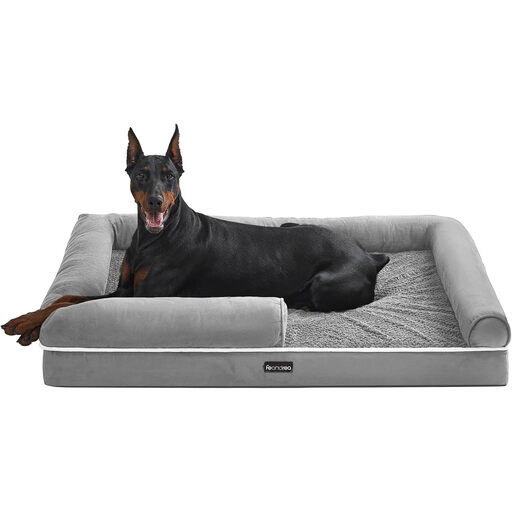
Why it stands out: This model is designed as an XXL dog couch and, with its raised edges, offers a sheltered environment that invites them to lean and snuggle.
Benefits:
Who it's for: For dog owners looking for a sofa-style bed that offers their dog a secure "nest" environment. It is suitable for large breeds weighing up to 45 kg.
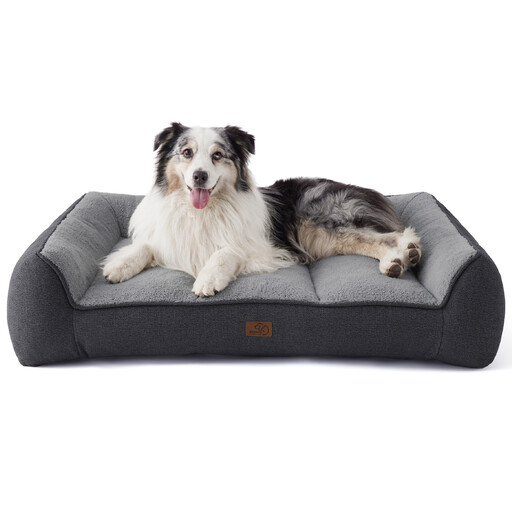
Why it stands out: This dog sofa features extra-thick padding and a thoughtful three-cushion headrest designed to specifically relieve pressure on the neck area.
Benefits:
Who it's for: A great choice for owners of large or older dogs who place special value on a supportive headrest and an easily accessible sleeping spot.

Why it stands out: The core of this bed is made of egg-crate foam, a structure known for its even pressure distribution and excellent ventilation.
Benefits:
Who it's for: Especially recommended for dogs with arthritis or other joint issues, as the egg-crate foam specifically contributes to pressure relief. Suitable for dogs weighing up to 45 kg.
While the orthopedic beds featured are ideal for indoors, dogs that spend a lot of time in the garden or on the patio often need a different kind of resting place. An elevated position protects them from cold and damp ground and ensures good air circulation. If you're considering a durable option for the outdoors, you can find more models in our Elevated Outdoor Dog House category.
An orthopedic dog bed is characterised by its filling made of pressure-relieving materials. These primarily include memory foam, high-resilience cold foam, or egg-crate foam. These materials adapt to the dog's body, support the spine and joints, and return to their original shape after use. The goal is to prevent pressure points and promote an ergonomically correct lying position.
As a rule of thumb, the dog should be able to stretch out comfortably in all directions on the bed without any body parts hanging over the edge. Measure your dog from the tip of its nose to the base of its tail while it is in a natural sleeping position. Add about 20 to 30 centimetres (8 to 12 inches) to this measurement to determine the minimum length and width of the sleeping surface.
Proper care is crucial for longevity and hygiene. Always follow the manufacturer's washing instructions. Typically, the outer cover is removable and can be machine-washed. It is recommended to wash the cover every one to two weeks, depending on use. Ensure the cover is completely dry before putting it back on to prevent mould growth inside.