
Lieferung heute & morgen

Qualitätsgarantie

Willkommens-Angebote freischalten: KOSTENLOSE Lieferung | Bis zu 80 % RABATT | Kostenlose 30-Tage-JoyPlus-Testphase
App herunterladen
When you buy outdoor camping equipment online, it’s easy to focus first on price, colour or impressively large capacity figures. In everyday use, however, it’s the finer details that determine whether a rucksack, sleeping bag or transport bag really suits your planned trip. Unclear temperature ratings, missing dimensions and exaggerated weight claims are particularly common causes of poor purchases.
This guide highlights the technical specifications that matter before you buy, and which equipment suits different camping and travel profiles.
The term “winter sleeping bag” can be used in different ways. What really counts are specific temperature values such as comfort range, limit or extreme temperature. Without a verifiable rating, it’s hard to judge whether it’s suitable for cold nights.
A sleeping bag with a comfort range of 8 to 14 °C, for example, is designed for mild to moderate camping nights. For high-altitude treks or temperatures below freezing, you should choose a different model with an explicitly appropriate temperature classification.
A camping rucksack with a high capacity can still be uncomfortable if the back length, hip belt and shoulder straps don’t fit your body. A 45-litre trekking rucksack is often suitable for multi-day, fairly compact trips. For family camping with lots of gear, a large transport bag is usually more practical.
Lightweight materials reduce the overall weight, but they may require more careful handling. Even a rucksack made from Dyneema composite material should be protected from sharp edges, unprotected tools and strong pulling forces. Details about the material, empty weight and maximum load are therefore more important than pure marketing claims.
Compare not just the volume, but also the external dimensions and the empty weight:
An ultralight hiking rucksack isn’t automatically the right choice for heavy loads. Check whether the hip belt, chest strap and back panel allow for controlled weight distribution.
For rucksacks and bags, the following details are relevant:
For longer storage, bags should be kept dry, clean and out of direct sunlight. Damp bedding or sleeping bags can encourage odours and mould.
For a camping rucksack, an adjustable shoulder and hip belt, plus a suitable back length, are essential. Heavy items should be placed as close to the back as possible. Side pockets should hold bottles or accessories without affecting your balance when walking.
For a foldable travel bag with wheels, the terrain matters. Wheels make transport easier on flat surfaces, but are less practical on stairs, loose stones or steep paths. In those situations, the bag should also have suitable carrying handles.
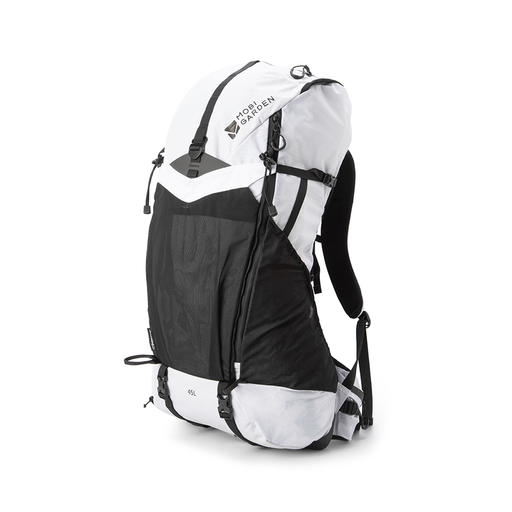
Why this product fits the profile: The 45-litre trekking rucksack combines a stated weight of around 1.35 kg with a ventilated 3D back panel, hip belt and multiple attachment points for trekking poles or a sleeping mat.
The capacity, external dimensions and empty weight are all clearly stated. The separate compartment for hydration systems and the weight distribution help with organised packing.
Dyneema composite material, ventilated back panel, adjustable chest and hip belt, and 45 litres of volume.

Why this product fits the profile: Multiple bags with zips and handles make it easier to store clothing, bedding and camping accessories separately.
The size of 73 × 34 × 37 cm per bag and the quantity of six are clearly stated. This makes it easier to plan the actual storage space before you buy.
Six-pack, zip closure, carrying handles and a format suitable for clothing, bedding or camping equipment.
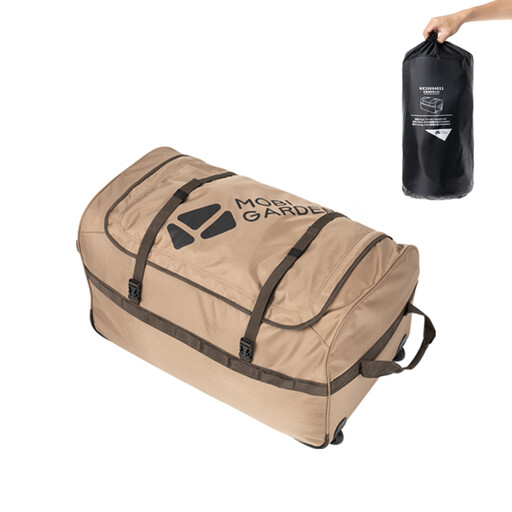
Why this product fits the profile: The 110-litre bag is designed for large equipment loads when camping, fishing or travelling, and folds down compactly after use.
Capacity, external dimensions, packed size and weight are all stated. The wheels are designed for flat surfaces; on stairs the bag can be carried by hand.
110 litres of volume, integrated wheels, 1.75 kg empty weight and a stated packed size of 42 × 21 cm.
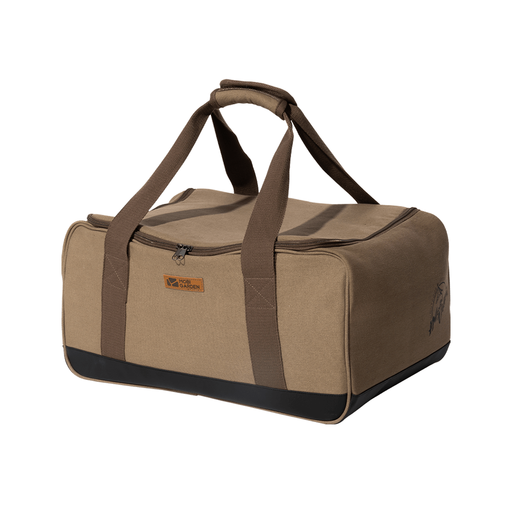
Why this product fits the profile: The structured camping organiser is designed for cookware, stoves and accessories, and makes it easier to keep things separate in the car or tent.
Internal dimensions, divider, EVA padding and reinforced PVC base are all clearly described. This prevents delicate cookware from being loose among other gear.
47 × 28.5 × 23 cm, removable divider, padded interior surfaces and water-resistant base.
A sleeping bag should be chosen based on temperature range, packed size and filling material. The Mobi Garden Winter Thickened Sleeping Bag has, according to the product details, a comfort rating of 8 to 14 °C, dimensions of 190 × 84 cm and a weight of around 1,800 g. It can be joined with a matching left or right version to form a double sleeping bag. According to the manufacturer, it is not intended for temperatures below zero.
For storage: allow sleeping bags to dry completely and do not keep them permanently compressed. A camping storage bag or a foldable outdoor bag can keep clothing, bedding and accessories separate. Gas canisters and hot cooking utensils should not be placed inside a closed organiser.
We’ve put together a full, regularly updated list of products that fully meet these strict selection criteria and the safety regulations in force in the EU.
For two to three days, the basic kit usually includes a rucksack or transport bag, sleeping bag, sleeping mat, weather-appropriate clothing, hydration system, cooking accessories, head torch and first-aid kit. The capacity you need depends on whether you’ll be carrying the tent, food and cookware yourself.
The lifespan depends on the material, use, care and storage. Zips, wheels, coatings and seams are typical wear points. Clean bags after use, remove sand from wheels and store textiles in a dry place. Overloading and sharp-edged items can significantly shorten the useful life.
The cost depends on the intended use and scope. A rucksack for light trekking requires different features than a 110-litre wheeled bag for family camping. It makes sense to first decide on capacity, weight, temperature range and method of transport, and only then compare prices and features.