
Lieferung heute & morgen

Qualitätsgarantie

Willkommens-Angebote freischalten: KOSTENLOSE Lieferung | Bis zu 80 % RABATT | Kostenlose 30-Tage-JoyPlus-Testphase
App herunterladen
A well-maintained outdoor space is a point of pride for many homeowners and garden enthusiasts. But from moss-covered driveways to crusted grill grates, maintenance can quickly become a challenge. The market for outdoor cleaning equipment is vast, but not every product delivers on its promise. Before you make a purchasing decision, it's important to know the common pitfalls that can lead to a poor investment.
Many devices advertise impressive performance specs that, in practice, are disappointing. A common problem, for example, is high-pressure washers with high pressure but an insufficient water flow rate, which makes cleaning inefficient. Another pitfall is the battery life of cordless devices like leaf blowers, which is often too short for cleaning larger areas. Finally, using unsuitable tools, such as a grill brush that is too aggressive on an enamelled grate, can lead to permanent damage.
To find the right device for your needs, you shouldn't be guided by marketing promises but rather focus on objective technical parameters. These three factors are crucial for making an informed choice.
With a pressure washer, the specified pressure in bar is only half the story. For effective outdoor cleaning, such as cleaning a driveway, the flow rate in litres per hour (L/h) is just as important. High pressure loosens the dirt, but a sufficient amount of water is necessary to wash it away. A device with 180 bar and only 350 L/h will clean significantly slower than a model with the same 180 bar and 550 L/h. Look for a balanced ratio between these two values to ensure high cleaning efficiency.
For cordless devices like a cordless leaf blower, two values are crucial: the battery capacity in amp-hours (Ah) and the voltage in volts (V). The capacity (Ah) determines how long you can work on a single charge, while the voltage (V) is an indicator of the motor's power. For larger gardens, a device with a high capacity (e.g., 4.0 Ah or more) or a system with interchangeable batteries is recommended. Models with brushless motors are often a good choice, as they generally operate more efficiently and have a longer lifespan.
Choosing the right tool is crucial to avoid damaging surfaces. A patio cleaner for a delicate wooden deck or a WPC cleaner should work with softer brushes and ideally clean with low pressure. For robust stone surfaces, however, harder bristles are suitable. The same principle applies to cleaning garden tools and especially when cleaning a grill grate. A stainless steel grill brush is ideal for cast iron or stainless steel grates but can scratch enamelled surfaces. Therefore, always check which materials the respective cleaning tool is designed for.
Based on these objective criteria, we have put together a selection of devices suitable for different requirement profiles.
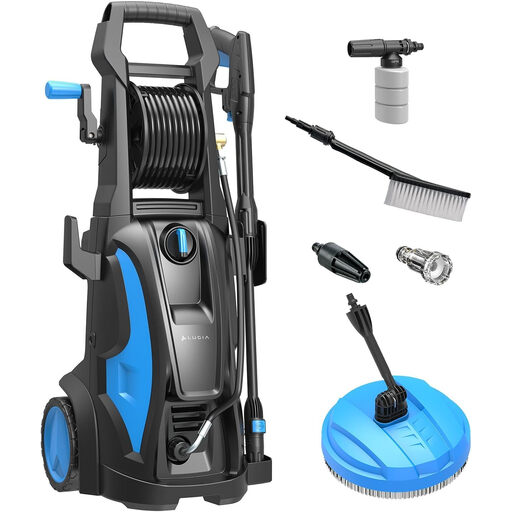
Why it's a good fit: Ideal for homeowners looking for a versatile tool for various tasks—from washing the car and cleaning the patio to tidying up garden furniture.
This model bypasses the "high pressure, low water" trap by combining 185 bar with a solid flow rate of 550 L/h. This ensures efficient and fast cleaning.
A complete accessory kit, including a patio cleaner, rotating brush, and turbo nozzle, is already included, making the device versatile right out of the box.
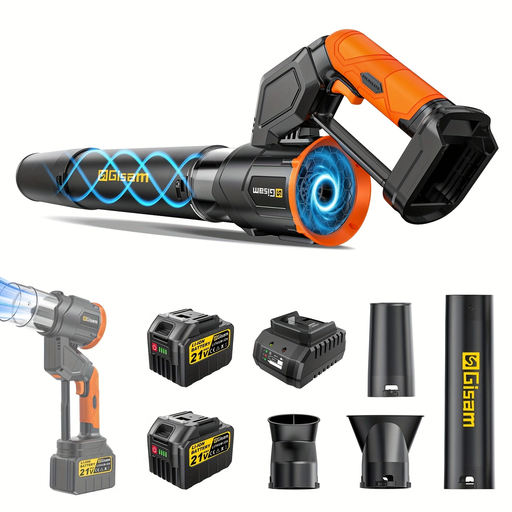
Why it's a good fit: Perfect for garden owners with large lawns or many trees who need a fast, flexible, and cordless solution for leaf removal.
With two 6.0 Ah batteries and a fast charger, this model tackles the problem of short battery life. The brushless motor also ensures efficient energy use and durability.
High airflow of 850 m?/h for rapid work and a flexible 2-in-1 design with a rotating handle for different working heights.
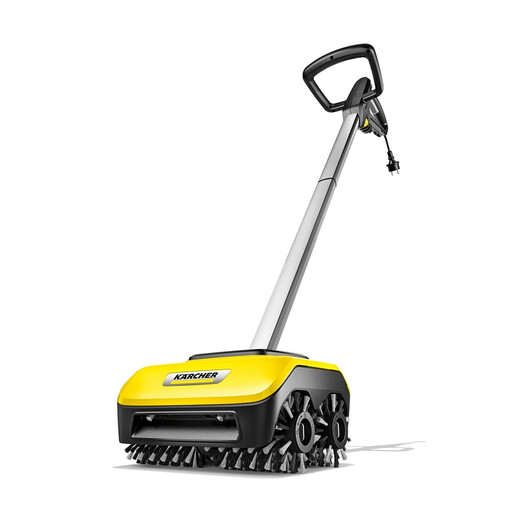
Why it's a good fit: The right choice for anyone who owns a wood or WPC deck and wants to clean it thoroughly yet gently, without damaging the surface.
This device is specifically designed as a WPC cleaner and for cleaning wooden floors. It works with rotating brushes and low water pressure (max. 10 bar) to prevent material damage from overly aggressive high pressure.
Uniform, edge-to-edge cleaning thanks to two counter-rotating brush rollers. The water consumption is adjustable via a valve, allowing for resource-efficient use.
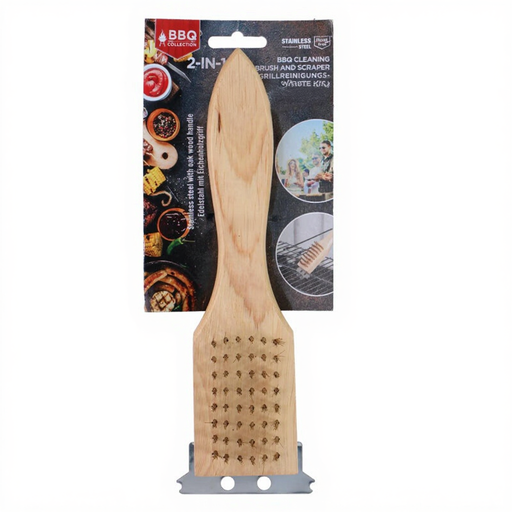
Why it's a good fit: For grill enthusiasts looking for a durable and highly effective tool to remove even the most stubborn build-up from the grill grate.
This grill brush avoids the pitfall of short-lived tools by using robust materials. The 2 mm thick stainless steel scraper and the oak wood handle are designed for heavy-duty use.
The 2-in-1 function, combining a scraper and a brush, allows for extremely effective cleaning. The oak wood handle provides a secure grip and good heat resistance.
We have compiled a complete, up-to-date list of products that fully meet these strict selection criteria and German safety regulations.
Regular, simple maintenance will significantly extend the life of your pressure washer. After each use, you should check and clean the water filter for contaminants. In winter, store the device in a frost-free location and completely drain all hoses and the pump to prevent frost damage. A professional inspection is usually only necessary if performance declines or there are visible defects.
The power of a cordless leaf blower depends heavily on the model. Devices with high airflow (measured in m?/h) and high air speed (km/h) are certainly capable of moving damp and heavy leaves. For such tasks, models with a turbo function or a high-power setting are particularly suitable. Look for devices with brushless motors, as they often deliver more consistent power.
Some patio cleaners, especially those with interchangeable brushes, can also be used on concrete or stone surfaces. For the K?rcher PCL 6, for example, brush rollers for stone surfaces are available as an option. However, it is important to check the manufacturer's specifications. A cleaner designed for wood with soft bristles will wear out quickly on rough concrete and may not achieve the desired cleaning effect. For non-sensitive concrete surfaces, a classic pressure washer with a surface cleaner attachment is often the more efficient solution.