
Lieferung heute & morgen

Qualitätsgarantie

Willkommens-Angebote freischalten: KOSTENLOSE Lieferung | Bis zu 80 % RABATT | Kostenlose 30-Tage-JoyPlus-Testphase
App herunterladen
Whether for your patio, garage, entranceway or camping gear: outdoor electronics and lighting must suit the location, power supply and weather conditions. However, high lumen ratings or terms such as “smart” alone reveal little about whether a product is genuinely practical for everyday use.
An LED outdoor floodlight with a high lumen rating is not automatically suitable for every area. Beam angle, mounting height and orientation are also crucial. A narrow beam can illuminate a driveway precisely, while a wider spread may be more suitable for a patio.
With sets, you should also check whether the light output applies to one device or several floodlights. For example, the Grifema set combines 2,200 lumens across two lights. This does not automatically mean 2,200 lumens per floodlight.
The IP rating describes protection against the ingress of solid objects and water. IP66 indicates, among other things, dust protection and protection against powerful water jets. However, this does not mean that every light can be operated permanently underwater.
Even with waterproof garden lighting, cables, plugs and wall penetrations must be suitably protected. In rented properties, you should also check whether permanent installation or alterations to the exterior façade are permitted.
A product may appear suitable externally but be designed for a different mains voltage. According to its product specifications, the LUTEC Twin-Spotlight with 120 V, 60 Hz is not suitable for German 230 V household power supplies without further checks. Compatibility should always be confirmed before purchase, particularly for permanent installations. Fixed-wired lights should ideally be installed by a qualified electrician.
For an outdoor wall light or security light, the stated IP rating should match the installation location:
An IP rating is no substitute for proper sealing. Before installation, check that the screws, seals and cable glands are suitable.
Colour temperature is measured in Kelvin:
You should also consider wattage, lumens, beam angle and adjustable light heads. A model with two movable heads can distribute light more effectively across a driveway, gate or garden path. For motion sensors, check whether the detection angle, range and activation time can be adjusted.
LED technology generally uses less energy than older light sources. However, actual costs depend on the combination of power consumption and daily operating time. A 20-watt light that stays on for many hours each night may use more energy than a lower-powered model with a motion sensor.
For remote locations, battery-powered devices, solar lights or a dynamo torch may be suitable. With rechargeable products, battery capacity, charging time and replaceability are important considerations. For bone-conduction headphones used for sport and outdoor activities, you should also check the Bluetooth version, battery life, IP rating and fit. An open design says nothing about volume or sound quality, and it is not a substitute for hearing protection.
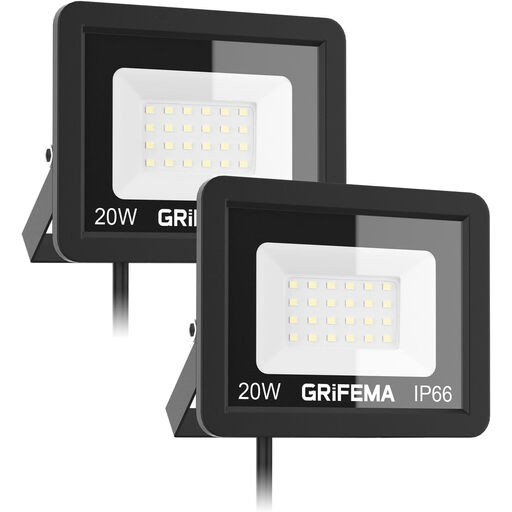
Why this product suits this profile: The set includes two lights for the garden, garage, courtyard or patio, with flexible positioning thanks to holders that can each be adjusted through 180°.
The product information explicitly states the combined light output for the 2-pack. However, the IP66 rating should not be confused with suitability for underwater use.
2,200 lumens combined, 20 watts per light, 6,500 K and adjustable holders.
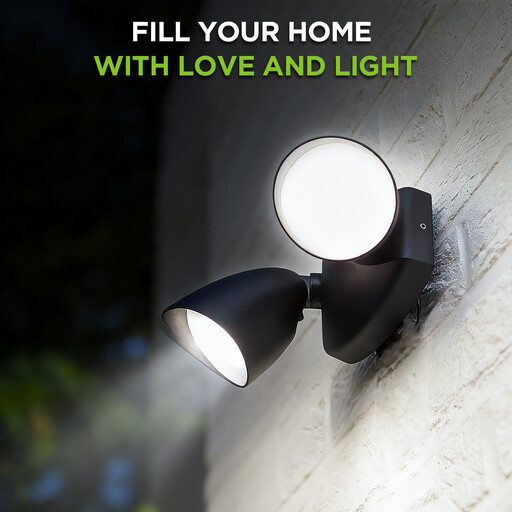
Why this product suits this profile: The metal construction, two light heads and neutral-white 4,000 K illumination are well suited to entrances, courtyards and covered outdoor areas.
The light colour is clearly specified as 4,000 K. Before installation, check the connection type, IP rating and local mains compatibility using the complete product documentation.
20 watts, 1,800 lumens, two light heads and a full-metal design according to the product name.
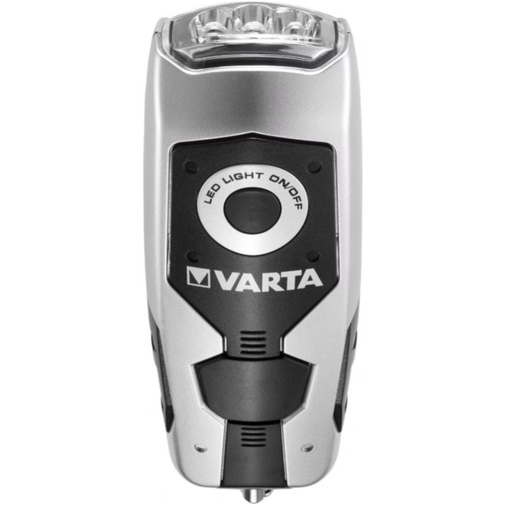
Why this product suits this profile: For use in the car, garage, on camping trips, during power cuts or on hikes, this manually powered torch works independently of available batteries.
Power is generated using the integrated hand crank. For extended use, the stated light duration after cranking should not be compared with the brightness of a mains-powered light.
No external batteries required, LED light source, and a shock-resistant, splash-proof design according to the product description.
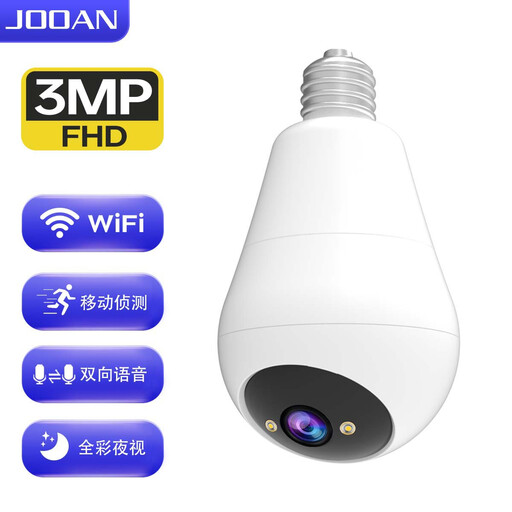
Why this product suits this profile: The combination of an E27 light source, camera, motion detection and 2.4 GHz Wi-Fi is ideal for users who want to combine lighting and surveillance in one device.
The product information explicitly states that the device only works with 2.4 GHz Wi-Fi. The camera must also be positioned so that neighbouring properties and public areas are not captured unlawfully.
2K or 3-megapixel resolution according to the product information, 355° pan, 90° tilt and integrated lighting.
We have put together a complete, regularly updated list of products that fully meet these strict selection criteria and the safety regulations applicable in the EU.
For your living space, a Neo-QLED 4K television such as the Samsung QN80F may be worth considering in 75 or 85 inches. Both versions offer 4K resolution, Mini-LED technology, Tizen, four HDMI ports and energy efficiency class F. However, they are designed for indoor use and are not suitable as outdoor televisions. Direct sunlight, rain and moisture should be avoided.
For sports use, bone-conduction headphones with IPX7, Bluetooth 6.0 and a stated battery life of up to 12 hours should be selected according to your personal requirements. Fit, controls, charging method and whether you need to remain aware of surrounding sounds are the key considerations.
It depends on the installation location. For exposed outdoor areas, products with a stated water and dust protection rating are a sensible choice. The specific IP class must match the level of exposure to rain, splashing water and dust, as well as the mounting position. Cable connections also require suitable protection.
Costs depend on the wattage, daily operating time and electricity tariff. A 20-watt light used for five hours a day consumes 0.1 kilowatt-hours per day in theory. A motion sensor or timer can reduce the actual operating time.
As a rule, the detection area should be limited to your own property. Public paths and neighbouring properties must not be monitored without a legal basis. Before installation, check data protection requirements, notification obligations and the camera’s orientation.