
Lieferung heute & morgen

Qualitätsgarantie

Willkommens-Angebote freischalten: KOSTENLOSE Lieferung | Bis zu 80 % RABATT | Kostenlose 30-Tage-JoyPlus-Testphase
App herunterladen
By: Joybuy Product Recommendation Officer
The right outdoor garden lighting can make paths easier to see, highlight flower beds or add a decorative touch to your patio or balcony. In practice, though, some common buying mistakes can lead to disappointment: the light may not charge sufficiently in winter, its IP rating may be misunderstood, or it may not be bright enough for the area you want to illuminate.
This buying guide explains which details to check before you buy and which models suit different needs.
IP65 means a product is dust-tight and protected against water jets from different directions. This rating is suitable for many outdoor areas, but it does not automatically mean the light can be kept underwater. Lights installed in dips in the ground, fountains or areas where water collects need to meet different requirements.
So, when choosing waterproof garden lights, check that the IP rating is clearly stated and suitable for the intended installation position.
Garden solar lights need enough daylight to charge. If they’re in the shade of walls, trees or canopies, charging can take longer. Available energy also falls in winter and on heavily overcast days. Features such as “automatic switch-on at night” describe how the light works, but don’t guarantee the same lighting time in every weather condition.
Before you buy, check:
The lumen rating describes luminous flux – the amount of light emitted. For LED lights, watts mainly refer to electrical power consumption. A higher wattage therefore doesn’t automatically mean a brighter light. For paths, entrances and stairs, light distribution and mounting height also matter.
RGB lighting gives you a choice of colours, but it isn’t always a substitute for clearly directed warm white or neutral white light. Decorative garden lighting can work well around seating areas, while evenly spaced outdoor pathway lights are usually more practical for frequently used paths.
For many freestanding outdoor lights, IP65 outdoor lighting is a sensible choice. The first digit, 6, indicates complete dust protection; the second, 5, indicates protection against water jets. Connections, cable joints and the solar panel should also be designed for outdoor use.
When installing your light:
Consider lumens, colour temperature and beam angle together when choosing a light. Warm white light at around 2700 to 3000 Kelvin often creates a subtle effect in the garden. Daylight white can make outlines stand out more clearly. A wide beam angle spreads the light over a larger area, while a narrow beam highlights specific features.
A 100-lumen light is better suited to guidance or decoration. A 470-lumen model can illuminate a larger area, provided the mounting height and light distribution are suitable. Always consider the manufacturer’s figures in relation to where you plan to use the light.
For solar lights, battery type, capacity and charging time are useful points of comparison. Actual lighting time depends on sunlight, temperature, battery age and the brightness setting. A smart solar light may offer additional control options, but it will need a compatible app or wireless connection.
Bluetooth Mesh is particularly useful if you want to control several lights together. For a single light, an automatic dusk-to-dawn sensor may be all you need.
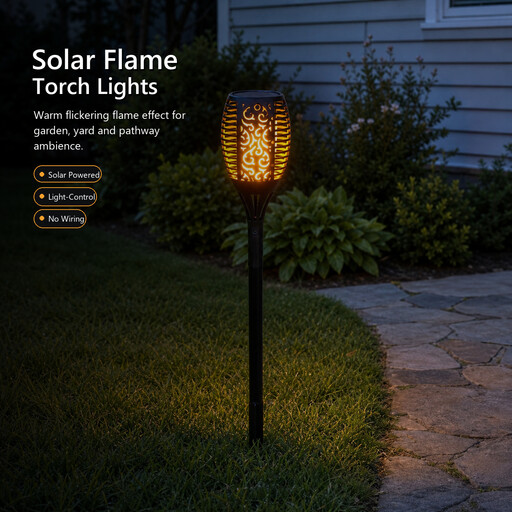
Why this product suits this profile: These two solar torches are a good choice if you want to create a decorative effect on your patio, lawn or garden path without running power cables. According to the product name, they feature 96 LEDs, a flame effect, automatic on/off and IP65 protection.
The stated IP rating and automatic switching are clearly specified. Even so, you should place the solar panel in as bright a spot as possible.
Two lights in the set, 96 LEDs according to the product name, solar-powered operation and a flame effect.
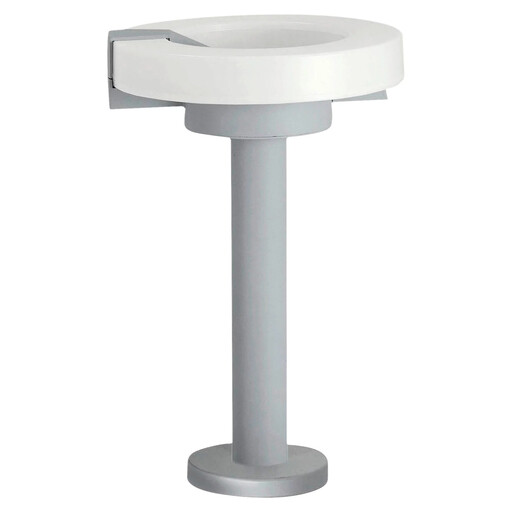
Why this product suits this profile: This permanently installed outdoor light is aimed at anyone looking for a lasting solution for lawns, driveways or paths. It is specified as IP65, 3000 Kelvin and 470 lumens, with an integrated, non-dimmable LED module.
The brightness, colour temperature and IP rating are all clearly stated. Bear in mind that the LED module is not dimmable and the E27 socket can take an additional bulb of up to 40 W, which is not included.
IP65, 470 lumens, warm white light at 3000 Kelvin, plus a glass diffuser and base according to the product description.
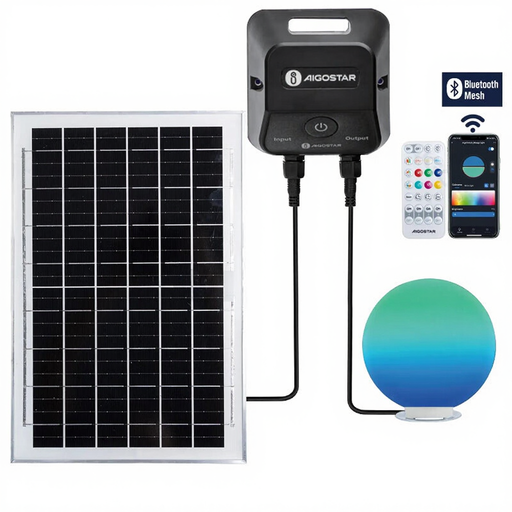
Why this product suits this profile: This model is a good fit for larger patios, event spaces or anyone who wants to control several lights centrally. It offers RGB and white light, Bluetooth Mesh for more than 200 devices according to the product information, and a separate solar panel.
The technical specifications state IP65, a charging time of 4 to 6 hours and an 8000 mAh battery. Actual operating time will still depend on the charge level and light colour.
RGB plus 2700 to 6500 Kelvin, a 120-degree beam angle, Bluetooth Mesh and a separate solar panel, according to the product specifications.
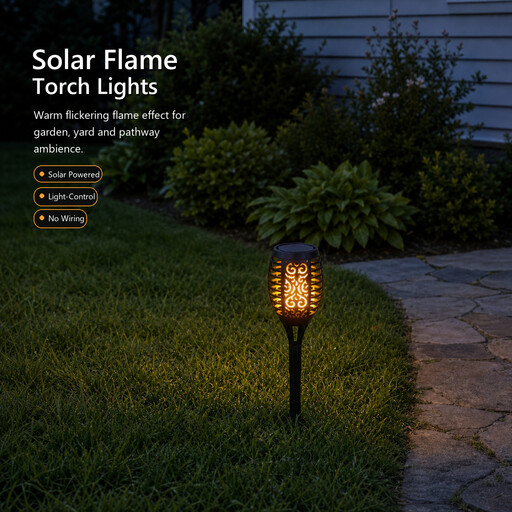
Why this product suits this profile: This set of four lights is ideal if you want to add decorative lighting to several spots around the garden. The product name specifies 12 LEDs, a height of 51 cm, a flame effect, automatic on/off and IP65 protection.
The set size, height and IP rating are clear from the product name. For effective charging, position each light in as open and sunny a spot as possible.
Four solar torches, 51 cm tall, 12 LEDs according to the product name and IP65 protection.
We’ve put together a complete, regularly updated list of products that meet these strict selection criteria and the applicable EU safety regulations.
Their lifespan depends on the battery, LED module, temperature, moisture and how well they’re maintained. Dirty solar panels reduce charging efficiency. If the battery is replaceable, changing it later can extend the light’s useful life. Treat manufacturers’ lifespan figures as technical estimates, not a guarantee for every environment.
Solar lights don’t use mains electricity while they’re running, so their ongoing energy consumption is low compared with mains-powered outdoor lights. However, you should still factor in the purchase price, possible battery replacements and spare parts when considering the overall cost. For mains-powered LED garden lights, wattage and daily operating time also affect running costs.
Position outdoor pathway lights to mark the route evenly without shining directly into your eyes. Staggering them can reduce harsh contrasts between light and dark. Before fixing them in place, check that the beams, path width and cable route work for your property. In purely decorative areas, you can use outdoor solar torches or solar garden torches, spaced further apart.