
Lieferung heute & morgen

Qualitätsgarantie

Willkommens-Angebote freischalten: KOSTENLOSE Lieferung | Bis zu 80 % RABATT | Kostenlose 30-Tage-JoyPlus-Testphase
App herunterladen
Colourful garden lighting can transform balconies, patios, and gardens into atmospheric oases. However, the market is flooded with products whose marketing promises often fall short in practice. Misleading weather resistance claims or underpowered solar panels can quickly lead to disappointment. This guide will show you which technical details to look for to find a durable and functional solution that meets your needs.
Before making a purchase, it's crucial to understand the most common issues that arise with cheap or poorly specified products.
To avoid the pitfalls mentioned above, you should carefully examine three core technical parameters. These are the primary determinants of the longevity and functionality of your outdoor lighting.
The choice of power source is fundamental and depends on the location and intended purpose.
The IP (Ingress Protection) rating indicates how well an electrical device is protected against the intrusion of foreign objects and water. For outdoor use, the following classes are relevant:
Always check the IP rating for all components, including the power supply and cable connectors.
Choosing the right product depends heavily on individual needs and the planned application. Here are a few options tailored to specific user profiles.
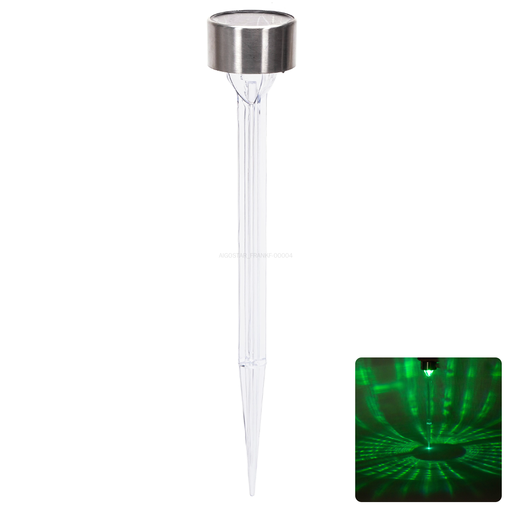
Why This Fits Their Persona: Ideal for adding the first splashes of colour to a garden or balcony without complex installation. These solar ground stakes are cost-effective and can be placed flexibly to highlight individual plants or path edges.
This model avoids the pitfall of insufficient solar power for its intended purpose, as it's designed as an accent light. It doesn't promise to light up the whole garden, but instead delivers a reliable, colourful light effect for several hours after dusk.
No wiring required; automatic on/off via a dusk sensor; IP44 rating is sufficient for use as a ground stake in flowerbeds.
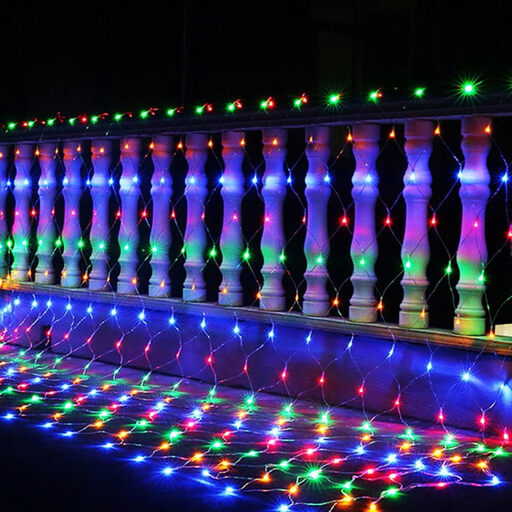
Why This Fits Their Persona: Perfect for large-scale decoration of bushes, house walls, or as *colourful balcony lighting*. The 3x2 metre net ensures even light distribution and is ideal for parties or as *outdoor Christmas lighting*.
As a mains-powered product, it delivers consistent brightness that would not be possible with solar-powered net lights of this size. The product description explicitly states that the adapter must be kept dry, which transparently addresses the trap of misleading weather resistance.
Large 6 m? coverage area; 8 different lighting modes for varied effects; memory function saves the last setting.
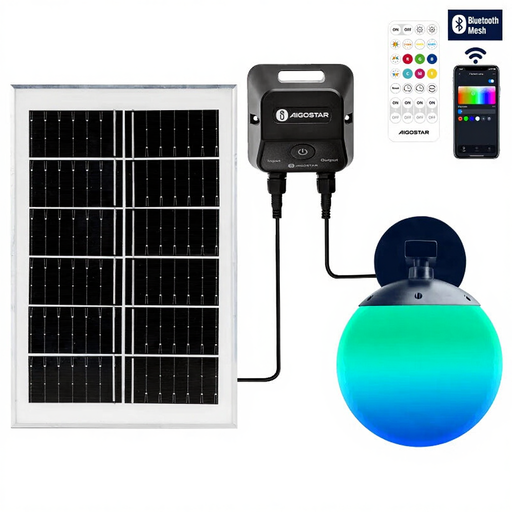
Why This Fits Their Persona: This light combines self-sufficient solar power with modern smart home technology. It's ideal for illuminating building fa?ades and offers full control over colours (RGBCCT) and brightness via an app—with no electricity costs or wiring.
It solves the problem of weak solar performance with a high-efficiency monocrystalline panel and a large 4Ah battery. The pitfall of limited control is bypassed through its Bluetooth Mesh app integration, which offers full RGBCCT functionality. The IP65 rating ensures high weather resistance.
Complete control via app (colour, brightness, colour temperature); no running costs thanks to solar power; robust IP65 construction for durability.
We have compiled a complete, up-to-date list of products that fully meet these strict selection criteria and relevant safety standards.
It depends on the installation location. For a light under an eave or on a covered balcony, an IP44 rating (protection against splashing water) is often sufficient. For lights exposed to direct rain, such as spotlights in the lawn or string lights in trees, IP65 (protection against water jets) is the recommended minimum. Ensure that the power supply and all connectors also have an appropriate rating or are placed in a dry location.
The performance of solar lights for the garden is limited in winter. Shorter days, frequent cloud cover, and lower temperatures reduce charging performance and battery capacity. They can still function for purely decorative purposes, but the runtime will be significantly shorter. For reliable lighting, such as on paths or at entrances, mains-powered systems are the safer choice during the winter months.
Compatibility depends on the smart home system used. Many manufacturers rely on open platforms like Tuya, which means that lights from different brands that are also Tuya-compatible can be controlled via the same app. Other manufacturers use proprietary systems like Aigostar's Bluetooth Mesh. Always check which system a light uses before purchasing to ensure it is compatible with your existing devices or your preferred ecosystem (e.g., Alexa, Google Assistant).