
Lieferung heute & morgen

Qualitätsgarantie

Willkommens-Angebote freischalten: KOSTENLOSE Lieferung | Bis zu 80 % RABATT | Kostenlose 30-Tage-JoyPlus-Testphase
App herunterladen
The right outdoor garden lighting can illuminate paths, highlight flower beds or provide practical light for your patio and front door. In practice, though, unclear IP ratings, unsuitable light colours and poorly positioned solar panels often lead to the wrong purchase. Checking a few technical details before you buy will help you choose lighting that suits your garden, how you plan to use it and where you’ll install it.
If you’re looking for waterproof outdoor lighting, don’t rely on marketing claims alone. The IP rating describes protection against solid objects and water:
No IP rating means a light can be left underwater permanently. Even with an IP65 light, you’ll need to consider the cable entry points, seals and installation location.
A garden solar light needs enough daylight to charge. Beneath dense trees, on a north-facing wall or next to tall buildings, the solar panel may receive less energy. So the charging and lighting times given by the manufacturer only apply in suitable conditions. Many models list a charging time of around 4 to 6 hours and a lighting time of 8 to 12 hours.
Kelvin describes light colour, while lumens measure light output. A 6500-Kelvin light looks cool white, while 2700 to 3000 Kelvin is perceived as warm white. Cooler light can be useful for visibility and safety; warm white is often a more subtle choice for patios and front doors. A high wattage alone tells you little about how bright a light will actually be.
For an outdoor garden light, the IP rating should suit where you plan to use it. A garden path light is often positioned close to the ground, where it’s exposed to splashes, dirt and changing temperatures. An outdoor wall light also needs to be fitted properly to keep the seal and connection protected.
For mains-powered lights operating at 220 to 240 volts, you’ll need to arrange installation by a qualified electrician. This is especially important for integrated LED lights and dimmable models.
Solar lights don’t need a fixed power supply. However, the battery, solar panel and charging conditions are all important factors to consider. Clean the panel regularly with a soft, damp cloth. Batteries are wear-and-tear parts and should be disposed of in accordance with local regulations for electrical waste and batteries.
For a mains-powered LED garden light, check whether the LED module can be replaced. An integrated module means you don’t need to change a bulb, but it can limit your repair options if something goes wrong.
A few lumens are often enough for a decorative ground spike light. A garden lamp or a light by the driveway will need a different level of output, depending on the area. For a dimmable outdoor lamp, the light and dimmer must be technically compatible. An incompatible dimmer can cause flickering or other problems.
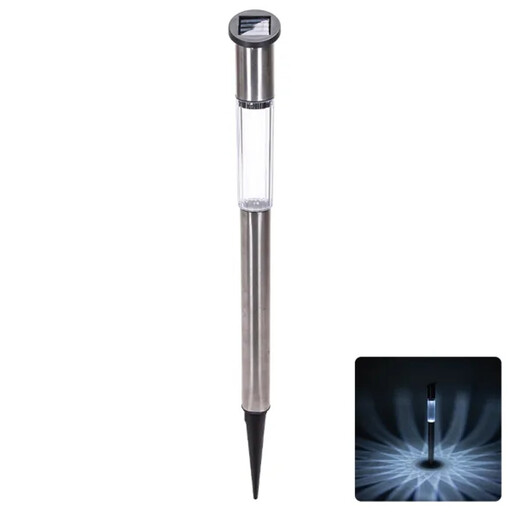
Why it suits this buyer: This solar ground spike light can be pushed into soft ground without the need for fixed electrical wiring. It’s suitable for paths, flower beds and smaller lawns.
The product details specify the charging conditions, run time and IP44 rating, making it easier to assess whether it’s suitable for a sheltered outdoor area.
Solar-powered, stainless steel look, 6500 Kelvin and, according to the product details, 8 to 12 hours of light in suitable conditions.
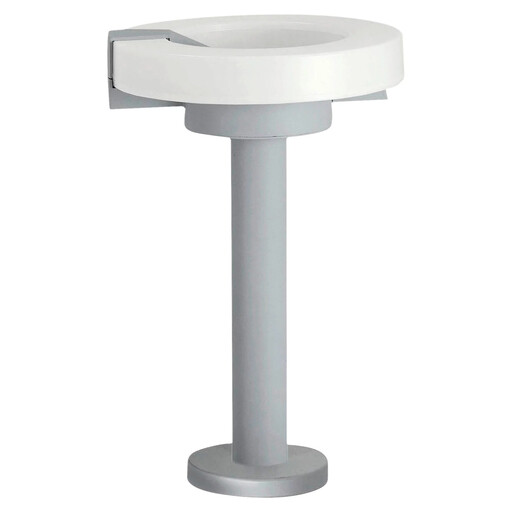
Why it suits this buyer: This classic garden lamp is designed for properties where paths, driveways or lawns need consistent lighting.
The IP65 rating is clearly stated, setting this model apart from basic IP44 lights. Its sturdy base helps you secure it safely on a suitable surface.
According to the product details: IP65, 470 lumens, 3000 Kelvin and an E27 socket up to 40 watts; the LED module is not dimmable.
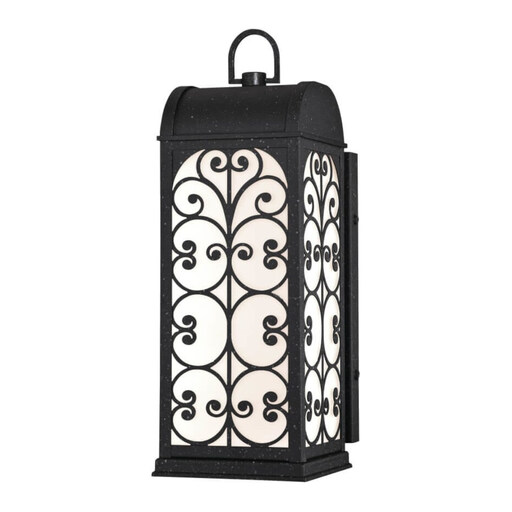
Why it suits this buyer: This outdoor wall light is ideal for front doors, patios and narrow outside walls where you need adjustable lighting that doesn’t take up much space.
The IP44 rating and the need for compatibility with an LED dimmer are clearly stated, helping you assess the installation location before you buy.
Integrated 16-watt LED light, 2700 Kelvin, dimmable with a suitable external dimmer and a compact width of 14 centimetres.
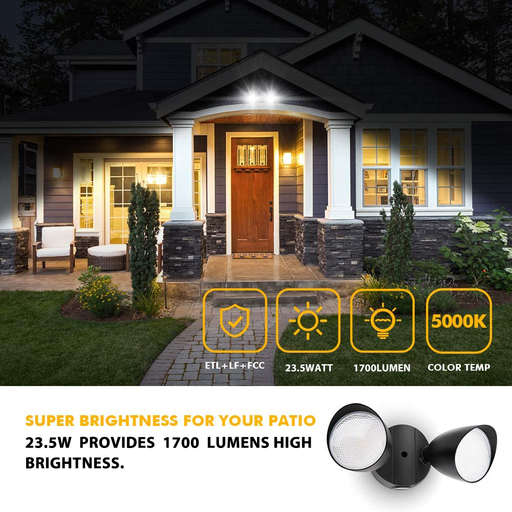
Why it suits this buyer: This twin outdoor light is suitable for garages, sheds, driveways or larger garden areas where you need to direct two beams of light.
The two light heads can be adjusted through 180 degrees, so you can point them towards the driveway, door or wall before installation.
Integrated LED technology, 5000 Kelvin, two adjustable heads, plus a die-cast aluminium housing and toughened glass lenses according to the product description.
We’ve put together a complete, regularly updated list of products that meet these strict selection criteria and the safety regulations in force across the EU.
It depends on where it will be installed. An IP44 outdoor light may be sufficient for sheltered areas. In more exposed locations, an IP65 garden light offers extra protection against dust and water jets. The light still needs to be installed correctly and must not be left in water permanently.
According to the product details for several Aigostar models, they can provide around 8 to 12 hours of light in suitable charging conditions. In practice, the time of year, cloud cover, shade, dirt on the solar panel and the condition of the battery all affect how long they stay lit. If there’s very little sunlight for an extended period, the lights may not last as long.
Energy use depends on the wattage, how long the light is on and how it’s switched. An integrated, low-wattage LED light used for a few hours each evening will have correspondingly low running costs. Solar lights don’t use mains electricity, but may need a replacement battery after prolonged use. For a realistic estimate, compare the wattage with the number of hours the light is used each day.