
Lieferung heute & morgen

Qualitätsgarantie

Willkommens-Angebote freischalten: KOSTENLOSE Lieferung | Bis zu 80 % RABATT | Kostenlose 30-Tage-JoyPlus-Testphase
App herunterladen
The right outdoor garden lighting can make paths more visible, highlight flowerbeds or create targeted accents around your patio and façade. In practice, however, it is not just the design and light colour that can lead to the wrong purchase. Products are often chosen based on marketing claims, even when their IP rating, power supply or installation location are not suitable.
A marking such as IP44 outdoor lighting means protection against solid foreign objects measuring 1 mm or more, as well as protection against splashing water. This is suitable for many sheltered areas, but not automatically for permanently exposed locations or installation in the ground.
IP65 garden lights are protected against dust and water jets. However, this rating does not mean that the light can be submerged. For outdoor floodlights, façade lights and installations exposed to harsher weather, IP65 may be a more suitable choice. The installation instructions for the individual product remain decisive.
Brightness is measured in lumens. A high value describes the luminous flux, but on its own says nothing about how well a path or façade will be illuminated. The beam angle, installation height and light distribution also affect the result.
For example, an outdoor LED floodlight with 2.200 lumens is more suitable for broad, bright illumination than a small solar garden light designed to create a decorative effect. For paths and flowerbeds, several low-positioned LED garden lights are often more practical than a single, very bright light source.
Solar garden lights need sufficient direct daylight. Beneath dense tree foliage, on a north-facing wall or in permanently shaded areas, charging performance may be lower. Statements such as “8–12 hours of runtime” apply under suitable charging conditions according to the product description and should not be understood as a guaranteed daily operating time.
The battery should also be replaceable or at least clearly specified. With permanently integrated batteries, the service life of the entire product may depend on the condition of the battery.
First, identify the intended area of use:
For mains-powered lights, electrical connections should be installed professionally and protected against moisture. Permanently connected outdoor lights should be installed by a suitably qualified person.
Solar lights work without a fixed power cable and are well suited to rented gardens, flowerbeds or distant sections of a path. Their brightness depends on the position of the sun, shade and battery capacity. Mains-powered LED lights generally provide more consistent light levels, but require a power supply.
A 20-watt light used for 5 hours a day consumes 0,1 kWh per day in purely mathematical terms. Ongoing costs therefore depend on power in watts, operating time and your individual electricity tariff. A motion sensor can reduce the time the light is switched on, while path lights that remain illuminated continuously will have a different operating profile.
Warm white light of around 3.000 Kelvin has a more understated effect and often works well around seating areas or entrances. Light between 4.000 and 6.500 Kelvin appears cooler and may be chosen for driveways, work areas or security lighting. RGB garden lighting is primarily intended for adding colour; it does not automatically replace functional general lighting.
For smart outdoor lighting, check app compatibility, range and any hubs required. A light with Tuya Smart compatibility, for example, may allow control via an app or compatible voice assistants. For garden lights with motion sensors, the detection angle, hold time and installation height are also important.
The following products meet a range of different requirements. Technical details are based on the respective product descriptions.
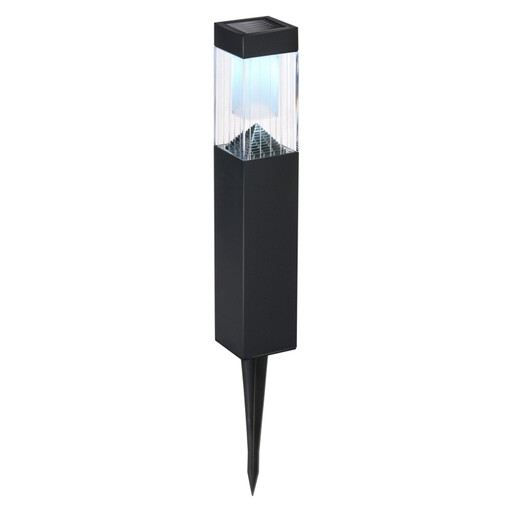
Why this product suits this profile: This solar light can be pushed into soft ground without a fixed cable, making it suitable for simple path or flowerbed lighting.
Power comes from an integrated solar panel and an AAA battery. This removes the need for complicated cable planning. The location should nevertheless receive plenty of sunlight.
Two LEDs, a height of 34 cm, a black finish and cable-free installation provide a simple solution for paths and lawns.
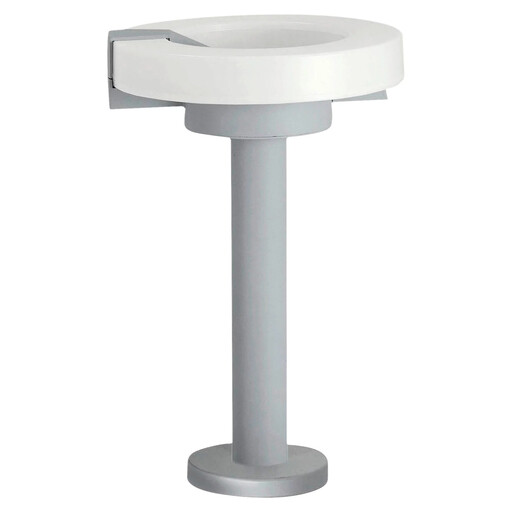
Why this product suits this profile: The classic bollard design is ideal for permanent garden paths, driveways and lawns where the light needs to be positioned clearly.
The stated IP65 rating is designed to protect against dust and water jets. It still does not replace correct installation or inspection of the electrical connections.
An integrated LED module, 3.000 Kelvin, 470 lumens and a robust design with toughened glass and a sturdy base.
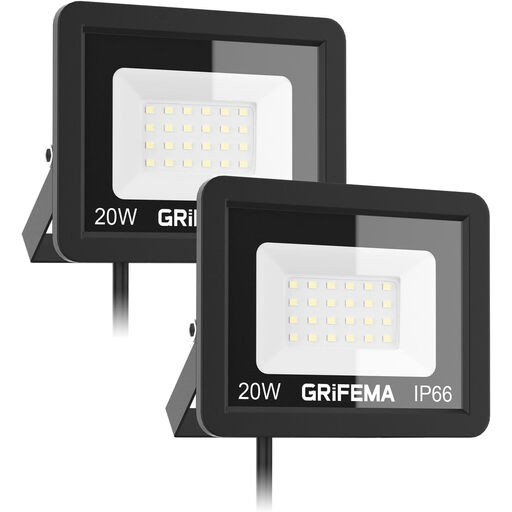
Why this product suits this profile: This two-piece set is aimed at users who want to illuminate large areas, garages, courtyards or driveways with high light output.
The combination of IP66, an adjustable 180-degree bracket and clearly stated 20 watts per floodlight makes it easier to match the product to the installation location.
A combined 2.200 lumens, 6.500 Kelvin and two adjustable floodlights for functional outdoor lighting.
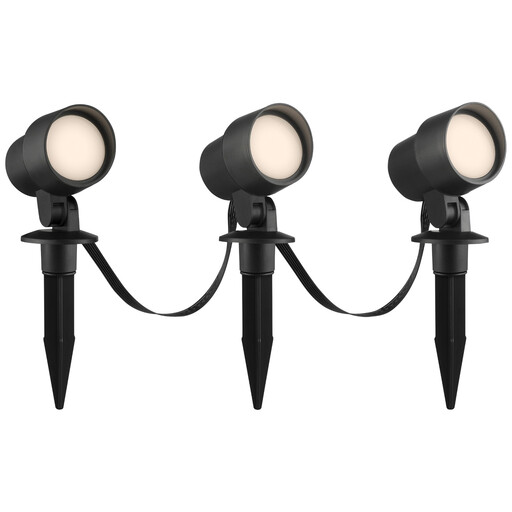
Why this product suits this profile: Three ground spike lights with RGB, CCT and dimming functions are ideal for users who want to adapt accent lighting for flowerbeds, patios or landscaping with flexibility.
The three separately positionable lights avoid a rigid single-light setup. With IP44, the location should nevertheless be protected from heavy exposure to water and flooding.
Tuya Smart compatibility, dimmable brightness, RGB colours and an adjustable colour temperature ranging from warm to daylight white.
We have put together a complete, regularly updated list of products that fully meet these strict selection criteria and the safety regulations applicable in the EU.
For a path, evenly distributed path lights are generally more pleasant than a single bright floodlight. At entrances or garages, a light with a sensor can be useful, provided that the detection range and activation time suit the property. Flowerbeds benefit from low-positioned solar lights or ground spotlights, while outdoor floodlights can be directed at façades, trees or larger lawn areas.
Before buying, check the cable length, transformer, mounting materials and control method. With solar products, the panel’s orientation should also form part of the location planning. Purely decorative RGB garden lighting should be considered separately from functional lighting, so that paths and steps remain sufficiently visible.
IP44 may be sufficient for sheltered areas. For exposed installations subject to greater levels of rain and dust, IP65 or higher is often more suitable. Regardless of the IP rating, the light must not stand in water or be submerged.
Service life depends on the LED module, battery, operating hours, temperature and moisture. With solar garden lights, the battery is often the component that loses performance first. Stated figures such as 15.000 hours refer to the light source according to the manufacturer and are not automatically a guarantee for the entire light.
While operating, solar lights draw their power from the charged battery and do not require an external mains supply. However, charging depends on direct sunlight, panel size, weather and shade. For consistent brightness throughout the night, mains-powered LED lights are generally easier to plan.