
Lieferung heute & morgen

Qualitätsgarantie

Willkommens-Angebote freischalten: KOSTENLOSE Lieferung | Bis zu 80 % RABATT | Kostenlose 30-Tage-JoyPlus-Testphase
App herunterladen
The right outdoor garden lighting should make paths clearly visible, provide functional illumination around entrances, or add an atmospheric touch to patios and balconies. In everyday use, however, it is often not the design but the combination of ingress protection, light output, power supply and installation that determines how practical a light really is.
As a Joybuy Product Recommendation Officer, I assess market claims against transparent, verifiable criteria. The following guidance helps homeowners, tenants and garden owners put advertising claims into context and choose suitable garden lighting.
The term “waterproof” is not very meaningful on its own. What matters is the specific IP rating. A light rated IP44 is protected against solid foreign objects measuring 1 mm or more, as well as splashing water. It may be suitable for a covered patio, balcony or sheltered entrance, but it should not be left standing in puddles for extended periods.
IP65 provides dust protection and protection against water jets. This can be advantageous for a garden lantern or outdoor light installed in exposed locations. IP66 offers an even higher level of protection against powerful water jets. However, the rating does not replace proper sealing of cable connections and electrical terminals.
Many product descriptions state only the wattage. For brightness, the luminous flux in lumens is more informative. A decorative garden solar light with only a few lumens serves a very different purpose from an outdoor LED floodlight for a courtyard, garage or driveway.
The colour temperature also affects where a light is best used:
A high lumen rating is not automatically the right choice. Floodlights aimed too brightly can dazzle neighbours or illuminate windows.
A permanently connected outdoor wall light requires a suitable electrical installation. Work on 220–240-volt connections in Germany should be carried out by an appropriately qualified professional. Battery-powered and rechargeable lights do not require a mains connection, but their runtime must be compatible with how they will be used.
When choosing outdoor string lights, buyers should also check the cable length, LED spacing, power adapter, mounting method and IP rating. An IP44 string light must not be submerged and requires a protected connection point.
Before buying, check whether the light will be installed in an open garden, beneath a roof, on an exterior wall or close to the ground. IP44 may be sufficient for a covered patio. In areas exposed to heavy weather, a higher IP rating is often the more appropriate choice.
For ground lights and solar lights, stability is another important consideration. An ground stake should hold securely in the soil. Solar lights need several hours of direct sunlight wherever possible; shade from walls, trees or roof structures reduces charging performance.
Paths often require no more than consistent, moderate illumination. For courtyard lighting or a garage, an adjustable outdoor LED floodlight with a higher lumen output may be more suitable. Pay attention to the beam angle and the direction in which the light is aimed. Two movable light heads can illuminate larger areas or target specific zones more precisely.
Integrated LEDs save space and eliminate the need to replace bulbs. If the LED module cannot be replaced, however, you should take the stated service life and warranty into account.
The main options are:
An outdoor light with motion sensor switches on only when movement is detected. Check the detection range, stay-on time and the possibility of false triggers caused by animals or passing vehicles.

Why this light is a good fit: Ideal for garden paths and smaller outdoor areas without an existing power connection. The light is installed by pushing it into the ground and requires no permanent mounting.
The charging and illumination times are stated clearly: 4–6 hours of charging and 8–12 hours of illumination under the specified conditions. The IP44 rating is also disclosed transparently.
Solar panel, NiMH battery, 6500 K and IP44; recommended for locations with direct sunlight.
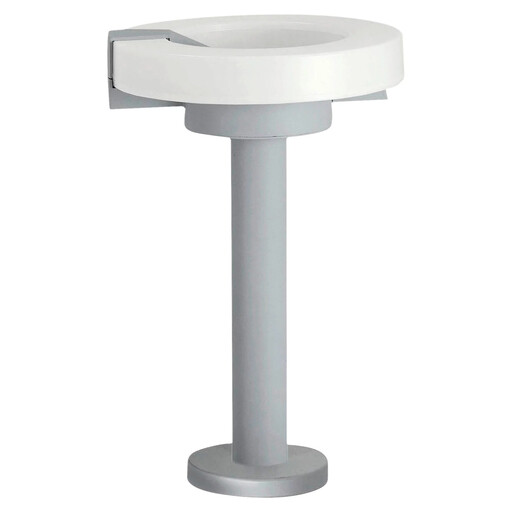
Why this light is a good fit: Its classic design is suitable for paths, lawns, driveways and property boundaries when a permanently positioned garden lantern is preferred.
Rather than relying on vague weatherproofing claims, the product specifies an IP65 rating. It also uses an E27 socket for bulbs up to 40 W; the bulb is not included and must be selected separately.
470 lm, 3000 K, toughened glass diffuser and a sturdy base plate according to the product details.
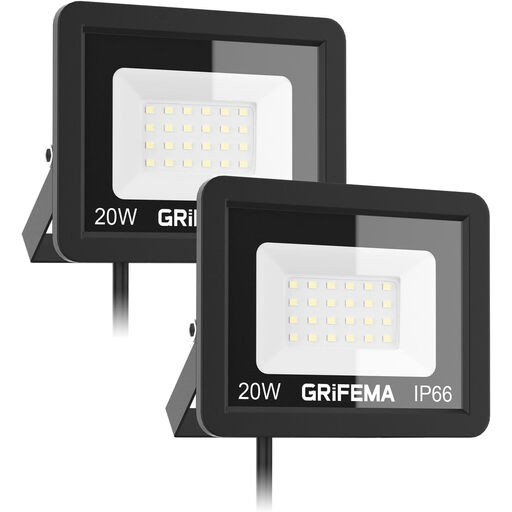
Why this light is a good fit: Suitable for garages, courtyards, larger garden areas or work zones where higher light output and flexible positioning are important.
The product details specify a combined luminous flux of 2200 lm, 20 W per floodlight and an IP66 rating. The 180° bracket allows the beam to be directed precisely.
6500 K, IP66 and a 2-pack; according to the description, no plug is included. The electrical connection therefore requires particularly careful planning.
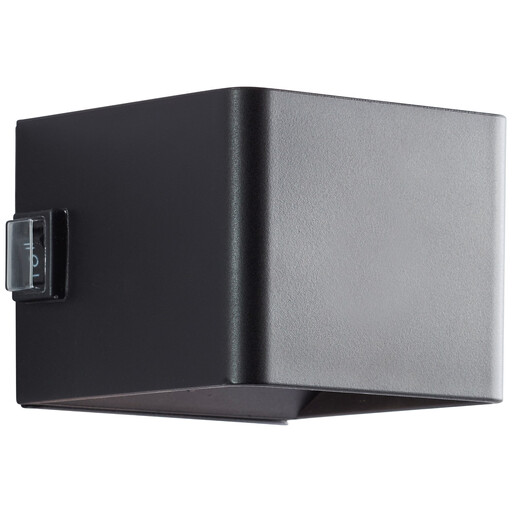
Why this light is a good fit: Ideal for rental properties, balconies, patios and locations without a permanently installed power connection. The integrated battery and USB port support flexible use.
The battery, USB charging cable, magnetic mount and motion sensor are all explicitly listed. The IP44 rating protects the light against splashing water, but it is not suitable for submersion.
300 lm, 4 W, 3000 K, IP44 and four protection-class specifications according to the product page; the LED module is integrated.
Our selection includes a range of lights for sheltered and damp outdoor areas. Always check the IP rating, connection and installation location before buying.
Start by planning the areas that need illumination: the entrance, path, seating area, garage or property boundary. Several lower-output lights often create more even illumination than a single, very bright floodlight.
For mains-powered lights, the junction box, cable and mounting hardware must all be suitable for outdoor use. Cables must not be left loose across walkways. Solar lights need an unobstructed view of the sky, while battery-powered string lights require regular battery replacement. Clean solar panels and diffusers with a soft, damp cloth, and check housings and cables for cracks.
That depends on the installation location. IP44 is often sufficient for sheltered areas. Lights exposed directly to the weather benefit from IP65 or IP66. The rating must be appropriate for the complete installation; mains plugs and cable connections in particular must not be left unprotected in standing water.
Consumption depends on the wattage and operating time. An 11 W light switched on for five hours a day uses 55 Wh per day in purely mathematical terms. To calculate the annual cost, multiply the daily consumption by the number of days used and your tariff’s electricity price. Solar and rechargeable lights reduce mains electricity consumption, but they require charging time or batteries.
Service life depends on the LED module, battery, switching cycles, moisture and temperature. With integrated LEDs, the module is not always replaceable. For this reason, pay attention to the manufacturer’s specifications, warranty terms, availability of spare parts and carry out regular visual inspections. If you notice excessive heat, damaged cables or penetrating moisture, discontinue use of the light.