
Lieferung heute & morgen

Qualitätsgarantie

Willkommens-Angebote freischalten: KOSTENLOSE Lieferung | Bis zu 80 % RABATT | Kostenlose 30-Tage-JoyPlus-Testphase
App herunterladen
The right outdoor garden lighting can illuminate paths, highlight flower beds or create a pleasant atmosphere on patios and balconies. However, some common marketing claims can easily lead to the wrong purchase. A high number of LEDs does not automatically mean the brightness is right for you, “waterproof” is not a standardised technical specification, and solar lights are not equally reliable in every location.
This buying guide explains which technical specifications matter before you buy and which lights are suitable for different outdoor areas.
The IP44 rating describes protection against solid foreign objects measuring 1 millimetre or more, as well as splashing water from different directions. This is sufficient for many sheltered areas, paths and decorative applications. However, it does not mean that a light can be exposed to heavy rain, standing water or immersion for extended periods.
IP65 provides a higher level of protection against dust and water jets. Even here, it is important to note that the light housing and the solar panel may have different protection ratings. With solar string lights, you should therefore check whether the IP rating applies to the entire construction or only to the lighting section.
Claims such as “8 to 14 hours” depend on sunlight, the season, orientation, shade and battery condition. In German weather conditions, the actual lighting time may be considerably shorter in winter or after several cloudy days.
The solar panel should be positioned during the day where it is as free as possible from trees, house walls and areas of permanent shade. A decorative solar light is therefore not automatically suitable for a dark north-facing balcony or a densely planted flower bed.
2700 kelvin produces warm white light with a yellowish appearance. This light colour is often suitable for seating areas, flower beds and decorative outdoor lighting. Neutral white or daylight white settings may be more suitable for paths and functional areas. With RGB garden lights, the focus is on creating colourful effects rather than necessarily providing even illumination.
As well as light colour, the installation location, beam angle and actual power consumption are also important. A small solar ambient light is more suited to creating individual accents, while a garden spotlight with a ground spike can be used to target plants, façades or paths.
IP44 garden lighting may be suitable for a covered patio or sheltered balcony. Lights installed in unprotected areas should be designed to withstand greater exposure to the elements. During installation, you should also ensure that cable connections, power supplies and sockets are suitable for outdoor use.
Solar garden lights do not need a permanent power cable, but they do rely on sufficient sunlight. For mains-powered LED garden lighting, the electrical connection should be installed with protective measures suitable for outdoor use. Low-voltage systems can reduce installation work, but depending on the product, they may require a power supply or transformer.
Pay attention to:
Dimmable outdoor lighting can be adapted more effectively to seating areas, paths and night-time use. Smart garden lighting with app or voice control can provide scenes, schedules, RGB settings and CCT adjustments. However, you will need to consider a stable Wi-Fi or Bluetooth connection, compatible apps and a suitable power supply.
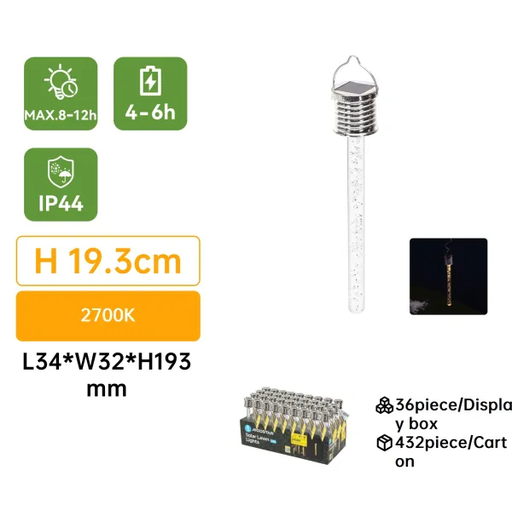
Why this product suits this profile: This compact solar light does not require a mains connection and is suitable for small flower beds, paths or decorative accents on balconies and patios.
The product specifications explicitly state IP44, a charging time of around 4–6 hours and a lighting time of 8–12 hours. This makes it easier to assess where the product can and cannot be used.
Warm white light at 2700 K, an integrated 40 mAh Ni-MH battery and a low weight of 40 g.
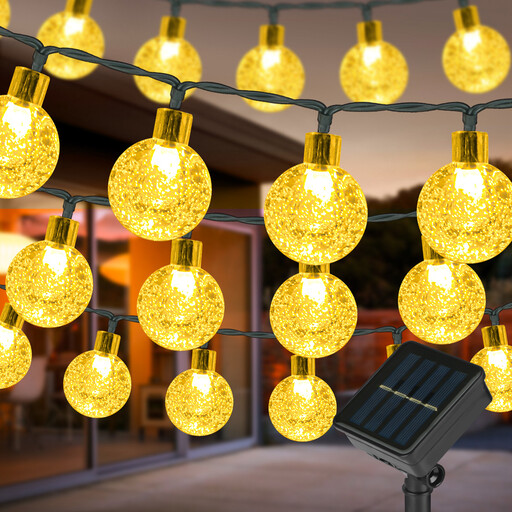
Why this product suits this profile: This 7-metre string light is designed for patios, balconies, pergolas and larger decorative areas where a continuous line of light is desired.
The product description specifies an IP65 rating for the string lights and separately states that the solar panel must not be immersed in water.
50 warm white LED bubble lights, eight stated lighting modes, automatic activation in the dark and a solar charging time of around 6–8 hours.
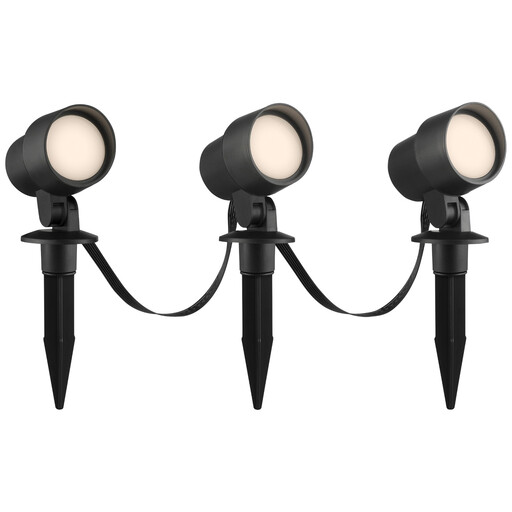
Why this product suits this profile: This set of three is designed for users who want to illuminate several areas precisely and adjust the light colour, brightness or colour scenes via an app or voice assistant.
The specifications list specific features rather than making blanket claims: IP44, dimmable, RGB, CCT and Tuya Smart compatibility. However, the lights are not designed for standing water.
Three garden spotlights with ground spikes, adjustable colour temperature from warm white to daylight white, and control via an app or compatible voice assistants.
We have put together a complete, regularly updated list of products that fully meet these strict selection criteria and the safety regulations applicable in the EU.
Before installation, you should decide what you want the lighting to achieve:
Clean solar panels regularly with a soft, dry cloth. With mains-powered systems, plug connections should not be left on the ground, and only outdoor components intended for this purpose should be used. Before buying, you should also check whether the transformer, ground spikes, mounting materials and replacement parts are included.
Consumption depends on the power rating, operating time and number of lights. Solar garden lights draw their energy from the solar panel during the day. For mains-powered LEDs, consumption can be calculated using the stated wattage and daily operating time. However, a low wattage does not automatically indicate sufficient brightness.
The lighting time per night depends on the charge level and the weather. The battery is a consumable component and may lose capacity over time. Information about LED lifespan, such as the manufacturer’s stated lifespan of up to 15,000 hours for the Aigostar light, does not automatically refer to the battery’s service life or the lifespan of the product as a whole.
IP44 may be suitable for sheltered outdoor areas, provided the light is not standing in water or continuously exposed to severe weather. For more exposed applications, IP65 offers greater protection against dust and water jets for the product component carrying the relevant rating. The installation instructions provided by the manufacturer remain decisive.