
Lieferung heute & morgen

Qualitätsgarantie

Willkommens-Angebote freischalten: KOSTENLOSE Lieferung | Bis zu 80 % RABATT | Kostenlose 30-Tage-JoyPlus-Testphase
App herunterladen
Outdoor garden lights can illuminate paths, highlight flowerbeds or create a pleasant atmosphere on patios and lawns. Many products look similar when you are shopping, but can differ significantly in terms of IP rating, power supply, brightness and installation. If you focus solely on design or low prices, you may end up with a light that does not charge sufficiently in its intended location, is unsuitable for rainy conditions or cannot be controlled as expected.
A rating such as IP44 means protection against solid foreign objects above a certain size and against splashing water. This is sufficient for many decorative solar garden lights, but not for areas that are permanently wet, heavily irrigated or at risk of flooding. IP65 also provides dust protection and protection against water jets. IP67 allows temporary immersion under the specified conditions.
The IP rating does not replace correct installation. Cables, plug connections and housings must also be installed appropriately. An outdoor light with a ground spike should not be placed in a hollow where water regularly collects.
Solar garden lights are often advertised with a runtime of several hours. However, this depends on sunlight, the time of year, shade, battery condition and lighting mode. A solar panel beneath a tree or on a north-facing wall will charge much less than a panel positioned in an unobstructed, sunny location.
Some compact solar garden lights specify around 4 to 6 hours of charging time and 8 to 12 hours of illumination. These figures should be understood as technical product specifications, not as guaranteed runtime in all weather conditions.
RGB garden lighting can change colour without an app or Wi-Fi connection. If you need groups, schedules, dimming or voice control, look specifically for Bluetooth Mesh, Wi-Fi, Matter or a manufacturer's app. With extension lights, you should also check whether they work independently or require a base light.
For flowerbeds, lawns and paths without a mains connection, garden lights with ground spikes are practical. The spike can be pushed into soft ground and moved if you redesign your garden. Solar lights need a location with as much sunlight as possible.
Mains-powered LED garden lamps provide consistent lighting regardless of daylight. For 220-volt products, installation must comply with the manufacturer's instructions and applicable local regulations. Work on electrical connections should be carried out by a qualified electrician.
For outdoor ground spotlights and floodlights, the adjustable beam angle is also important. This allows paths, walls and tree canopies to be illuminated more precisely.
Stainless steel effect finishes, plastic, polycarbonate and polyurethane differ in weight, appearance and care requirements. However, the material description alone does not indicate how suitable a light is for a particular location. The key factors are IP rating, temperature range, mounting method and achievable stability.
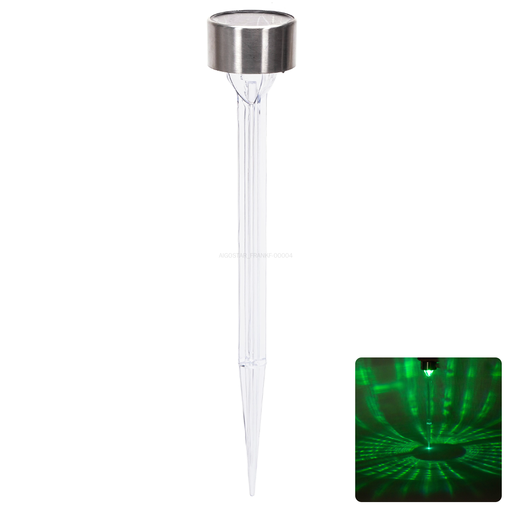
Why this product suits this profile: This compact solar light can be installed in soft soil or lawns without a mains connection and provides RGB lighting for paths and flowerbeds.
The specifications clearly state the charging time, runtime and IP44 rating. This makes it easier to distinguish its use as a decorative light from that of full-scale functional lighting.
RGB light, ground-spike installation, Ni-MH battery and automatic switching on and off at dusk and dawn.
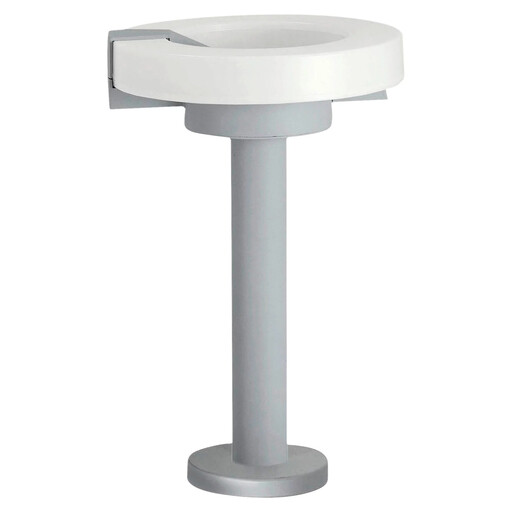
Why this product suits this profile: This garden path light is designed as a sturdier post light for paths, driveways and lawns when more even illumination is required than small solar spotlights can provide.
The IP65 rating is clearly stated. This means the light should be assessed differently from IP44 models in terms of dust protection and resistance to water jets.
470 lumens, 3000 Kelvin, IP65 and a robust design with toughened glass, according to the product description.
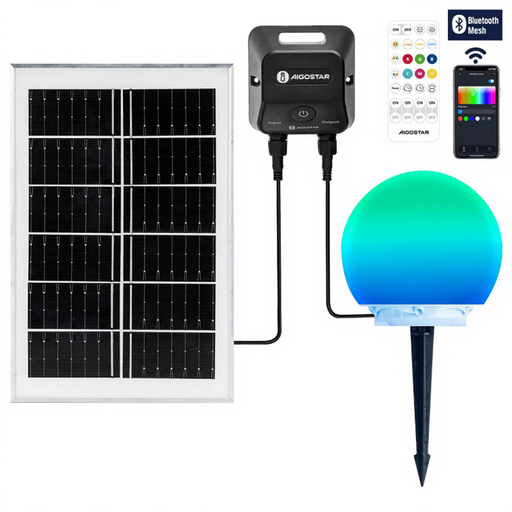
Why this product suits this profile: For larger gardens or multiple light points, this solar-powered light offers RGBCCT, Bluetooth Mesh and a separate panel for more flexible positioning.
The specifications distinguish between smart home control, battery, solar panel and IP67 rating. Before buying, you should still check whether the Bluetooth range and app are suitable for your garden.
RGB+CCT from 2700 to 6500 Kelvin, 4000-mAh lithium battery, 5-W solar panel and Bluetooth Mesh connection, according to the product specifications.
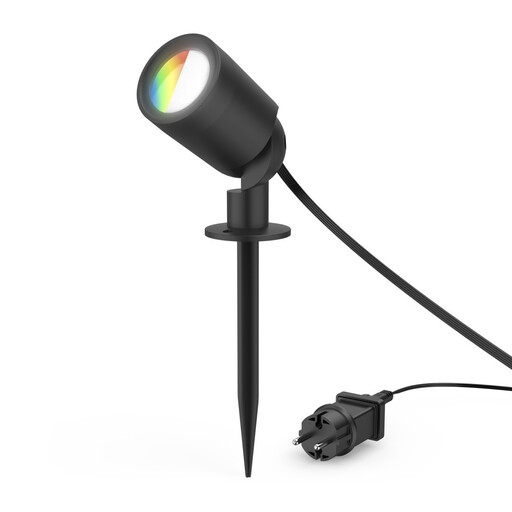
Why this product suits this profile: This mains-powered model is aimed at users who want to combine Wi-Fi, Matter and voice control with dimmable RGB lighting in a single light.
This light is not presented as a cordless solar light: it operates at 220 volts and requires professional installation. This prevents mistaken expectations regarding installation and operation.
IP65, stepless dimming, 16 million colours, adjustable beam angle and Matter compatibility, according to the product description.
We have put together a complete, regularly updated list of products that fully meet these strict selection criteria and the safety regulations applicable in the EU.
Before installation, observe the location in daylight for several hours. Branches, exterior walls and fences can shade the solar panel. Ground spikes should be inserted into firm soil that is not permanently waterlogged. In hard ground, do not hammer the spike in with excessive force, as this may damage the housing or connection.
The solar panel and light housing can be cleaned with a soft cloth. With mains-powered models, disconnect the power supply before cleaning or carrying out maintenance. Damaged cables, housings or batteries should no longer be used. Batteries and electronic components must be disposed of in accordance with local regulations.
This depends on the path's width, the spacing between lights and the desired lighting effect. Small solar lights are often suitable for orientation and decoration. For clearly functional illumination, consider the lumen rating, spacing between lights and beam angle together. Individual decorative RGB lights do not automatically replace safety lighting.
Solar garden lights can remain outdoors in winter, provided the temperature range and IP rating of the particular product are suitable. However, shorter days, low winter sun, snow and cloudy weather reduce charging performance. Keeping the panel clear and having realistic expectations about runtime are crucial.
Consumption depends on power, operating time and lighting mode. A 7-watt light used every day for several hours will incur correspondingly higher costs than a small 0.006-watt solar light. For an accurate estimate, buyers can calculate the power consumption based on the planned operating time and their own electricity tariff.