
Lieferung heute & morgen

Qualitätsgarantie

Willkommens-Angebote freischalten: KOSTENLOSE Lieferung | Bis zu 80 % RABATT | Kostenlose 30-Tage-JoyPlus-Testphase
App herunterladen
Outdoor garden lights can illuminate paths, define flower beds or create an inviting atmosphere on the patio. In practice, however, buying the wrong lights is often down to unsuitable IP ratings, poorly chosen installation locations or unclear information about smart home compatibility, rather than the colour of the light.
An IP44 outdoor light is protected against solid objects larger than 1 mm and water splashes. It can be suitable for sheltered areas, paths or flower beds, for example, but it should not be left standing in water or exposed to powerful jets of water for long periods.
IP65 garden lights are dust-tight and protected against water jets from various directions. They must not be submerged either. For safe, long-term use, cables, connectors and power supplies must also be suitable for outdoor use.
Solar garden lights need direct daylight. Shade from walls, trees or dense shrubs reduces their charging capacity. Claims such as 8 to 12 hours of illumination assume suitable charging conditions; they don’t guarantee the same running time in all weather.
Before buying, check the following:
Wi-Fi garden spotlights with app control often require 2.4 GHz Wi-Fi. For Matter garden lighting, check that you have a compatible Matter controller or suitable smart home hub.
An extension light can’t necessarily be used on its own. For example, Hama’s extension model requires a compatible base light. This is one of the most important things to check before buying a multi-light garden lighting system.
Solar lights with ground spikes are practical for paths, small flower beds and decorative areas, as they don’t need a mains connection or fixed wiring. Options include classic ground spike lights, decorative solar lights and stainless steel solar lights.
Mains-powered LED garden lights are better suited to regular use and configurable lighting scenes. 220-volt models must be installed by a qualified electrician in accordance with the manufacturer’s instructions and applicable regulations.
An IP44 light may be suitable for garden paths where water splashes are occasional, provided it isn’t installed in a dip or somewhere that stays wet. For exposed areas subject to rain and watering, IP65 garden lights offer greater protection against dust and water jets, according to the stated technical specifications.
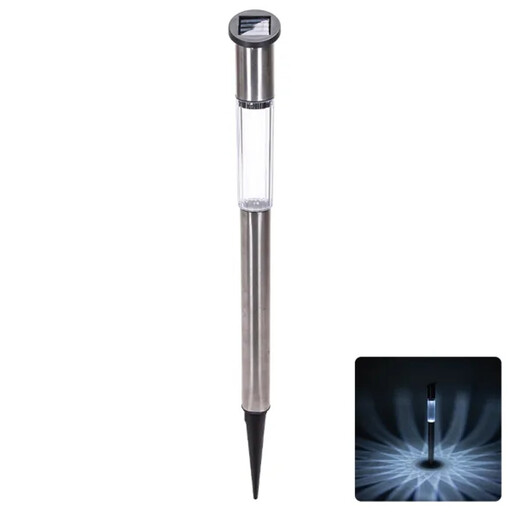
Why this product suits this profile: This solar ground spike light can be pushed into soft ground without fixed wiring, and is designed for paths or smaller flower beds.
Charging and illumination times are clearly stated as 4–6 hours to charge and 8–12 hours of light in suitable conditions. The IP44 rating also makes its limitations clear.
Solar panel, NiMH battery, ground spike installation and a stated colour temperature of 6500 K.
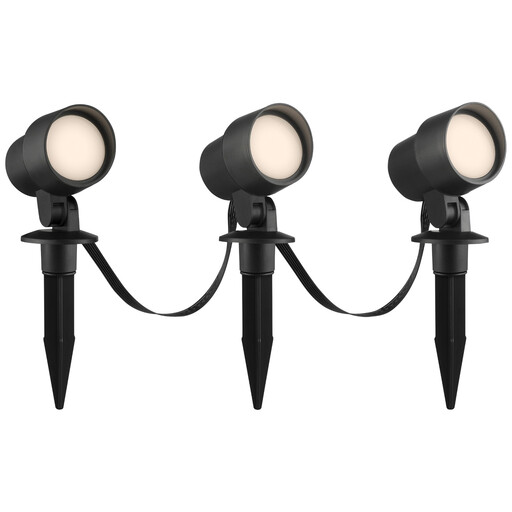
Why this product suits this profile: This set is designed for buyers who want to illuminate several points along a path, patio or flower bed with coordinated lighting scenes.
CCT, RGB and dimming are listed as specific features. The IP44 rating also makes clear that the lights shouldn’t be installed somewhere that is permanently underwater.
Three lights, Tuya smart compatibility, plus app and voice control according to the product description.
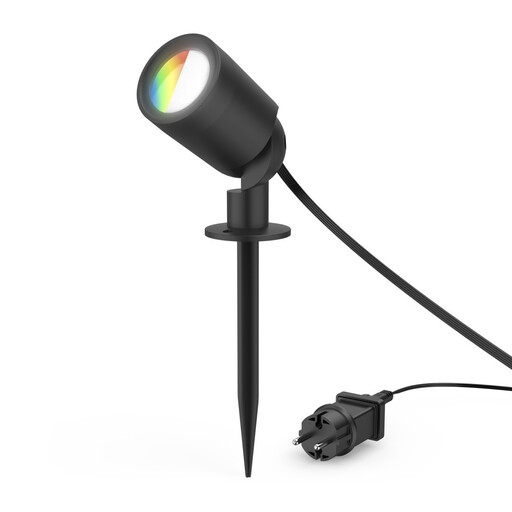
Why this product suits this profile: A good choice for anyone who wants to spotlight tree canopies, walls or paths and manage the lighting using an app or voice control.
Matter compatibility, 2.4 GHz Wi-Fi and the need for electrical installation are all clearly stated. This makes it easy to check the technical requirements before buying.
IP65, 16 million colours, stepless dimming and installation with either a ground spike or mounting base.
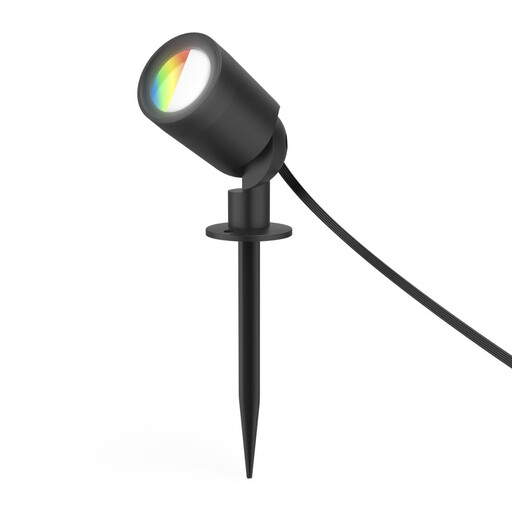
Why this product suits this profile: This light is designed for anyone who wants to add extra points of light to an existing Hama system.
The product description clearly states that a Hama base light is required. This makes it clear that the light has limited use on its own.
Add up to three extra spotlights, with Matter support, RGB colours and IP65 protection.
We’ve put together a complete, regularly updated list of products that meet these strict selection criteria and fully comply with the safety regulations in force in the EU.
Their lifespan depends on the LED, battery, solar panel, temperature and maintenance. The Aigostar models mentioned here have a stated rated lifespan of up to 15,000 hours. Frequent charging cycles and winter conditions can reduce the capacity of the integrated NiMH batteries. Clean the solar panel regularly with a soft, damp cloth.
Consumption depends on the wattage, daily running time and number of lights. A 7-watt light running for five hours uses around 0.035 kilowatt-hours a day. Solar garden lights don’t draw electricity from your mains while in use, but their performance depends on sunlight and battery capacity.
Solar garden lights with ground spikes are a straightforward option for short paths and decorative markers. For more focused or regular illumination, consider LED garden spotlights or mains-powered garden inground spotlights. The key factors are adequate spacing, an angle that minimises glare and an IP rating suited to the installation location.