
Lieferung heute & morgen

Qualitätsgarantie

Willkommens-Angebote freischalten: KOSTENLOSE Lieferung | Bis zu 80 % RABATT | Kostenlose 30-Tage-JoyPlus-Testphase
App herunterladen
The right outdoor lighting should mark out paths, make seating areas usable and enhance the overall look of your garden. In practice, however, several common assumptions when buying outdoor lights can lead to disappointment. For example, a solar light will not automatically work in every location simply because it is advertised as being “for outdoor use”. Likewise, a long stated runtime means little if the quoted figure only applies to the lowest brightness setting.
This guide from the Joybuy Product Recommendation Officer explains what homeowners and garden, balcony and patio owners should look for when choosing outdoor lamps for gardens and patios.
Solar garden lights need direct, or at least sufficiently strong, sunlight. Trees, walls and covered areas can significantly reduce charging performance. For the Aigostar models, the stated charging time under suitable conditions is 4 to 6 hours, while the lighting duration is 8 to 12 hours. Actual figures may vary in winter or on heavily overcast days.
The IP rating must suit the light’s location. An IP44 outdoor light is protected against solid foreign objects measuring 1 mm or more, as well as splashing water from various directions. It is suitable, for example, for sheltered patio areas, paths or flowerbeds, but should not be left standing in water for extended periods.
An IP65 garden light is also dust-tight and protected against water jets. This makes it more suitable for areas exposed to harsher conditions. Even so, an IP65 light should not be placed in puddles or used underwater.
The runtime of rechargeable outdoor lamps depends on brightness, temperature and usage. A figure such as “up to 80 hours” generally refers to the lowest brightness setting. For a realistic assessment, several details are therefore important: battery capacity, charging time, brightness levels and controls.
For garden paths, flowerbeds and lawns, solar lights with ground spikes are practical because there is no need to lay a power cable. Look for:
A rechargeable outdoor lamp or cordless table lamp offers greater flexibility. It can be used on the dining table, balcony or at different seating areas. However, the battery must be charged regularly. Also check whether a USB cable and mains adapter are included.
RGB colours are appealing for decorative garden lighting, while warm white light of around 3,000 K is often chosen for patios and entrance areas. Brightness should not be judged by wattage alone. More useful specifications include:
Dimmable outdoor lights are particularly useful when one lamp needs to be used both while dining and as subtle background lighting. When choosing smart garden lighting, buyers should also check whether an app, Wi-Fi or Bluetooth network and a compatible voice assistant are required.
Metal housings, stainless steel and weather-resistant plastics may be suitable for outdoor use. However, the product’s specific IP rating remains the deciding factor. Clean solar panels regularly with a soft cloth, as dust and pollen can reduce charging performance. Batteries and electronic components must not be opened or modified independently.
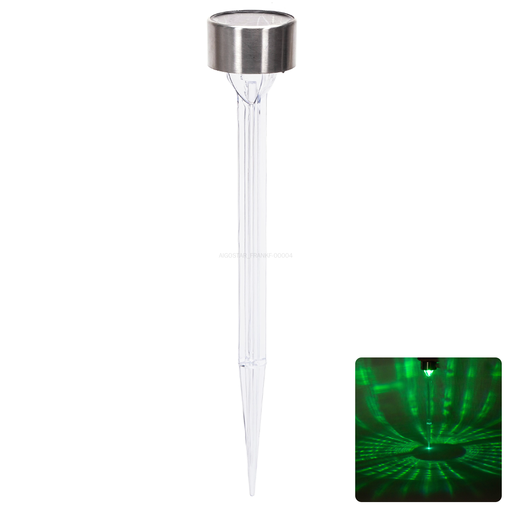
Why this product suits this profile: This solar light can be pushed directly into soft soil or lawn and requires no power cable. RGB lighting is ideal for paths, flowerbeds and smaller garden areas.
The specifications clearly state the charging time, lighting duration and IP44 rating. This makes it easier to assess whether the intended location is suitable before buying.
Solar-powered, ground-spike installation, RGB lighting, Ni-MH battery and a stated lighting duration of 8 to 12 hours.
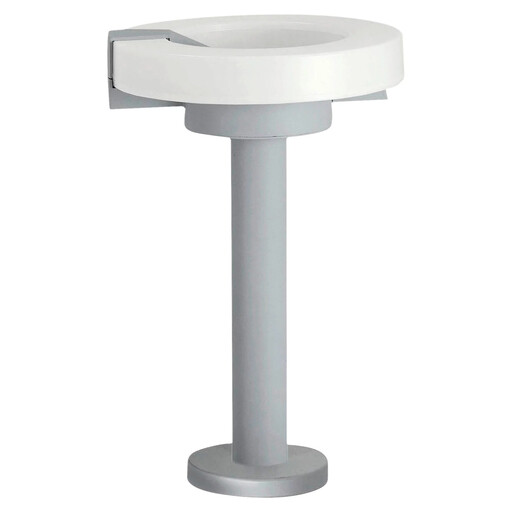
Why this product suits this profile: The classic post design is suitable for driveways, garden paths and lawns. Warm white light at 3,000 K and a stated luminous flux of 470 lumens create clearly defined illumination.
The IP65 rating is designed for dusty areas and locations more exposed to the weather. The non-dimmable design is also stated clearly.
IP65, 470 lumens, 3,000 K, toughened glass diffuser and E27 fitting for bulbs up to 40 W.
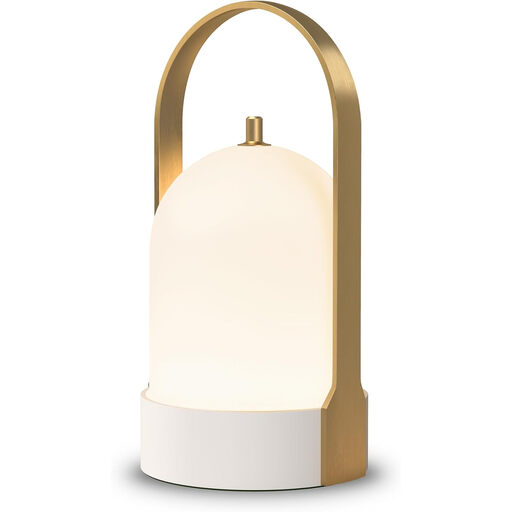
Why this product suits this profile: This cordless table lamp can be used on the patio, balcony, dining table or when camping. Four touch dimming levels let you adjust the light to suit different situations.
The four brightness levels make the stated maximum runtime easier to put into context. IP44 indicates protection against splashing water, not prolonged immersion.
4000-mAh battery according to the product description, USB charging, four touch dimming levels and 360-degree light distribution.
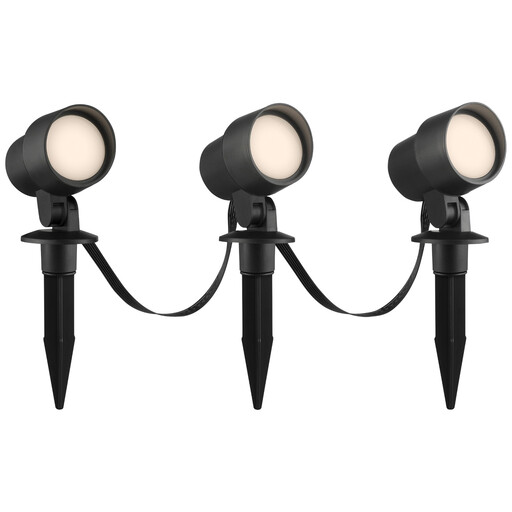
Why this product suits this profile: This set combines RGB lighting, adjustable colour temperature and dimmability. Tuya Smart compatibility enables app and voice control, provided the required system has been set up.
The product description specifies the required smart compatibility, IP44 rating and ground-spike installation. Check the power supply and network requirements before buying.
Three lights, RGB and CCT selection, dimmability and Tuya Smart control via app or compatible voice assistant.
We have put together a complete, regularly updated list of products that fully meet these strict selection criteria and the safety regulations applicable in the EU.
For sheltered outdoor areas, an IP44 outdoor light may be sufficient. For freestanding installation, dusty conditions or greater exposure to the weather, an IP65 garden light provides more comprehensive housing protection. The specific installation instructions remain decisive.
Lifespan depends, among other things, on the LED module, battery, charging cycles, frost and maintenance. Product specifications such as an LED lifespan of 15,000 hours do not automatically apply to the battery or the product as a whole. If the lighting duration decreases, clean the panel first and then check the battery in accordance with the instructions.
Solar lights draw their energy from sunlight during the day and do not require mains electricity while operating. Rechargeable lamps need to be charged regularly. Running costs depend on battery capacity, charging frequency and the electricity tariff. With RGB or dimmable lights, using a lower brightness setting can reduce energy consumption per use.