
Lieferung heute & morgen

Qualitätsgarantie

Willkommens-Angebote freischalten: KOSTENLOSE Lieferung | Bis zu 80 % RABATT | Kostenlose 30-Tage-JoyPlus-Testphase
App herunterladen
The right outdoor LED lighting for your garden and home can make paths easier to see, help you find your way to the entrance or enhance the look of your outdoor space. In practice, though, unclear product details and unsuitable installation locations can often lead to the wrong purchase. For example, a solar light placed in the shade may not charge properly. A wall light with a motion sensor, on the other hand, may be pointing the wrong way and switch on whenever a vehicle passes.
Before you buy, consider the location, IP rating, light output and power supply together. This will help you decide whether a solar garden light, an outdoor LED wall light, an LED security floodlight or RGB garden lighting is right for your property.
An IP44 rating means protection against solid objects larger than 1 mm and splashing water from different directions. It does not mean complete protection against heavy rain, standing water or temporary immersion. IP44 may be sufficient for a covered patio; for an exposed area, check the specific installation recommendations and stated IP rating.
The term ‘weatherproof’ should not be considered in isolation, either. The housing material, seals, operating temperature range and intended installation location also matter.
A solar ground light will only work reliably if its panel receives enough direct sunlight during the day. Trees, walls, roof coverings and dense seasonal foliage can all increase charging time. Figures such as ‘8 to 12 hours’ should therefore be understood as product specifications under certain conditions, not as a guaranteed lighting time in every season.
Power consumption in watts describes energy use, not brightness on its own. Lumens, colour temperature, beam angle and installation height all play a part. A decorative path light needs a different light distribution from lighting for a courtyard or driveway. With a sensor light, you should also consider the detection range, time delay and direction.
Before choosing weatherproof outdoor lighting, first decide exactly where it will be installed:
Stainless steel, aluminium and plastic differ in weight, maintenance requirements and durability. Check metal housings regularly for damage to the finish. For lights with ground spikes, it’s also important that the ground isn’t too hard or permanently waterlogged.
Solar lights don’t need a mains connection, but they depend on sunlight. Mains-powered models provide more consistent brightness, but require connection and installation. Power consumption determines the ongoing energy use. A sensor light can save electricity because it doesn’t stay on all the time.
For rechargeable lights, check the battery type, capacity and whether it can be replaced. For example, the Aigostar model listed here specifies a 200 mAh Ni-MH battery, a charging time of 4 to 6 hours and a lighting time of 8 to 12 hours.
Warm white light at around 3000 K creates a subtle feel around entrances and patios. Neutral white light at around 4000 K can provide clear, practical illumination for courtyards, garages and security lighting. RGB garden lighting, on the other hand, is better suited to decorative accents. It shouldn’t be treated as a substitute for practical lighting on stairs, driveways or work areas.
The selection below groups specific models by typical use. Details are based on the information provided for each product.
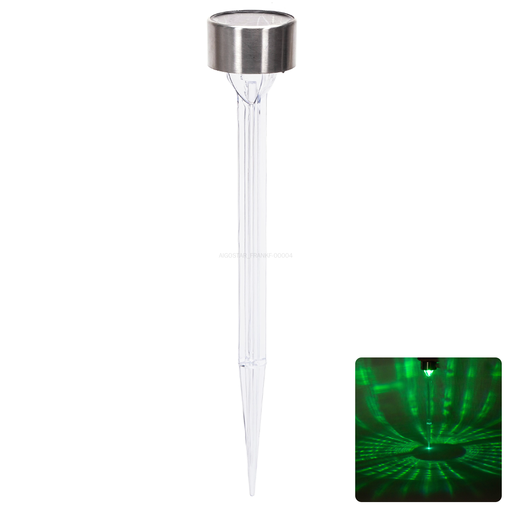
Why this product suits this profile: This solar garden light can be placed beside flower beds or paths without a mains connection. Its RGB light is designed for decorative garden accents.
The product details specify an IP44 rating, a charging time of 4 to 6 hours and a lighting time of 8 to 12 hours. This makes it easier to match the location to your expectations.
Integrated solar panel, ground spike mounting, RGB light and a stated weight of around 79.6 g.
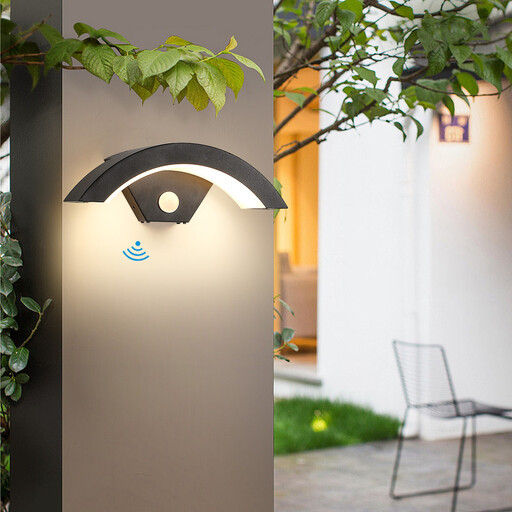
Why this product suits this profile: Designed for entrances, balconies, garages and patios, this model combines wall mounting with light and motion sensors.
Automatic activation means the light doesn’t need to be left on all the time. Before installation, check the detection angle and direction to prevent the sensor from switching on unnecessarily.
24 W power consumption, warm white light at 3000 K and a matt-coated die-cast aluminium housing, according to the product description.
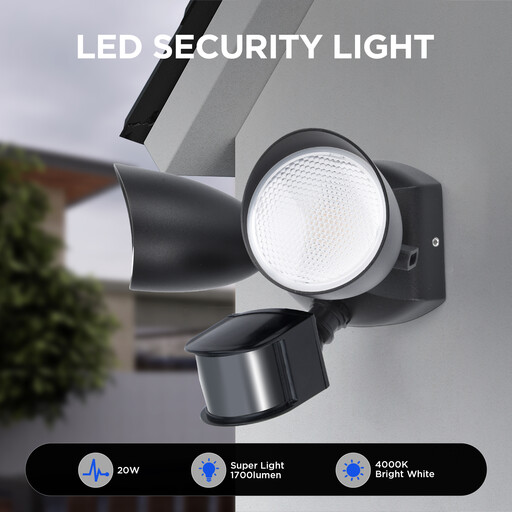
Why this product suits this profile: This model is worth considering if you’re looking for sensor-activated lighting for a courtyard, driveway, garden or patio, with a neutral white colour temperature.
The product name specifies 20 W, 1700 lm, 4000 K and a sensor. These details make it easier to plan practically than relying on a general claim about brightness.
Two integrated light heads, a stated output of 1700 lm and neutral white light at 4000 K.
We’ve put together a complete, regularly updated list of products that meet these strict selection criteria and the safety requirements in force across the EU.
Before installing your lights, it’s worth running through this quick checklist:
Lifespan depends on the LED module, electronics, battery, operating time, temperature and moisture. In solar lights, the battery may lose capacity before the LED module. The Aigostar model’s product details state a lifespan of 15,000 hours. This is the product’s stated figure and doesn’t necessarily reflect its actual total lifespan in all outdoor conditions.
Consumption depends on the power rating and how long the light is on. A 20 W light uses 0.02 kWh for one hour of operation. If it only switches on when activated by a sensor, its actual consumption may be lower than if it were left on continuously. Check the technical details for standby consumption and sensor controls.
A garden path light should make the path easy to see without causing glare. Solar ground lights with spikes are a flexible option for decorative markers. For regularly used paths where clearer guidance is needed, mains-powered lighting that provides more even illumination may be a better choice. The spacing, light distribution, installation height and IP rating of each light all matter.