
Lieferung heute & morgen

Qualitätsgarantie

Willkommens-Angebote freischalten: KOSTENLOSE Lieferung | Bis zu 80 % RABATT | Kostenlose 30-Tage-JoyPlus-Testphase
App herunterladen
Solar garden lights are a practical solution for flower beds, paths, patios and entranceways without a mains electricity connection. However, solar lights vary considerably in the effect they create, their weather resistance and how they are installed. If you choose on looks alone, you could end up with decorative solar lights that barely charge in the shade or don’t provide enough brightness to light your garden path as intended.
An IP44 rating means protection against solid objects larger than 1 mm and splashing water from different directions. This is sufficient for many sheltered outdoor areas, but it doesn’t replace sheltered installation in locations exposed to persistent heavy rain or standing water. Products rated IP65 or IP67 may be more suitable for more exposed spots. The specific installation location is still key.
Claims such as ‘up to eight or twelve hours’ refer to a fully charged battery. House walls, trees, balcony railings and the low sun in winter can all reduce charging performance. Dirty solar panels can also affect how the lights work. Wherever possible, position solar lights in an unshaded spot during the day. For north-facing areas or permanently covered patios, a mains-powered alternative may be more suitable.
RGB solar lights, solar lanterns and warm-white LED garden lights often create an inviting atmosphere, but they won’t necessarily light a path safely and evenly. So, think about what you need them for:
Check the stated IP rating and compare it with the intended location. Plastic housings are lightweight and easy to move, while metal or stainless-steel-effect finishes offer a different look. If a product is made from plastic with a stainless-steel effect, read the product description carefully so you don’t mistake the material for the finish.
Useful details to check include:
These figures are product-specific guidelines, not a guarantee for every weather condition. Some models have a stated charging time of around four to six hours, with a run time of eight to twelve hours.
Ground lights with stakes need loose soil that’s deep enough. Don’t force the stake into very hard ground, as this could damage the housing or connections. Check the height and spacing too: a 129 cm solar lantern will look quite different from a small flower-bed light measuring around 30 to 40 cm.
For balconies or hard surfaces, models with wall fixings or a base are more practical. For string lights, check that the cable length, spacing between the LEDs and the solar panel’s position are suitable for the area.
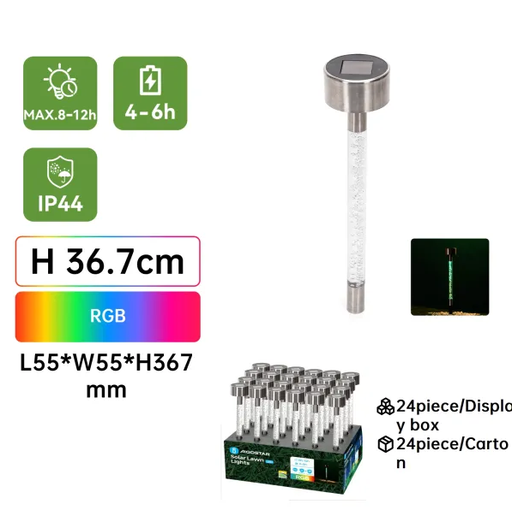
Why this product suits this need: This compact solar light can be placed in lawns, flower beds or along paths without a power cable, and provides coloured RGB lighting for decorative use.
The product details clearly state the charging time, run time, dimensions and IP44 rating. This makes it easier to check whether the light is suitable for your chosen location before buying.
RGB lighting, 36.7 cm height, built-in Ni-MH battery and automatic operation without a direct mains connection.
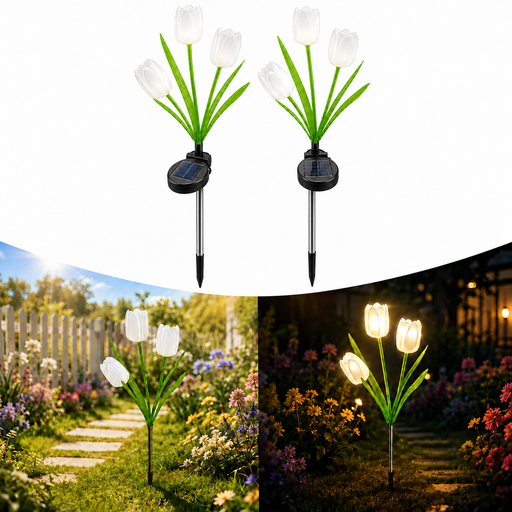
Why this product suits this need: The tulip design combines garden decoration with lighting, making it a good fit for flower beds, lawns, patios and seasonal displays.
The stated IP65 rating provides a useful guide for more exposed outdoor areas. The lights should still be kept away from places where water can collect.
Two lights in the set, an automatic light sensor, ground stakes and a stated run time of six to twelve hours.
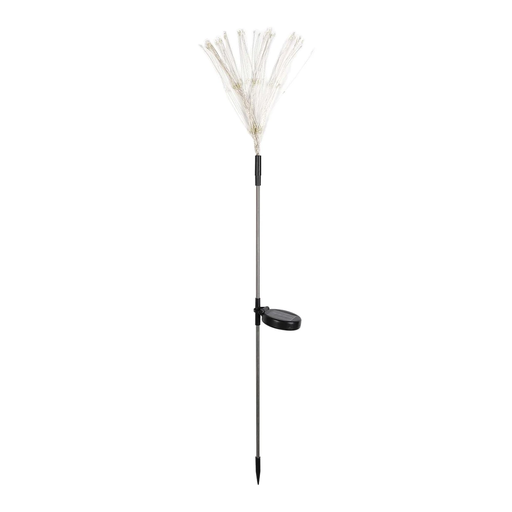
Why this product suits this need: Eight lighting modes make these lights suitable for different occasions, such as garden parties, weddings, holidays or seasonal outdoor decorations.
You’re not limited to a single lighting effect. A switch, memory function and stated IP44 rating make the lights easier to use as planned, provided the location is suitable.
Two lights, seven dynamic effects plus steady light, and automatic activation in the dark.
Before installation, charge the battery as instructed in the product manual and switch the light on. Position the solar panel facing upwards and keep it clear of shade from shrubs or walls. When using ground stakes, space them evenly along the path rather than placing individual lights right at the edge.
Every so often, wipe away dust, pollen and leaves with a soft cloth. Depending on their design and use, batteries can lose capacity after several seasons. So, check whether replacement batteries are available before you buy. Follow the manufacturer’s advice in frosty or stormy weather, or if you won’t be using the lights for a long time; delicate decorations may need to be stored somewhere dry.
We’ve put together a complete, regularly updated list of products that meet these strict selection criteria and fully comply with the safety regulations in force in the EU.
It depends on the battery, solar panel, time of year and location. Product claims of six to twelve hours usually assume suitable charging conditions. In winter or after several dull days, the lights may stay on for considerably less time.
The panel needs as much direct light as possible to charge the battery. Bright shade can increase charging time and reduce run time. If you have a balcony or a shady garden, observe how the sun moves across the area before installing the lights.
Solar lights don’t need to be connected to the mains while they’re in use. However, you may need to pay for battery replacements, spare parts or new lights in the future. So, it’s worth considering more than just the purchase price: battery type, materials, IP rating and expected lifespan all matter too.