
Lieferung heute & morgen

Qualitätsgarantie

Willkommens-Angebote freischalten: KOSTENLOSE Lieferung | Bis zu 80 % RABATT | Kostenlose 30-Tage-JoyPlus-Testphase
App herunterladen
A well-chosen outdoor light with a motion sensor not only enhances the security around your property but also offers convenience by automatically illuminating pathways and entrance areas. However, the market is flooded with products whose marketing promises often fall short in practice. Many buyers find themselves frustrated with lights that fail after the first heavy downpour, react to every passing moth, or barely have any brightness left in winter.
This guide will show you which technical details truly matter and how to avoid common purchasing traps to find a durable and functional lighting solution for your home.
Before we turn to the recommended features, it's important to be aware of the most common problems that lead to dissatisfaction.
To make an informed decision, you should check three core parameters. These are crucial in determining the longevity and functionality of your outdoor lighting.
The IP (Ingress Protection) rating is one of the most important specifications for a weather-resistant outdoor light. It indicates how well the housing is protected against the ingress of foreign objects (first digit) and water (second digit).
A good motion sensor is the heart of any automatic outdoor light. Pay attention to the following features to tailor the functionality to your needs:
The choice of power supply depends on the installation location and your reliability requirements.
Instead of making blanket recommendations, we have identified products that meet specific requirements and purposefully avoid the pitfalls mentioned earlier.
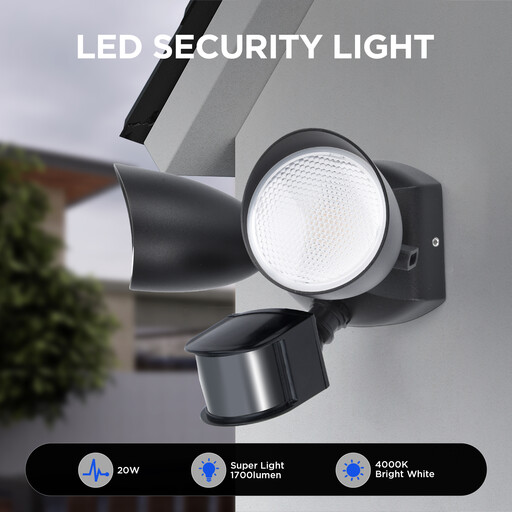
Why This Fits Their Persona: Ideal for homeowners who want to reliably and brightly illuminate driveways, yards, or the sides of their building. The mains connection guarantees constant performance, independent of sunlight.
The direct mains connection completely bypasses the pitfall of unreliable solar performance. Its high output of 1700 lumens ensures effective illumination where weaker lights would fail.
Two swivelling floodlight heads allow for flexible light direction. The high brightness serves as an effective security light.
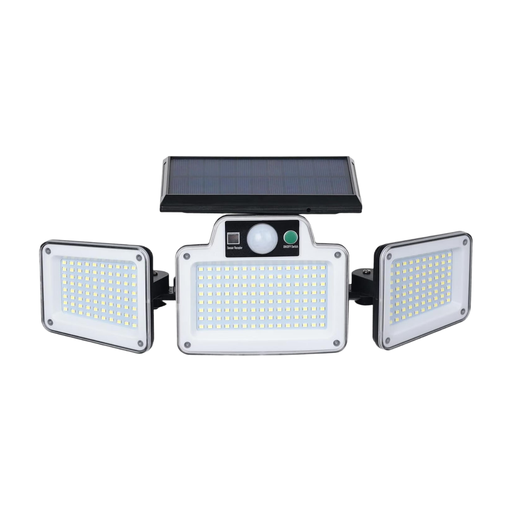
Why This Fits Their Persona: Perfect for garden owners who want to light up paths, sheds, or dark corners without a power connection. The three adjustable heads offer wide coverage for a flexible garden light with a motion sensor.
The separate solar panel, connected by a long cable, can be optimally positioned towards the sun while the light itself remains in the shade. This solves the poor charging performance problem common to many integrated solar lights.
IP65 rating for high weather resistance. Three different lighting modes, controllable via remote, offer flexibility between pure motion detection and continuous light.

Why This Fits Their Persona: For users seeking a functional light for their home entrance that blends seamlessly into modern architecture. The warm white light (3000K) creates a welcoming atmosphere.
This light combines a robust die-cast aluminium housing with an IP65 rating, thereby avoiding the pitfall of poor weather resistance. The integrated sensor is discreet and does not disrupt the aesthetics.
The U-shaped design creates an attractive up-and-down lighting effect on the facade. The combination of a dusk sensor and motion sensor ensures fully automatic and energy-efficient operation.
We have compiled a complete, up-to-date list of products that fully meet these strict selection criteria and safety regulations.
A common mounting height is between 2 and 2.5 metres. At this height, a good detection range for people is achieved, while the light is also protected from easy tampering or vandalism. Always follow the manufacturer's specific recommendations.
Yes, on most high-quality models. You can usually use small dials on the housing to set how long the light should remain on after the last detected movement (e.g., from 10 seconds to several minutes). This allows you to adapt it to your individual security and convenience needs.
Winter performance depends heavily on the quality of the light. Models with large, efficient solar panels and batteries with a high capacity (e.g., over 2000 mAh) can store enough energy for operation even with fewer hours of sunlight. Lights with a separate panel that can be optimally aligned with the low winter sun have a clear advantage here. However, budget models with small, fixed integrated panels often fail in winter.