
Lieferung heute & morgen

Qualitätsgarantie

Willkommens-Angebote freischalten: KOSTENLOSE Lieferung | Bis zu 80 % RABATT | Kostenlose 30-Tage-JoyPlus-Testphase
App herunterladen
A well-lit driveway, a safe garden path, or an illuminated patio not only enhances comfort but also boosts security around your home. An outdoor light with a motion sensor is a practical and energy-efficient solution for this purpose. It only turns on when light is needed. However, with a vast array of models featuring different power sources and functions, making a choice can be overwhelming.
This article serves as your guide. We'll introduce objective criteria to help with your decision and present a selection of models for various applications, from wide-area illumination to flexible, battery-powered solutions.
To find the right light for your needs, a few technical specifications are crucial. The following points will help you objectively compare the features of outdoor lights.
The choice of power supply significantly determines the installation flexibility and ongoing running costs.
Since outdoor lights are exposed to the elements, their durability is a key quality indicator. The IP (Ingress Protection) rating indicates how well a light is protected against the ingress of foreign objects (first digit) and water (second digit).
The primary function of an outdoor light is to provide illumination on demand.
Based on the criteria mentioned, we have compiled a selection of outdoor lights with motion sensors for different requirements.
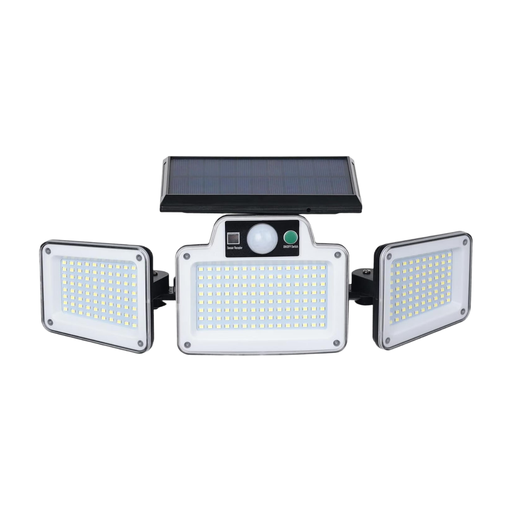
Why It Stands Out: This model is designed as a high-performance security light. With three individually adjustable heads and a total of 280 LEDs, it provides broad and bright illumination. The solar panel is connected to the light via a 4.7-metre cable, allowing for optimal placement of the panel for sun exposure, independent of the light itself. It is conveniently controlled by a remote, which can be used to select three different lighting modes.
Pros:
Who It's For: Homeowners who need bright, wide-area lighting for driveways, garages, or larger garden areas and prefer a low-maintenance solar solution.
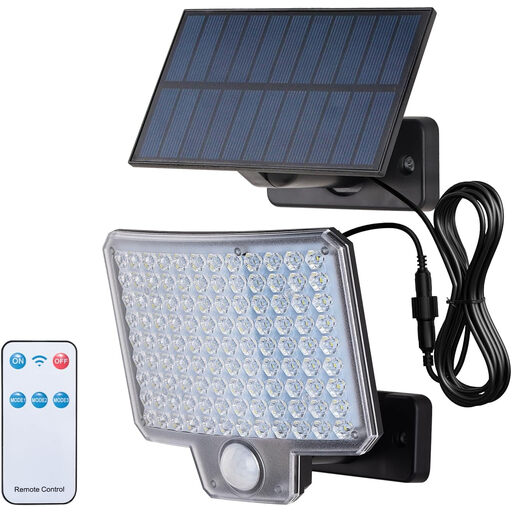
Why It Stands Out: This compact garden light also features a split design. The solar panel and the light unit are connected by a 5-metre cable. This is particularly useful for illuminating shady areas, such as under an eave or along a hedge, while the panel is placed in a sunny spot. With 108 LEDs and a 120° beam angle, it provides targeted yet sufficient brightness.
Pros:
Who It's For: Ideal for targeted illumination of paths, patios, or entrance areas, especially in places where the light itself must be mounted in the shade.
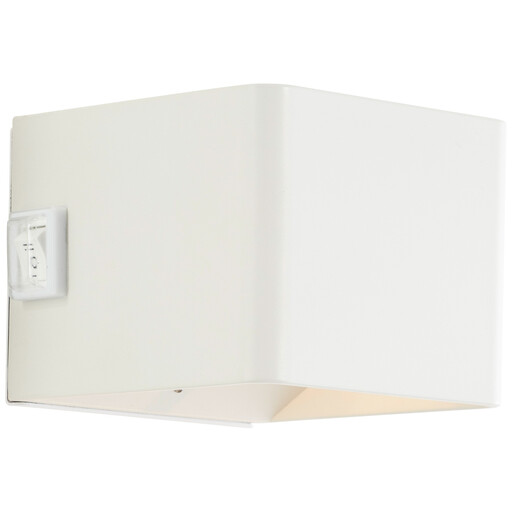
Why It Stands Out: The strength of this battery-powered outdoor wall light lies in its portability. Thanks to the integrated battery, which is recharged via a USB cable, and a magnetic mount, it can be flexibly attached to metal surfaces or placed in various locations. With 300 lumens and a warm white light colour (3000 Kelvin), it creates a pleasant atmosphere.
Pros:
Who It's For: For users looking for a straightforward and flexible lighting solution for a balcony, patio, shed, or for temporary use while camping where a permanent installation isn't feasible.
If you are looking for a light with other specific features or wish to compare more models, you can find a broader selection of lighting solutions in our category.
Discover more battery-powered outdoor lights with motion sensors
1. What does the IP rating mean for outdoor lights? The IP (Ingress Protection) rating classifies the degree of protection a housing provides against the ingress of foreign objects (first digit) and water (second digit). IP44 means protection against splashing water and is sufficient for most sheltered outdoor areas. IP65 offers protection against dust and water jets, making it suitable for exposed locations with direct exposure to the elements.
2. How do I install a solar outdoor light for optimal performance? For maximum energy harvesting, the solar panel should be mounted in a location that receives direct sunlight for many hours of the day, ideally with a south-facing orientation. Ensure that the panel is not shaded by trees, eaves, or other objects. Regularly cleaning the panel's surface of dust and dirt can also improve charging performance.
3. Can I adjust the illumination time on an outdoor light with a motion sensor? Yes, many models offer this function. With the featured Grifema lights, for example, you can choose between different modes via remote control. These modes define whether the light only turns on with motion, whether it stays on at a dim level and brightens upon motion, or how long it remains on after the last detected movement (e.g., 20–30 seconds).