
Lieferung heute & morgen

Qualitätsgarantie

Willkommens-Angebote freischalten: KOSTENLOSE Lieferung | Bis zu 80 % RABATT | Kostenlose 30-Tage-JoyPlus-Testphase
App herunterladen
A reliable outdoor light with a motion sensor provides both convenience and security. It illuminates the path to your front door, deters unwanted visitors, and helps reduce energy costs. However, the market is crowded, and many products fail to deliver on their advertising promises. Before you make a decision, it's crucial to understand the common pitfalls that often only become apparent after the purchase.
This guide shows you what truly matters and how to avoid the three most common mistakes:
To make an informed decision, you should check three core technical parameters. These are the primary determinants of the longevity and functionality of your new outdoor lighting.
The IP (Ingress Protection) rating indicates how well an electrical device is protected against the intrusion of foreign objects and water. For outdoor use, two ratings are particularly relevant:
Choosing the correct IP rating is not an option but a necessity for safe and long-lasting operation in our climate.
The type of power supply affects installation effort, operating costs, and flexibility.
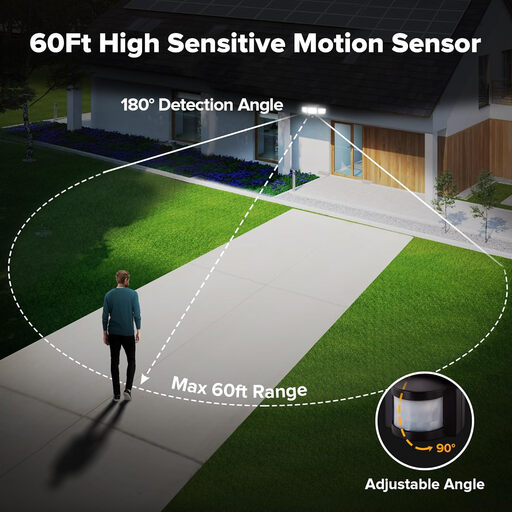
The heart of any automatic light is its sensor. Most models use a PIR sensor (Passive Infrared), which reacts to the body heat of people and larger animals. Key metrics here are the detection range (in metres) and the detection angle (in degrees). A wide angle is useful for a driveway, while a narrower one is sufficient for a small path.
LED technology has established itself as the standard light source. It is energy-efficient, long-lasting, and provides instant full brightness. Modern models also offer advanced features. An LED outdoor wall light with a camera, such as the eufy camera with light, combines lighting and video surveillance in one device, significantly increasing security.
Instead of a one-size-fits-all recommendation, we have curated products for three typical use cases.

Why This Fits Their Persona: Ideal for homeowners who need not just lighting, but an active surveillance solution. The combination of a bright floodlight and a 360° camera with person detection provides complete coverage for large areas like driveways and gardens.
AI-powered person detection minimises false alarms from animals or wind, solving the problem of inaccurate sensors. As a hardwired device, there are no worries about dead batteries on dark days.
Combines a 2000-lumen floodlight with a 360° pan-and-tilt camera. Offers a 24/7 recording option and dual-band Wi-Fi for a stable connection.
Why This Fits Their Persona: Perfect for users seeking a powerful, energy-independent solution with no installation hassle. Ideal for illuminating gardens, yards, or driveways where no mains connection is available.
Addresses the weakness of many solar lights with a panel that has improved charging efficiency and a solid battery. The IP65 certification also ensures high weather resistance.
High light output of 3000 lumens per light and three flexible light heads for wide, customisable illumination (270°). Comes in a convenient 2-pack.
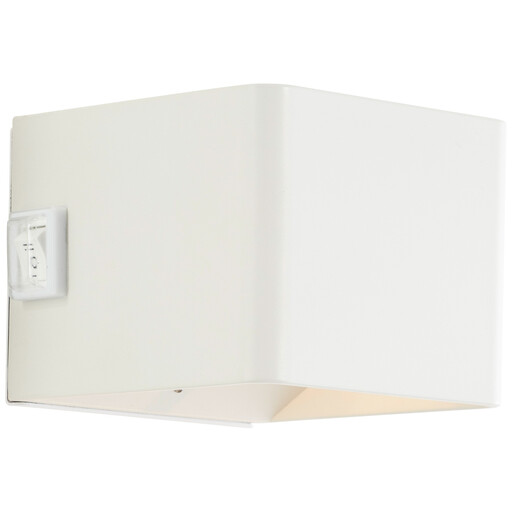
Why This Fits Their Persona: The solution for renters or for places where a permanent installation is not possible or desired. Ideal for balconies, patios, sheds, or as temporary lighting for camping.
Bypasses the complexity of fixed installation and the dependency on sunlight. The IP44 rating is perfectly adequate for its intended, often sheltered, use (e.g., on a balcony).
Extremely flexible thanks to battery operation (rechargeable via USB) and a magnetic mount for attaching to metal surfaces. No wires, no drilling.
We've compiled a complete, up-to-date list of products that fully meet these strict selection criteria and UK safety regulations.
The recommended installation height is typically between 2 and 2.5 metres. At this height, the sensor's detection range is optimal, and the light is protected from easy tampering. Always follow the specific instructions provided by the manufacturer in the manual.
Reliability heavily depends on the quality of the product. Models with large, efficient solar panels and high-capacity batteries can store enough energy for operation even in winter, especially if they are installed in a sunny, south-facing location. However, with budget models, the illumination time can be severely reduced on short, overcast days.
That depends on the power source. Solar and battery-powered lights do not require electrical expertise and can usually be installed yourself without any issues. Hardwired models that connect to the 230V mains supply must be installed by a qualified electrician for safety reasons and to comply with legal regulations.