
Lieferung heute & morgen

Qualitätsgarantie

Willkommens-Angebote freischalten: KOSTENLOSE Lieferung | Bis zu 80 % RABATT | Kostenlose 30-Tage-JoyPlus-Testphase
App herunterladen
A well-chosen outdoor light with a motion sensor not only enhances convenience by illuminating pathways after dark, but also boosts your home's security. However, the market is flooded with products whose performance claims often don't hold up in practice. Many buyers invest in lights that quickly fail due to weather exposure or whose sensors are unreliable.
As your Joybuy Product Recommendation Officer, I'm here to help you identify common purchasing pitfalls and make an informed decision. This guide focuses on the technical specifications that truly matter, ensuring you find a durable and functional lighting solution for your outdoor space.
Before we dive into the key parameters, let's look at three widespread issues that often lead to disappointment:
To avoid the problems mentioned above, you should focus on three technical specifications. These will provide an objective basis for your purchasing decision.
The IP Rating (Ingress Protection) is one of the most crucial specifications for any outdoor wall light. It consists of two digits: the first indicates protection against solid objects (like dust), and the second indicates protection against water.
LED outdoor wall light with motion sensor with this rating is suitable for mounting on unsheltered house walls, as it can withstand heavy rain.A quality motion sensor is the heart of any automatic outdoor lighting system. Look for the following features:
outdoor floodlight with a motion sensor used to monitor larger areas should have a longer range.The choice of power source depends on your installation location and priorities.
outdoor security light. However, installation should be carried out by a qualified professional.solar light with a motion sensor offers maximum placement flexibility and has no running costs. Pay attention to the battery capacity (in mAh) and the solar panel's power (in watts) to ensure sufficient runtime.Here are a few models that, based on their technical specifications, are well-suited for different user profiles.

Why It's a Match: Ideal for entrances, patios, and garages where reliable, mains-powered lighting is needed without worrying about battery life or sun exposure. The design is modern and discreet.
The die-cast aluminium housing is robust and weather-resistant, avoiding the pitfall of low-quality materials. The mains connection ensures the sensor functions consistently and reliably.
Combines a light sensor (dusk-to-dawn switch) with a motion detector for automated convenience. The constant-current driver technology ensures stable operation.
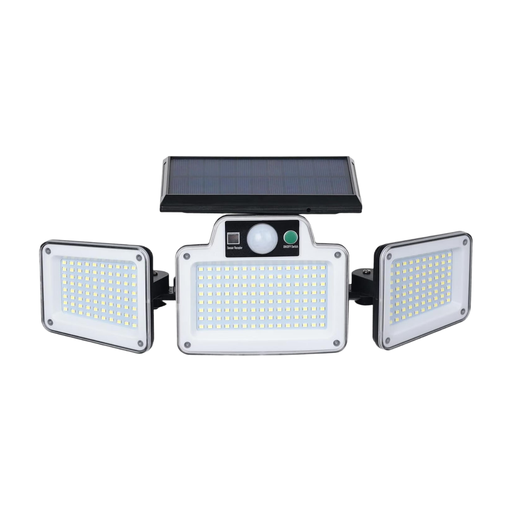
Why It's a Match: Perfect for gardens, garages, or pathways where no power line is available. The three adjustable heads allow for wide and flexible illumination of the desired area.
It bypasses the weak solar light trap with a 1.8W solar panel and a 2400mAh battery. The three operating modes (selectable via remote control) allow you to adapt to energy needs and weather conditions.
IP65-certified, making it well-protected against harsh weather. The long cable (approx. 4.7 m) between the panel and the light allows for optimal positioning of the panel towards the sun, even if the light is mounted in a shaded area.
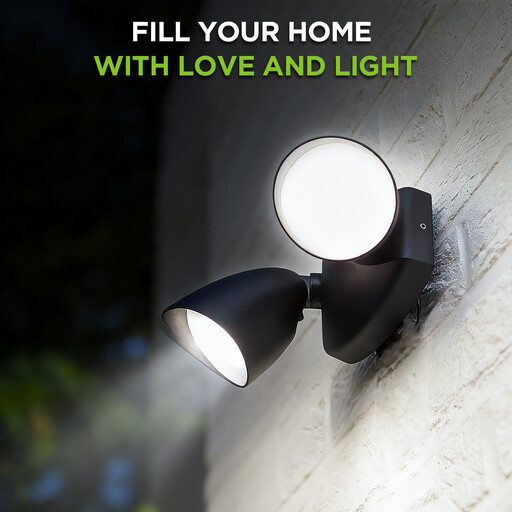
Why It's a Match: This high-performance outdoor floodlight with a motion sensor is designed to illuminate large areas like yards, gardens, or long driveways. Its high brightness serves as an effective deterrent.
The full-metal housing ensures durability and resilience. With 1800 lumens, this floodlight delivers powerful illumination that many cheaper models only promise on paper.
The two pivoting floodlight heads allow for precise light aiming. A colour temperature of 4000K (neutral white) provides clear and bright visibility in the dark.

Why It's a Match: A solution for anyone needing temporary or mobile lighting. Ideal for rental properties, camping, or for attaching to metallic surfaces like tool cabinets or vehicles.
This model doesn't promise a permanent, maintenance-free solution. It is clearly positioned as a portable light. The IP44 rating is sufficient for its intended, often sheltered, use cases.
The integrated battery (rechargeable via USB) and the magnet on the back offer maximum flexibility. No fixed installation or wiring is required.
We have compiled a complete, up-to-date list of products that fully meet these strict selection criteria and UK safety regulations.
The recommended mounting height is typically between 1.8 and 2.5 metres. At this height, the sensor's detection range is optimal, and the light is protected from easy tampering. Always follow the specific recommendations in the manufacturer's manual.
Integrated LEDs in outdoor lights have a very long lifespan, often rated between 20,000 and 50,000 operating hours. With average use of a few hours per night, such a light can function for many years before its light output noticeably diminishes.
Yes, many models allow you to adjust the sensitivity of the PIR (Passive Infrared) sensor. By reducing the sensitivity, you can decrease the likelihood of false triggers from small animals. Some higher-end models also feature special pet immunity or allow you to mask off specific areas of the sensor's detection zone.